Video: 5 Dead, Dozens Missing After Passenger Ferry Catches Fire Off Philippines
Our take
The recent tragedy involving the MV June Aster, a passenger ferry that caught fire off the Philippines, underscores a recurring and deeply concerning vulnerability within maritime transport. Five fatalities have been confirmed, with dozens still missing, a stark reminder of the potential for catastrophic loss of life at sea. These events, while geographically disparate, share a common thread of preventable risk. The incident echoes earlier concerns highlighted in related reports, such as the [Seafarer Killed, Another Missing After Attack On Oil Tanker Off Dubai], which demonstrates the diverse threats facing maritime vessels, and the [Oman Evacuates 16 Crew From Saudi Oil Tanker Attacked By Iran In Strait Of Hormuz], further illustrating the precariousness of maritime operations in certain regions. The recent fire aboard Russia’s [Russia’s 20,000-Ton Icebreaker Admiral Makarov Catches Fire During Repairs At Kronstadt Shipyard] highlights a broader pattern of incidents linked to mechanical failure and potentially inadequate maintenance protocols, regardless of vessel type or operational context. These interwoven incidents demand a rigorous re-evaluation of safety standards and oversight mechanisms across the global maritime sector.
The Philippines, like many maritime nations, relies heavily on ferries for inter-island transport, often carrying a large number of passengers and cargo. While regulatory frameworks exist, enforcement and adherence to stringent safety protocols can be inconsistent. The age and condition of many vessels operating in these regions are also factors, with older ships being more susceptible to mechanical failures and lacking modern safety features. The rapid response of the Philippine Coast Guard is commendable, but the scale of the disaster highlights the limitations of even the most robust rescue efforts when faced with a sudden and widespread emergency. Beyond the immediate tragedy, this event necessitates a deeper investigation into the ferry’s maintenance history, crew training, and adherence to fire safety regulations, not just for the MV June Aster but as a benchmark for the entire Philippine ferry fleet. The potential for human error, coupled with aging infrastructure, creates a precarious environment that demands constant vigilance and proactive measures.
The broader significance of this incident extends beyond the immediate human cost. It serves as a stark reminder of the interconnectedness of global supply chains and the potential disruption caused by maritime accidents. The vast majority of international trade relies on maritime transport, and any significant disruption can have cascading effects on economies worldwide. Furthermore, the incident raises questions about the adequacy of international maritime safety standards and the effectiveness of oversight mechanisms. While organizations like the International Maritime Organization (IMO) set global standards, their implementation and enforcement are often left to individual nations, leading to inconsistencies and gaps in safety protocols. A more coordinated and globally harmonized approach to maritime safety is essential to prevent future tragedies and protect the vital role that ships play in the global economy. Data-driven risk assessment, incorporating real-time monitoring of vessel conditions and environmental factors, could offer a preventative layer of protection, moving beyond reactive measures.
Looking ahead, a key question is whether these recurring incidents will spur meaningful change within the maritime industry. Increased investment in vessel maintenance, improved crew training, and the adoption of advanced safety technologies, such as automated fire detection and suppression systems, are crucial steps. However, systemic change requires a shift in culture, prioritizing safety over cost-cutting and embracing a proactive approach to risk management. The integration of ocean intelligence, leveraging data from multiple sources to predict and mitigate potential hazards, could also play a significant role in enhancing maritime safety. Ultimately, the goal should be to create a maritime environment where the risk of such devastating events is minimized, ensuring the safety of seafarers and passengers alike.
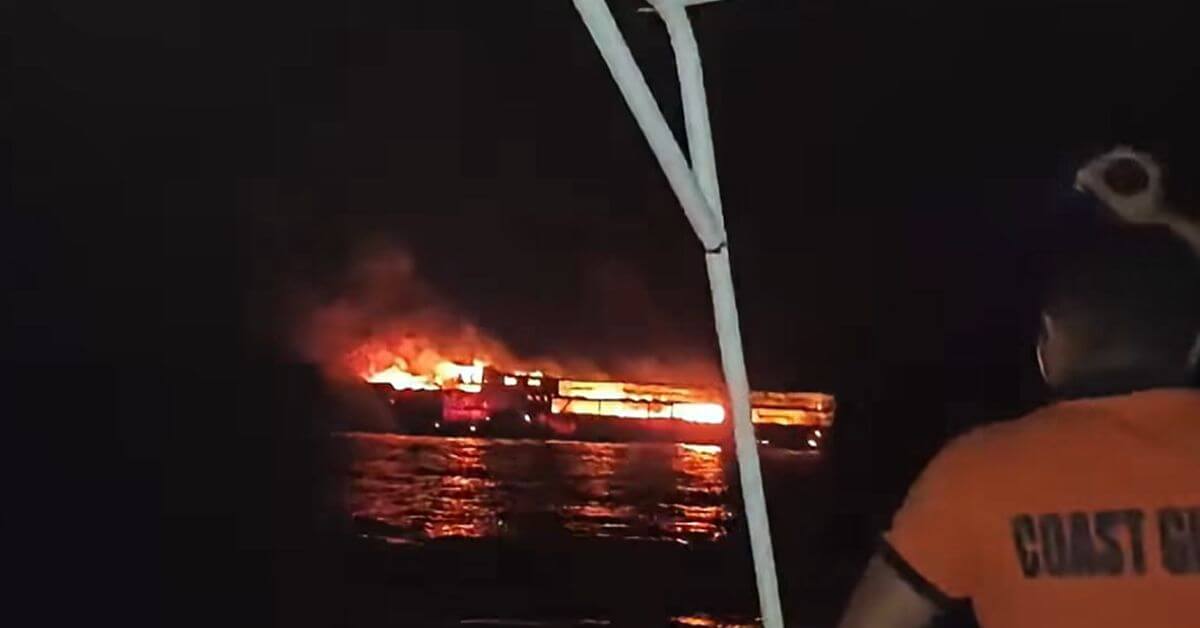
A fire on a passenger ferry off the western Philippines killed at least five people and left dozens missing.
The MV June Aster was sailing from Manila to Coron in Palawan province when the fire broke out at around 6:45 p.m. on Wednesday, Sept. 9. The vessel was near Coron at the time.
The Philippine Coast Guard said there were 134 people on board, including 117 passengers and 17 crew members.
Commodore Noemie Cayabyab, a Coast Guard spokeswoman, said 43 people had been rescued so far, while the number of missing could change as the search continues.
“We are continuing search and rescue operations,” Cayabyab said.
The fire has been put out, but the ferry is still afloat and listing. Smoke was still coming from the burnt vessel by midday on Thursday.
Video Credits: The Guardian/YouTube
The search involves a coast guard ship and high-speed response boats, along with a military ship, other government boats, private volunteers and fishermen.
The Coast Guard has also sent out a radio message asking nearby ships to look out for survivors. It is also working with coastal villages in case any passengers have drifted to shore.
Severe weather and large waves have made the rescue work more difficult.
The MV June Aster issued a distress signal while about 4 nautical miles (7.4 kilometres) from Turda village in Coron. Strong currents later carried the ferry about 7.68 nautical miles (14.2 kilometres) away from the village.
Images from the rescue showed coast guard personnel throwing life jackets to survivors while the ferry burned in the background.
Passengers were helped onto smaller boats and taken to shallow water. Body bags were also seen at what appeared to be a port.
The search was still going on Thursday as authorities worked to find the remaining missing passengers and crew.
References: business standard, thehindu
Read on the original site
Open the publisher's page for the full experience