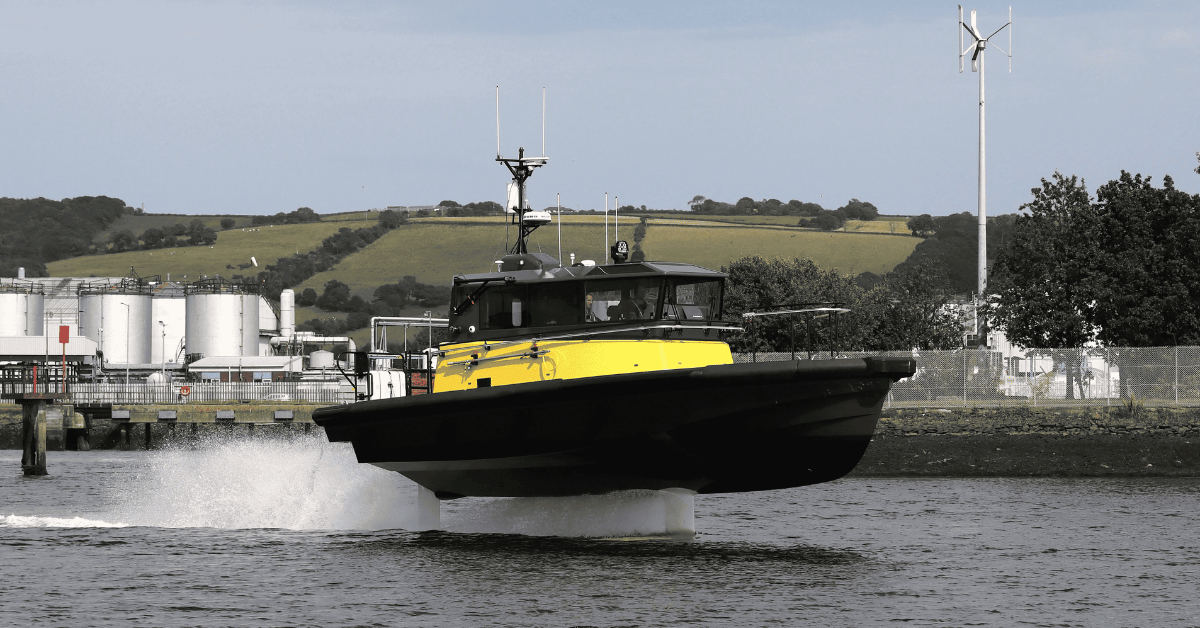
The first commercial electric hydrofoil pilot boat in the U.S. is not a test, a prototype, or a demonstration, it is a validated operational order. Jacobsen Pilot Service has purchased the Artemis EF-12 Pilot for the Port of Long Beach, and the projected fuel savings are measurable: 40,000 gallons of diesel per year, or roughly 400 metric tons of CO₂. That is empirical evidence of a shift we have been tracking across the maritime sector. The Port of Los Angeles recently set a validated benchmark with its lowest emissions per container, and Synergy Marine earned global recognition for validated decarbonization progress. These are not isolated milestones; they are calibrated indicators that the industry is moving from aspiration to integration.
What matters most here is the operational logic behind the purchase. Jacobsen Pilot Service is not a startup chasing grants, it has been running pilot boats for over a century, including carbon-fiber vessels already in service. Its president, Tom Jacobsen, explicitly cited firsthand experience with reduced weight and lower maintenance as reasons for confidence. The eFoiler® technology lifts the hull above the water during transit, cutting drag and energy consumption, then drops back into displacement mode for pilot transfers. That dual-state design is not a gimmick; it is an engineered response to a real-world constraint: pilots need to arrive stable and rested before guiding ships through one of the nation's busiest ports. The vessel will cover roughly 30% of Jacobsen's annual operating hours, charged by a dedicated DC fast charger at the dock. This is a practical, integrated data point in the larger equation of port decarbonization.
The $3.2 million in funding from the Port of Long Beach's SWIFT program, backed by California State Transportation Agency money, shows that public investment is accelerating private adoption. Dr. Noel Hacegaba, the port's CEO, framed the purchase as part of building the "Port of the Future" and a pathway to zero emissions by 2050. That timeline is ambitious, but the vessel's projected fuel savings are real and replicable. If a single electric hydrofoil boat can replace 40,000 gallons of diesel per year in one port, the question becomes how quickly similar vessels can scale across other U.S. ports, and what the charging infrastructure, grid capacity, and maintenance logistics will look like at that scale.
The detail to watch is the delivery date: late 2027. That is not tomorrow, and it leaves room for regulatory hurdles, supply chain friction, or performance validation in real operating conditions. The Artemis EF-12 has already attracted customers in Europe and the Middle East, but this is the first commercial deployment in the U.S. market. The vessel's active flight control system, which keeps it stable during foiling transit, will face the specific wave patterns, traffic density, and operational tempo of Long Beach. Whether the 25-knot service speed holds under all conditions, and whether the DC fast charger integrates seamlessly with Jacobsen's around-the-clock schedule, are the empirical questions that will determine if this remains a benchmark or becomes a footnote.