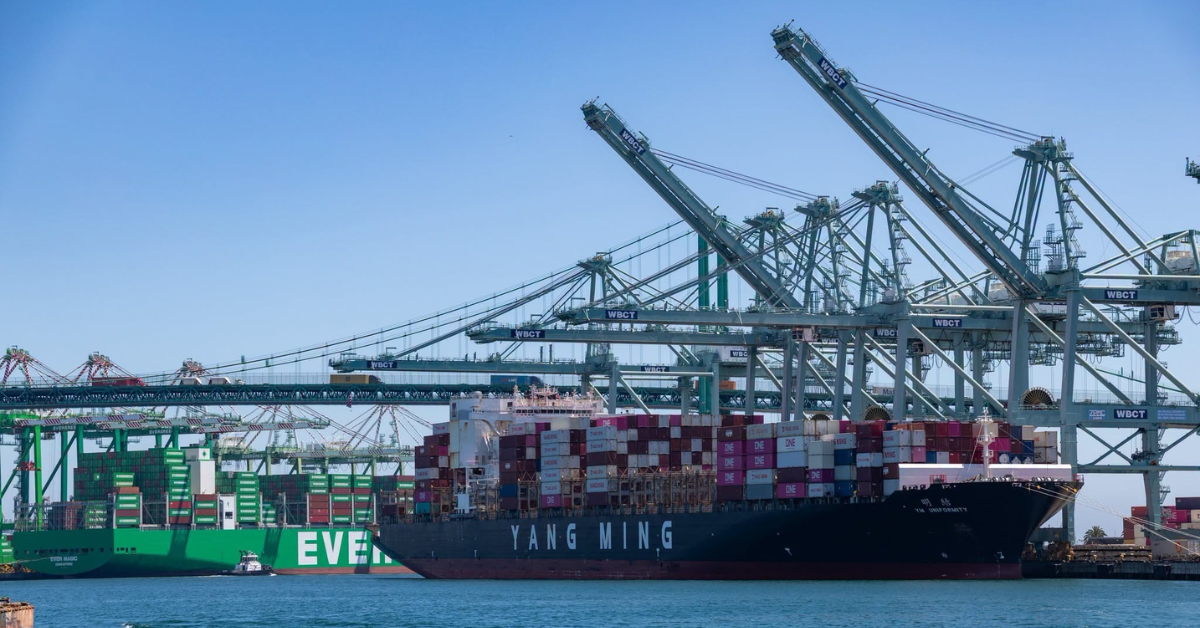
The Port of Los Angeles has proven that decoupling economic growth from environmental harm is not a theoretical aspiration but a measurable, validated reality. By recording its lowest emissions per container in 2025, the port offers a practical blueprint for industrial decarbonization that the rest of the world should study closely. This is not a story about a single port hitting a target; it is empirical evidence that integrated policy, sustained investment, and operational innovation can produce tangible results even as trade volumes rise.
For our readers, researchers, policymakers, and ocean stewards who track 2025 Global Temperature Data Confirms Measurable Warming Trends and the 2025 joins the warmest years on record as ocean heat persists without pause, this inventory provides a rare dose of calibrated good news within a warming ocean. Since 2005, the port has slashed diesel particulate matter by 90% and sulfur oxides by 98%, all while handling 37% more containers. The key metric is emissions per container, which strips away the noise of absolute volume and shows genuine efficiency gains. In 2025 alone, greenhouse gases dropped 3% year-on-year, and nitrogen oxides hit their lowest annual total since tracking began. These are not marginal improvements; they are the product of two decades of deliberate, peer-reviewed policy execution.
What makes this milestone instructive is its specificity. The port's inventory breaks down reductions by source: trucks, cargo-handling equipment, harbor craft, ships, and locomotives. Zero-emission cargo-handling units now comprise 14% of the fleet, up 20% in a single year. Harbor craft running on renewable diesel have cut DPM by 69% since 2005. These are not abstract pledges; they are measured outcomes validated by regional, state, and federal air regulatory agencies. For the ocean data community, this level of granular, longitudinal reporting is exactly the kind of ocean intelligence that enables evidence-based decision-making. It also raises a direct question: can these strategies scale to other major ports, particularly in developing economies where container volume is growing fastest?
The Port of Los Angeles has set a validated benchmark, but the trajectory of Atmospheric CO₂ reaches record highs in 2024, validated by global data reminds us that isolated successes must be replicated at scale to bend the global curve. The port's own leadership acknowledges the work is unfinished, pointing to zero-emission operations as the next horizon. The specific detail to watch is the pace of truck electrification: trucks still account for a disproportionate share of near-shore emissions, and while DPM and NOx from trucks fell 16% and 25% in a single year, the fleet remains overwhelmingly diesel. If the port can maintain that rate of turnover while expanding its green shipping corridors with Asian partners, it will offer the world a repeatable model. If not, this benchmark risks becoming a solitary peak rather than a rising tide.