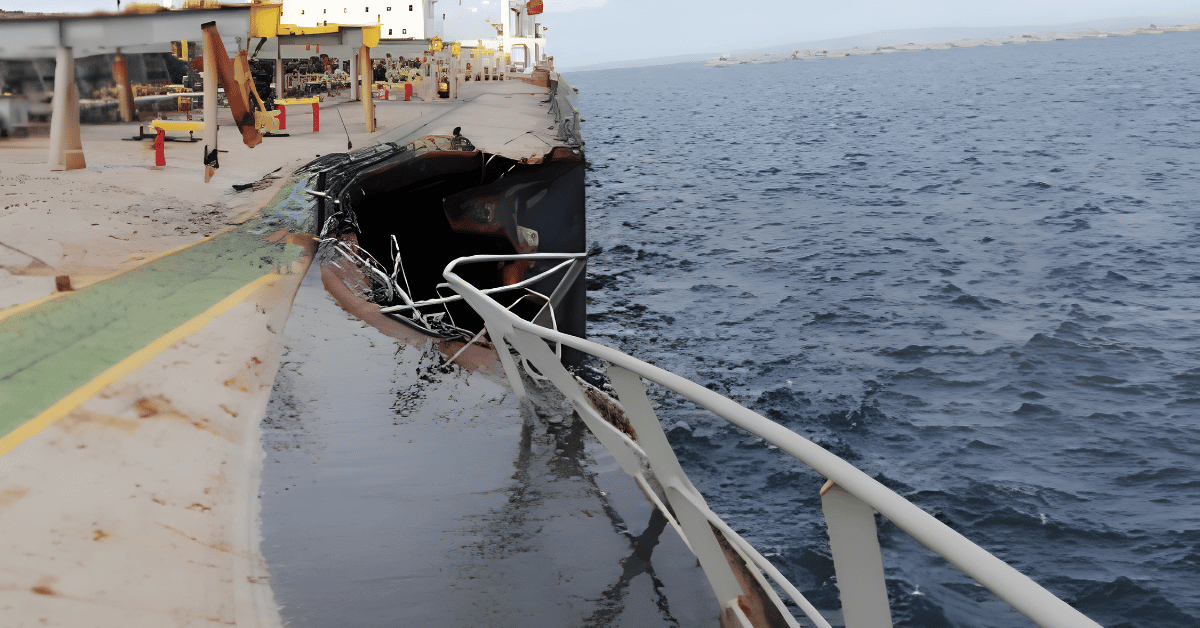
A loaded bulk carrier, Vessel A, was making about 7 knots through a Traffic Separation Scheme in dense fog when it collided with another bulker. The critical detail: an untracked vessel went unnoticed in the busy shipping lane. This is not a story about equipment failure or a rogue wave. It is a story about a gap in the integrated data ecosystem that maritime operators rely on every day. When a ship is not transmitting its position, or when that data is not being validated against other sources in real time, the entire TSS becomes a blind spot. The collision is a direct consequence of treating vessel tracking as a passive tool rather than an active, layered safety system.
This incident sits uncomfortably close to other developments we are watching. The Kiwi Frigate Monitors Sanctions, Enhancing Global Maritime Security Intelligence shows how military assets can fill intelligence gaps in open water, but commercial shipping does not have that luxury. Meanwhile, Optimizing Autonomous Shipping: Data-Driven Navigation for Efficiency and Sustainability points toward a future where navigation decisions are increasingly automated. That future will not be safer if the underlying data streams remain incomplete. And with the Gulf of Aden Sees First Reported Piracy Incident Since August reminding us that maritime threats are persistent, the industry cannot afford to treat any single collision as an isolated event. Every untracked vessel is a variable that no algorithm can account for.
The practical takeaway for our readers is blunt: if you are not cross-referencing AIS data with radar, satellite observations, and peer-reported positions, you are navigating with one eye closed. The fog did not cause this collision; the absence of a validated, measured picture of the surrounding traffic did. The vessel was making 7 knots, which is slow enough to react, but only if you know what to react to. A single untracked contact in a TSS is all it takes to turn a routine transit into a casualty. The question every master and pilot should be asking is not whether their ship is tracked, but whether every ship around them is accounted for in the same integrated, empirical framework.
The specific detail to watch in the aftermath is how investigators determine why that vessel was untracked. Was it a transponder failure, a deliberate shutdown, or a gap in shore-based coverage? The answer will determine whether the fix is technical, regulatory, or cultural. If the industry waits for more mandatory mandates, it will be reacting again. The open question we are left with is simple: how many more collisions must occur before the standard for vessel tracking shifts from optional to absolute? That is the question that deserves an answer, and it is the one we will be watching closely.