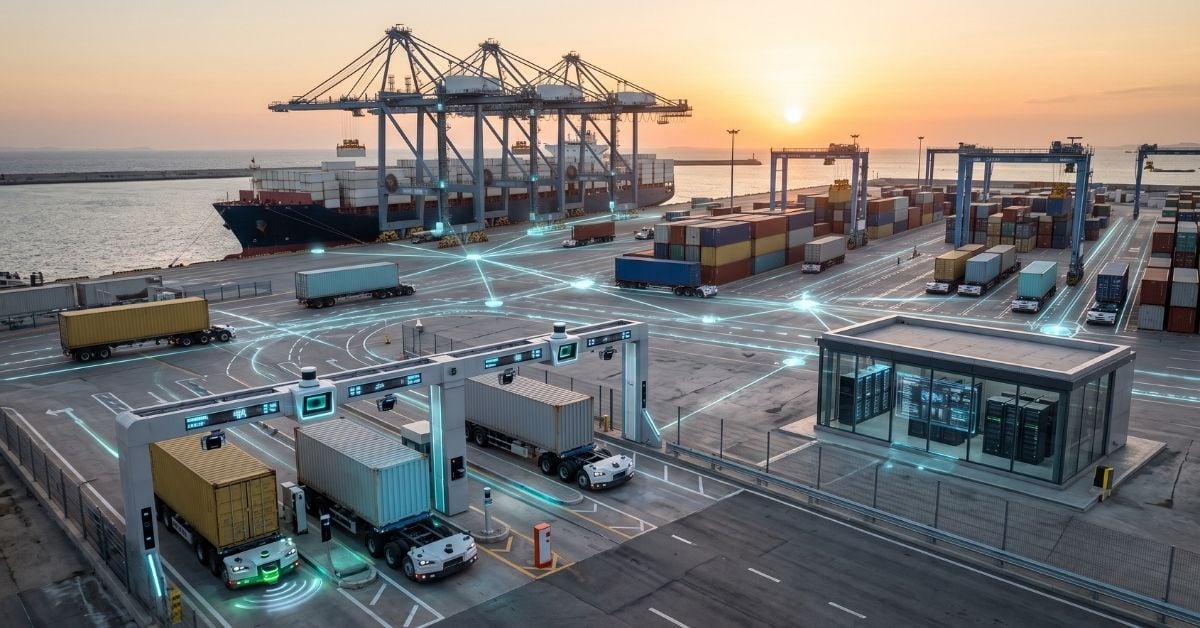
Automated ports are often framed as a triumph of efficiency, a straightforward equation where machines replace human error and throughput curves climb ever upward. The reality, as the analysis of system resilience makes clear, is far more conditional. Productivity gains are not a guaranteed dividend of automation; they are a reward for how thoughtfully we design the interconnected web of sensors, cranes, and logistics software that now governs the modern terminal. A port is only as fast as its slowest data handshake, and its resilience is the true metric we should be watching.
The piece rightly steers us away from the seductive but incomplete narrative of "smart" technology as a silver bullet. Instead, it forces us to confront the operational trilemma: flexibility, dependency, and security. These are not independent attributes to be optimized in a vacuum. A highly flexible system, one that can pivot to any vessel or cargo type, may inadvertently introduce dependencies that create brittle points under stress. Conversely, a system hardened for security might sacrifice the very adaptability that allows it to absorb an unexpected shock, like a sudden weather event or a cyber disruption. For our readers, many of whom are navigating the practicalities of maritime operations, this is not an abstract engineering puzzle. It is the difference between a port that weathers a peak season surge and one that experiences a cascading failure that backs up vessels for days.
This serves as a necessary corrective to the hype cycle. It grounds the conversation in empirical realities, reminding us that a digital twin or a real-time data stream is only as valuable as the resilience of the system it is meant to mirror. We would tell a reader who asks about this: do not measure your automation success solely by the dashboard's uptime or the average moves per hour. Instead, ask the harder questions. What happens when the primary communication link fails? How long does it take to fall back to manual procedures, and can your workforce execute that transition without a lag? The answer to those questions defines your true operational capacity. For a deeper dive into how this plays out in practice, consider how port congestion is being redefined by data sharing and how cybersecurity is becoming a core component of maritime supply chains.
The practical implication is that resilience is not an IT budget line item; it is a leadership mandate. It demands that we invest in redundancy, not just in hardware, but in human expertise and decision-making protocols. The next competitive advantage in shipping will not be the size of a port's cranes, but the robustness of its integrated data ecosystem. The specific point to watch is the industry's response to dependency. As we build systems that are more interconnected, we increase the blast radius of a single point of failure. The port that can measure, calibrate, and validate its own fallback mechanisms under real-world stress will be the one that sets the new standard. For now, the most critical question is not whether your port is automated, but whether it can survive the failure of its own strengths. That is the resilience that will define the next decade of global trade.