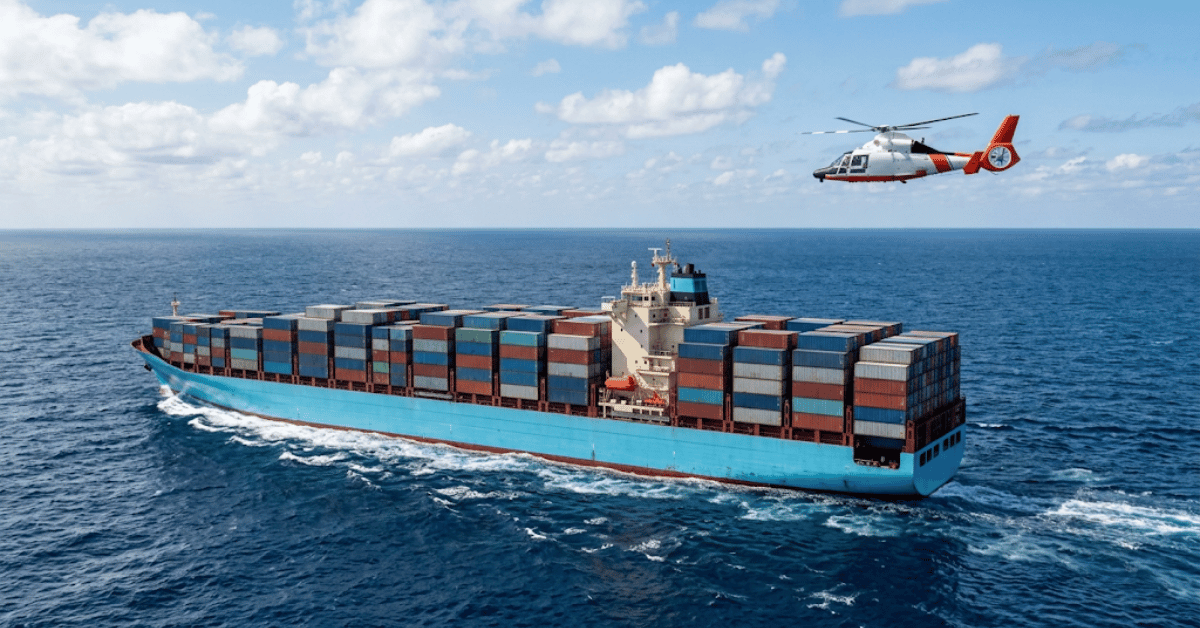
A medevac is, at its core, a controlled act of precision. When the Coast Guard Air Station Borinquen lifted that 46-year-old mariner from the container ship, the operation was not a matter of luck or heroics in the abstract. It was the product of a system that treats response time as a form of medical intervention. For every hour that passes aboard a vessel with a rapidly worsening infection, the margin for error narrows. The crew did not just fly a rescue; they executed a calibrated transfer of risk from a patient to the operational environment. That is the quiet, unglamorous reality of maritime safety: it is a logistical calculation that happens to save lives.
We often talk about ocean intelligence in the context of climate indicators or data ecosystems, but this rescue is a reminder that the same integrated thinking applies to human emergencies. The coordination required to locate, reach, stabilize, and extract a single individual from a moving container ship is not unlike the work of a well-validated sensor network. It depends on real-time communication, peer-reviewed procedures, and crews who understand that their role is to be a reliable link in a chain that starts with a distress call and ends with a hospital bed. For our readers who work in shipping, offshore energy, or maritime logistics, the takeaway is practical: your company's safety culture is only as good as its weakest remote-care pathway. This incident is a case study in why medical response plans must be drilled, not just documented.
What strikes us, though, is the absence of spectacle. There is no alarmist headline here, no dramatic language about the ocean's fury. There is only a professional crew doing what the system was designed to do. That is precisely why this story matters. It is easy to assume that rescue capabilities are a given, that someone will always be there. But that assumption is a luxury built on maintenance schedules, training hours, and the willingness to commit resources to a single person in a vast expanse of water. The infection was the emergency; the response was the infrastructure. We would tell a reader who asked about this: do not wait for the next incident to audit your own emergency protocols. Ask yourself whether your team's medical evacuation plan is as clear as the Coast Guard's execution. The gap between a bad outcome and a good one is rarely the event itself. It is the preparedness that precedes it.
The detail to watch here is the timeline. A rapidly worsening infection does not wait for weather windows or administrative approvals. As autonomous ships and remote monitoring become more common, the question is not whether technology can flag a medical issue, but whether the human response can keep pace. This rescue proves the current system works. The next one may depend on how well we integrate predictive health data into routing decisions. For now, the mariner is safe. The lesson for the rest of us is that in the maritime world, speed is not a luxury. It is a clinical tool.