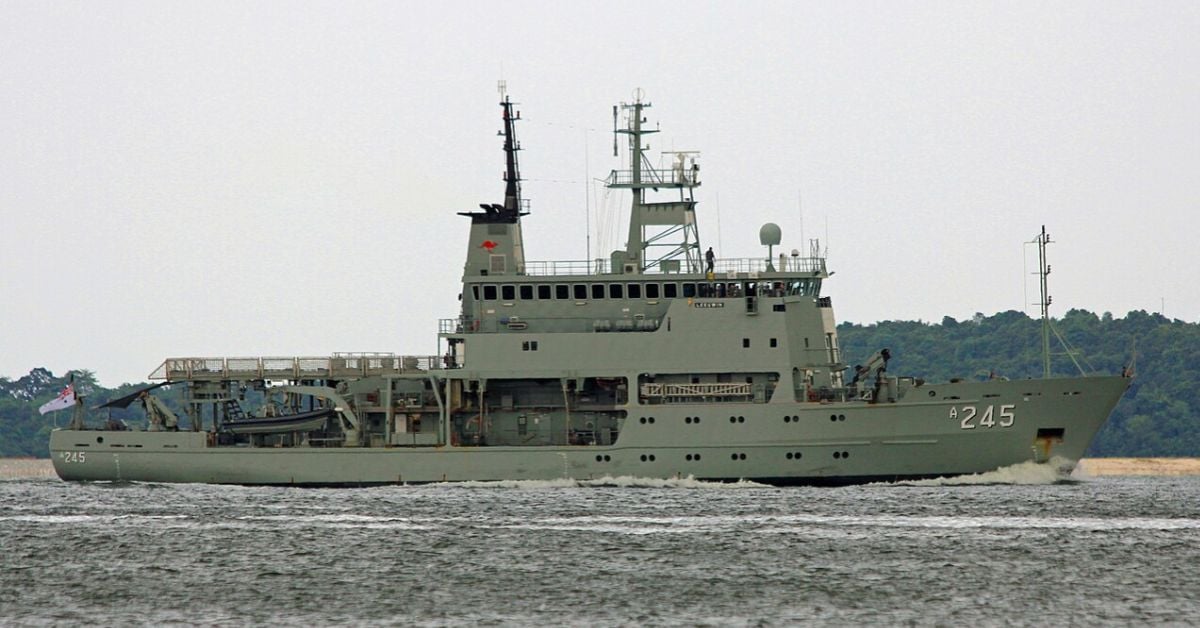
The discovery of hidden cameras aboard HMAS *Leeuwin* is not just a breach of privacy; it is a fundamental failure of institutional trust that demands more than an internal investigation. This incident, in which recording devices were found in female sailors' shower areas aboard a Royal Australian Navy vessel, represents a systemic betrayal that the Australian Defence Force must answer for with concrete, verifiable action, not just statements of condemnation. For our readers, who understand that safety protocols and empirical accountability are the bedrock of any high-stakes operational environment, this event underscores a stark reality: in the absence of rigorous, calibrated oversight, the very systems meant to protect can become instruments of harm.
Senator Jacqui Lambie's parliamentary disclosure that footage may have been uploaded online before discovery elevates this from a shipboard security failure to a potential crisis of ongoing violation. The Defence Department's statement that a recording device was found, without confirming whether it was in a female-only space, leaves a concerning gap in transparency. Vice Admiral Buckley correctly labelled the act as sexual violence and a "despicable betrayal of trust," and the decision to conduct a full fleet-wide audit of all bathrooms is a necessary first step, but it is a reactive calibration, not a preventive one. This pattern of post-incident scrutiny echoes other operational tragedies. Compare this with the Rescue Boat Overturns Off Western Cape Coast, Three Confirmed Dead, where inadequate safety measures cost lives, or the Tanker Engine-Room Fire at Calaca Port Injures Two Crew Members, where a fire exposed critical gaps in onboard emergency protocols. In each case, the immediate response focused on accountability after the fact, rather than the integrated data ecosystems and real-time monitoring that could have prevented the breach.
The practical implication for anyone who serves or relies on maritime institutions is direct: trust must be validated by measurable, longitudinal safeguards, not assumed by rank or tradition. The Defence Minister's assertion that "there is no room for such behaviour" is a necessary moral stance, but it must be backed by empirical changes, anonymous reporting systems, calibrated camera sweeps, and third-party audits of all sensitive spaces across the fleet. The fact that the ship did not sail due to complaints is a small indicator that internal reporting mechanisms may be working, but the fact that the cameras were discovered only after Lambie raised the issue in Parliament suggests those mechanisms are not yet sufficient. A specific takeaway for policy-makers and defence leaders: without peer-reviewed security protocols and an integrated culture of accountability, every vessel remains a potential site of violation, and every sailor's welfare becomes conditional on the integrity of those who operate the systems.
The open question that remains is the fate of the recorded footage. The Defence Department has not confirmed whether the material was uploaded online, nor how many personnel may have been affected. For the female sailors who trusted that their private spaces were secure, the absence of that answer is a continuing injury. Until that data is recovered and the perpetrators are held accountable through a transparent, audited process, the trust that the Australian Defence Force asks of its people remains compromised. The maritime community, from researchers to naval personnel, deserves a system where surveillance is deployed for safety, not exploitation. That standard must be enforced with the same rigour as any climate indicator.