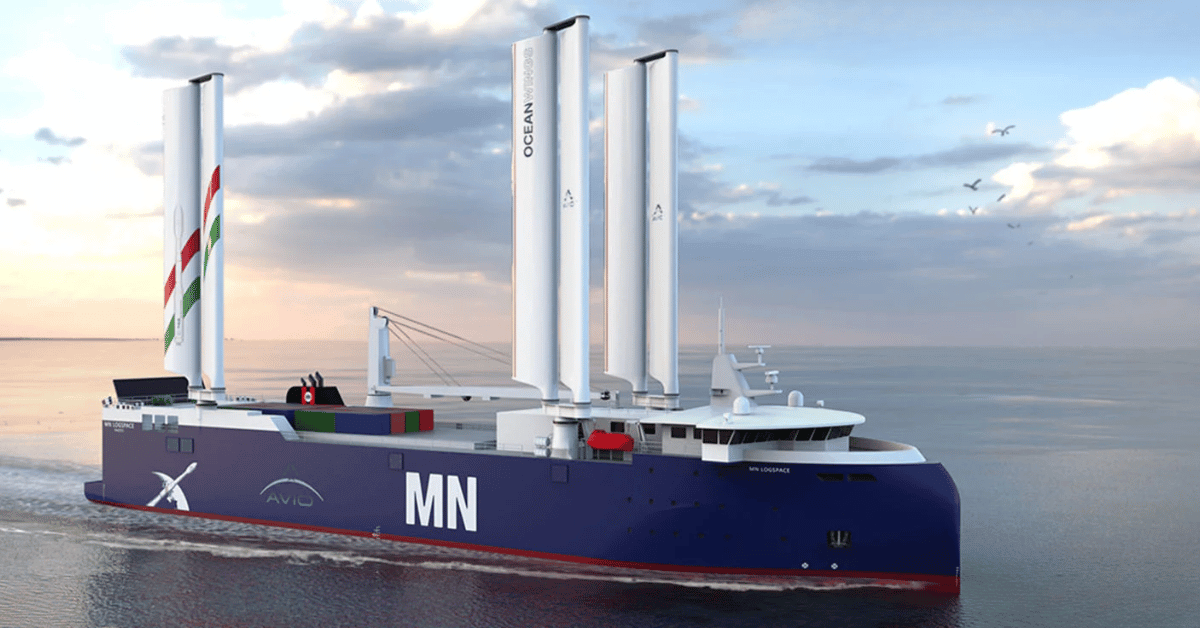
The ocean is the launchpad we have overlooked. While the space industry fixes its gaze on reusable boosters and orbital refueling, a quieter revolution is happening on the water: the design of a new roll-on/roll-off vessel, developed by KNUD E. HANSEN, purpose-built to carry launch vehicles, satellites, and other sensitive space cargo. This is not a cargo ship with a fresh coat of paint. It is a calibrated response to a logistical bottleneck that most mission planners would rather not discuss: how do you move a multi-ton satellite from a cleanroom in California to a launch site in French Guiana without introducing vibration, humidity, or a delay measured in weeks? The answer is not a bigger rocket. It is a better ship.
For our readers, this signals a maturation of the space logistics sector that has been long overdue. For years, the industry has operated on a patchwork of chartered freighters, overland convoys, and custom crating that treats the transport phase as an afterthought. That approach is no longer viable. As launch cadence increases and constellations grow denser, the supply chain becomes the critical path. A vessel designed from the keel up for this specific cargo is not a luxury; it is a form of insurance. We would tell any operator or integrator evaluating their own ground segment: pay attention to the naval architecture here, because it is the first line of defense against the "bent panel" problem. The design phase is where risk is engineered out, not discovered during a pre-launch inspection.
What stands out in this announcement is the implied integration of two worlds that rarely share a vocabulary. The maritime industry speaks in dead freight and port turnarounds; the space industry speaks in contamination control and tip-off rates. A RoRo vessel built for this purpose forces a dialogue between those lexicons. The result is an integrated data ecosystem where the ship itself becomes a sensor, monitoring shock and thermal conditions in real time, feeding metrics back to mission control before the vehicle even reaches the pad. That is ocean intelligence applied to orbital access. It is a practical, measurable advancement, not a conceptual one. For the reader who asks, "What does this mean for me?" the answer is direct: faster integration, lower handling risk, and a supply chain that treats your hardware as the precision instrument it is, not as a container of widgets.
We would flag one detail to watch as this design moves from basic to detailed engineering: the interface with existing port infrastructure. A vessel purpose-built for sensitive cargo only delivers value if it can dock at the right ports and load with minimal external handling. The question is not whether the ship sails, but whether the ports, cranes, and ground crews can match its capability. If KNUD E. HANSEN delivers on this design, the bottleneck shifts from the vessel to the shore side. That is the next constraint to solve. For now, we see this as a clear signal that the industry is moving toward a future where the ocean and orbit are not competing frontiers, but two legs of the same integrated journey. The takeaway: the next time you track a satellite's ride to space, remember that its voyage may have started with a hull cutting through the sea, not a flame cutting through the sky.