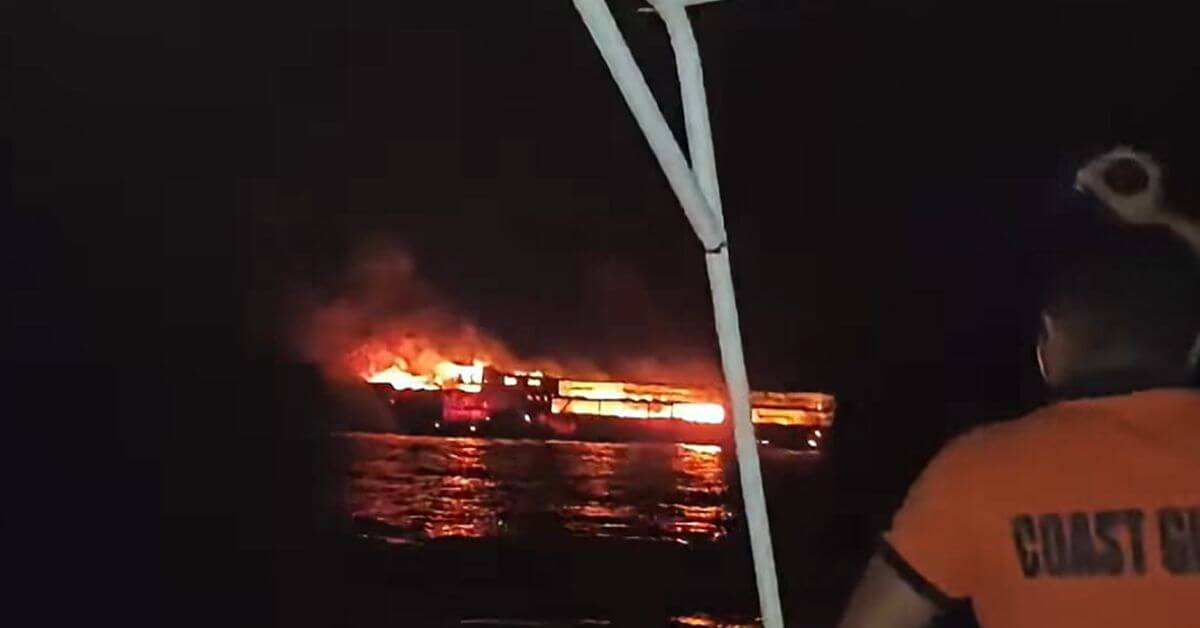
The MV *June Aster* was less than an hour into its voyage from Manila to Coron when fire erupted at 6:45 p.m. on Sept. 9. As search operations continue for dozens still missing off the Philippines, this tragedy joins a pattern of maritime incidents that demand more than sympathy, they demand empirical scrutiny. Compare this to the Cargo Ship Fire Prompts Evacuation Near Mykonos; Incident Under Investigation just weeks earlier, where all 29 crew evacuated safely, or the Fatal Attack on Cargo Ship Highlights Black Sea Shipping Risks, which underscores how geopolitical hazards compound operational ones. Each event is a data point in a system we have not yet fully calibrated.
Our take is this: the ocean does not forgive gaps in preparedness. The *June Aster* fire is not an isolated anomaly but a recurring signal within a global maritime transport network that remains dangerously opaque. We know from validated incident reports that fire remains one of the leading causes of loss at sea, yet the industry still lacks a truly integrated data ecosystem for real-time risk assessment. When a vessel like this loses containment of a fire, the consequences cascade from a localized emergency to a humanitarian crisis, and that crisis becomes a data void. The number of missing persons is still unconfirmed, which tells us that the systems for tracking crew and passenger manifests, vessel status, and emergency response timelines are not yet interoperable across jurisdictions.
For our readers, researchers, policymakers, and maritime professionals, this is a call to move beyond reactive reporting. We should be asking what longitudinal, peer-reviewed data exists on fire suppression systems in passenger ferries operating in archipelagic nations. We should be examining whether climate indicators like rising sea surface temperatures are altering the behavior of onboard fires in measurable ways. The Bulk Carrier Freed After Prolonged Grounding Near Gladstone, Australia incident, while a different class of event, reinforces the same point: when vessels lose operational integrity, the response depends on how well the ocean intelligence infrastructure connects the ship, the coastal state, and the salvage network. In the Philippines, connectivity between regional ports and national emergency services remains a variable we cannot yet quantify with confidence.
What would we tell a reader who asks us about this? That understanding drives protection, but only if we measure what we claim to protect. The specific consequence to watch is whether the Philippine Coast Guard releases a calibrated timeline of the fire's progression and the crew's response. Without that empirical record, the *June Aster* becomes another tragedy filed under "unknown cause", and that is a failure of ocean intelligence we cannot afford to repeat.