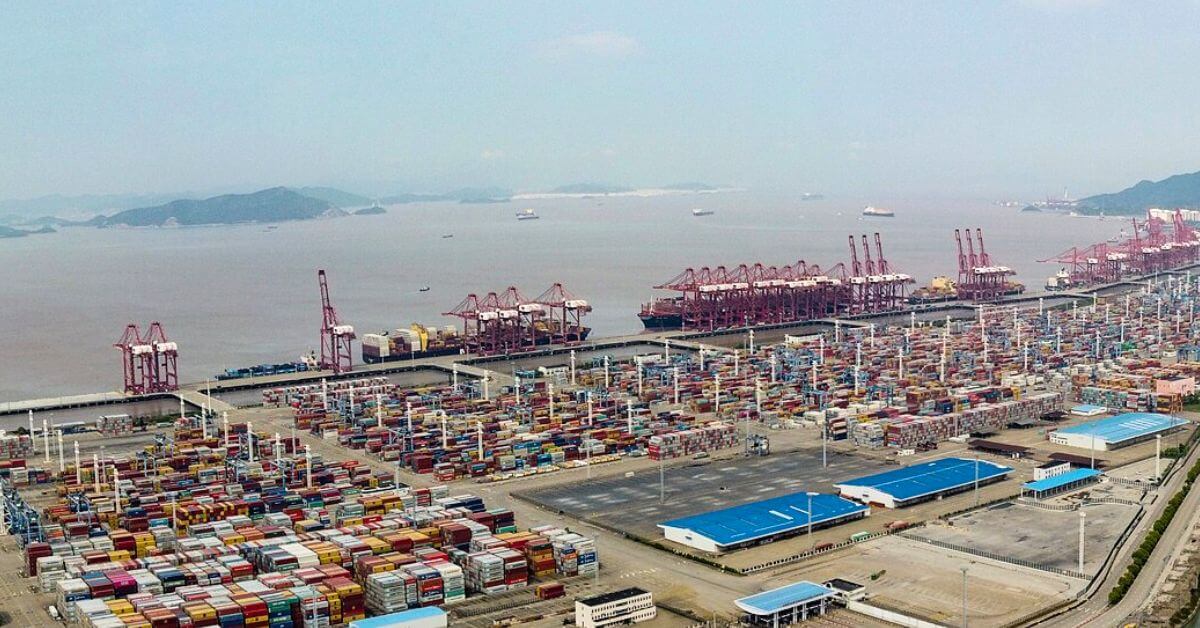
The numbers are straightforward, and the implication is not. Ningbo-Zhoushan's 22.90 million TEU in the first half of 2026, an 8.8% year-on-year increase, places it ahead of Singapore and second globally. That is not a rounding error; it is a structural signal. While the headline focuses on the ranking, the more useful reading is what this capacity represents: an integrated data ecosystem that lets a port complex move with a precision that others are still trying to calibrate. Meanwhile, Paradip Port Designated a Mega Port, Anchors Eastern India's Maritime Growth reminds us that the race is not just about volume but about who can convert infrastructure into strategic leverage.
The practical takeaway for our readers is not that Singapore has been beaten. It is that the margin of competition has shifted. Ningbo-Zhoushan's growth is not accidental; it is the product of a coordinated approach to port integration that links berth productivity, hinterland connectivity, and real-time cargo tracking into a single operational picture. The port is not merely bigger; it is more empirically organized. And that matters because the next phase of maritime trade will not be won by the largest facility alone, but by the one that can validate its performance with measurable, longitudinal data. Record Port Activity Reflects Rising Chinese Exports Amid Trade Uncertainty reinforces this: the system is absorbing pressure, not just handling it.
We would tell a reader who asks about this that the ranking is a lagging indicator. What deserves attention is the operational rhythm behind the container count. Ningbo-Zhoushan is not waiting for demand; it is building the kind of ocean intelligence that turns throughput into a competitive advantage. The port's ability to sustain an 8.8% increase during a period of trade uncertainty suggests that its growth is less about cyclical demand and more about a calibrated expansion of capacity and efficiency. That is a different conversation than the usual "who is number one" narrative.
The open question is whether other global hubs will respond with similar integration or continue to rely on legacy processes. For now, the concrete point to watch is whether Ningbo-Zhoushan can hold this pace through the second half of the year, when export patterns often shift. If it does, the second-place ranking will look less like a milestone and more like a baseline. The takeaway worth quoting: "Ningbo-Zhoushan is not just moving more containers; it is moving them with a level of operational precision that turns volume into a strategic asset." That is the standard the rest of the industry now has to measure against.