Next-Gen Digital Masts Enhance Submarine Ocean Intelligence
World Data Ocean emphasizes the pivotal role of advanced technology in enhancing ocean intelligence.
·6 min read·Marine Insight
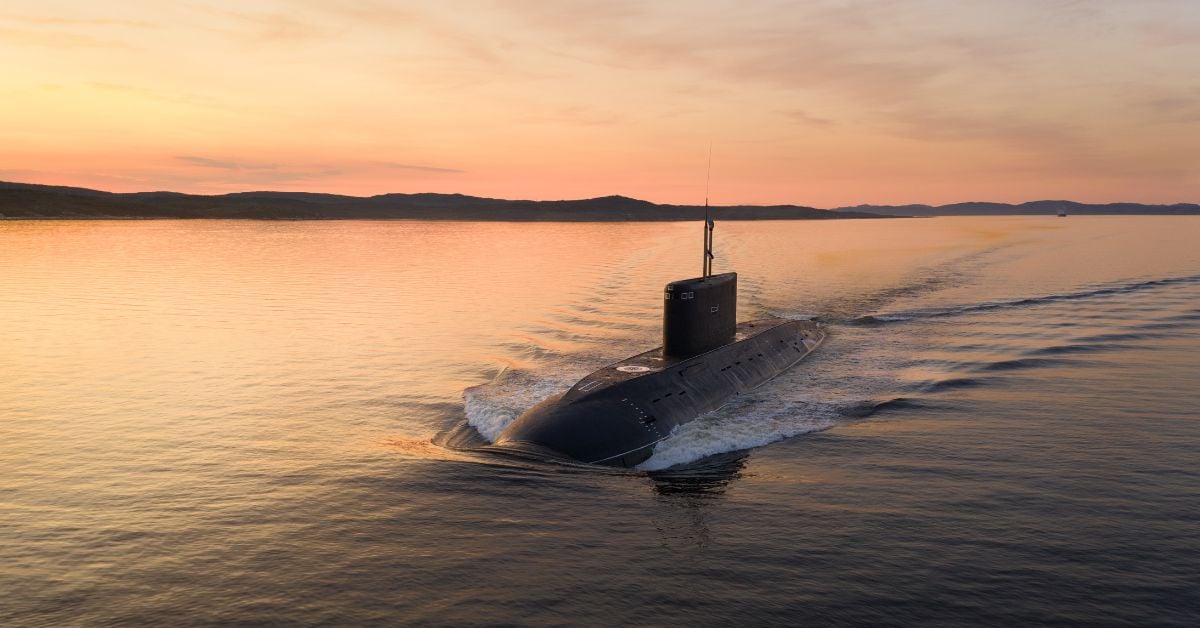
Image for representation purposes only
The U.S. Navy announced a $139 million agreement with L3Harris for the acquisition of low-profile submarine masts enabling the Virginia- class and Columbia-class subs to conduct operations in contested waters without letting adversaries know their location.
The photonic masts use telescoping arms to transmit HD visible and infrared imaging, along with providing 360-degree panoramic views while integrating with other systems like navigation, sonar and electronic support.
This would enhance situational awareness and surveillance capabilities of the US naval submarines in the Indo-Pacific waters, the Arctic region and the North Atlantic Ocean, where Russian and Chinese vessels also operate.
A submarine’s strength is its ability to remain hidden and undetected at all times, and the low-profile masts are being integrated to do just that.
Raising a mast at the periscope depth leads to vulnerabilities, as a submarine’s visual signatures can be detected at that time, along with wake effects and electro-optics, which can reveal its position.
However, the new masts would do away with these weaknesses. They would allow for quick decision-making by the crew members in the submarine and reduce exposure time above the surface, enabling commanders to attain visual intelligence quickly and then return to deeper water where acoustic signatures cannot be easily identified.
Virginia-class attack submarines, which are built for anti-submarine and anti-surface warfare, intelligence gathering, special missions and land attack capabilities, could enhance their combat abilities.
For instance, in a potential naval conflict with China or Russia, passive sonar cannot confirm if an object is another warship, debris or a commercial vessel. In this case, a digital mast helps the crew identify the target by providing visual imagery in real time while keeping the submarine’s location hidden from the enemy vessels’ patrol aircraft and satellite networks.
Conversely, for the Columbia-class ballistic missile submarines, which, according to the Navy, would form the most survivable leg of the U.S. nuclear triad through the 2080’s, the photonic masts serve a defensive purpose.
The strength of the Columbia-class submarines lies not in forward attack but in conducting patrols without revealing themselves to the enemy detection networks. In this case, low-profile masts would allow its crew to monitor the conditions at the surface, navigate hazards and assess its surroundings while exposing the bare minimum equipment for the shortest possible duration.
By improving situational awareness without compromising stealth, this $139 million investment would ensure that both attack and strategic deterrent fleets of the US Navy can maintain their operational advantage.