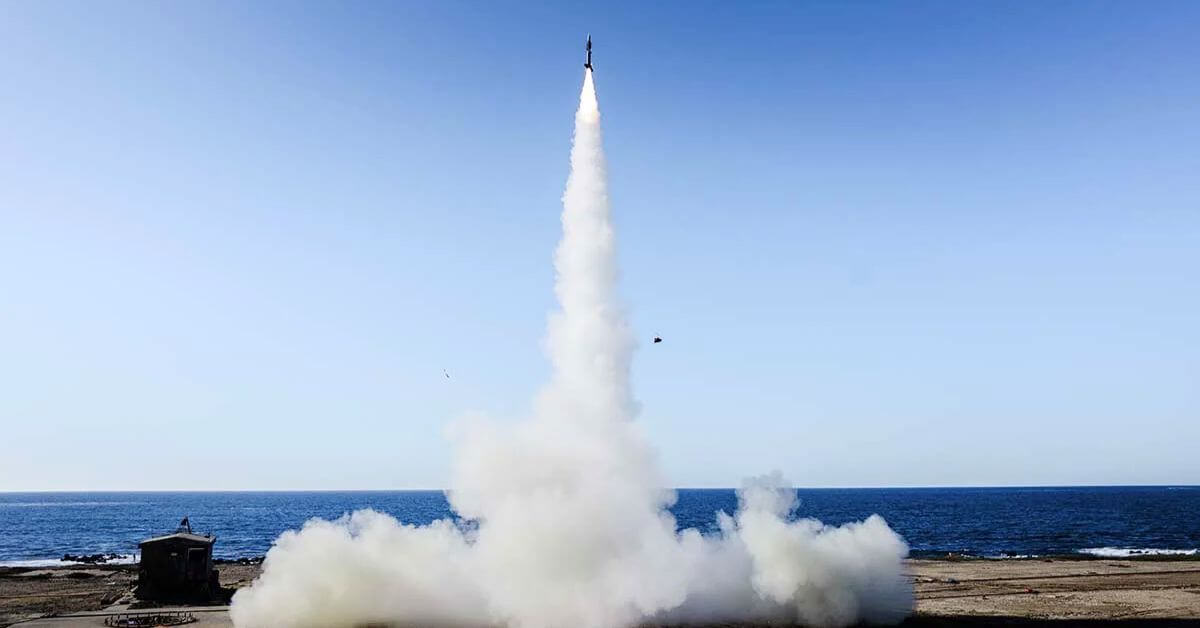
The U.S. Navy's decision to commit $200 million for the production of the Blackbeard hypersonic strike missile, as reported by Marine Insight, is not just another defense contract. It is a signal that hypersonic technology has moved from the experimental edge into the operational mainstream. Castelion's mandate to manufacture, assemble, test, and deliver an initial batch represents a critical vote of confidence in a company that is still scaling its industrial base. For our readers tracking the intersection of maritime strategy and emerging tech, this is where the abstract promise of hypersonics meets the hard reality of production lines and supply chains.
We see this as a validation of a broader principle: deterrence is only as credible as the industrial capacity behind it. A missile that exists only in a lab or on a test range does not change the strategic calculus. What matters is the ability to produce, deploy, and maintain these systems at a meaningful scale. The Navy's investment does not just fund a single batch; it creates the footing for a sustained production run. This is the difference between demonstrating a capability and fielding a force. For a community that has long heard about the promise of hypersonic speeds, this order is the moment when the conversation shifts from physics to production engineering. It is also a reminder that the undersea and surface fleets are being redesigned around a new generation of stand-off and strike capabilities, where speed and maneuverability are the defining variables.
Our honest take is that this development carries implications that extend well beyond the program itself. For researchers and policy analysts, the question is no longer whether the United States can build hypersonic weapons, but whether it can build enough of them, with the necessary quality, to sustain a credible posture across multiple theaters. For students and ocean enthusiasts, the connection may seem remote, but it is direct: the ocean is the domain where these systems will operate, and its strategic importance is being reinforced with every new contract. The challenges of testing, validating, and integrating such missiles into naval platforms are the same challenges that define ocean intelligence and data integration. We would tell a reader who asks about this news that the real story is not the missile itself, but the industrial and operational rhythm being established.
The specific detail to watch is the pace of delivery. Castelion's ability to meet the Navy's schedule will set a precedent for how quickly other hypersonic programs can transition from development to deployment. A single delayed batch can ripple through the entire force structure, affecting everything from training schedules to forward deployment plans. The takeaway here is clear: this contract is a benchmark for whether the defense industrial base can keep pace with the strategic urgency. We will be watching the delivery milestones, because in this domain, speed is not just a feature of the weapon, it is the measure of the entire enterprise.