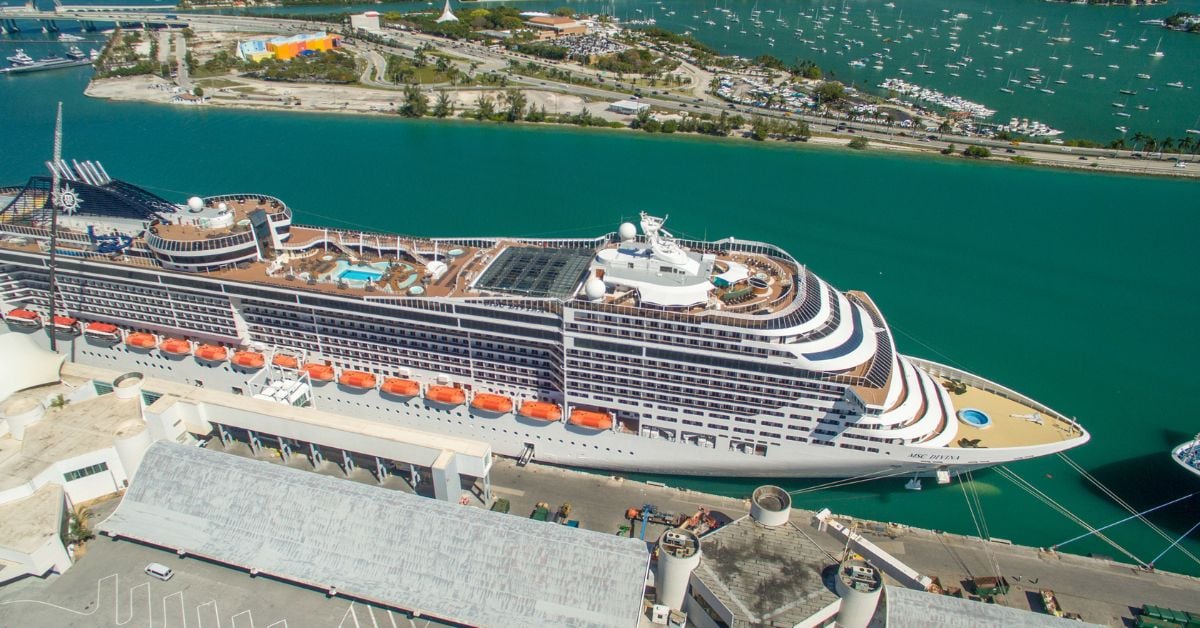
The decision to dock the Costa Serena in Nagoya to house 4,000 athletes for the Asian Games 2026 is a practical, if unconventional, solution to the perennial challenge of urban event accommodation. Rather than constructing temporary housing that would sit vacant after the closing ceremony, Nagoya has looked to the sea for a mobile, scalable answer. This is not a gimmick; it is a calculated deployment of existing maritime assets to meet a pressing logistical need. For our readers, this raises a question that extends beyond the sporting calendar: if we can integrate cruise vessels into the built environment of a major event, why are we not more aggressively considering similar models for disaster response or long-term housing stress? The same logic that makes a ship a sensible hotel here applies to other scenarios where land-based infrastructure is slow to build or prohibitively expensive.
This move also speaks to a broader truth about ocean intelligence that we have long championed. The Costa Serena is not just a floating dormitory; it is a self-contained platform with its own power, water treatment, and waste management systems. When we track invasive species in Port Phillip Bay or evaluate international master's programs in oceanography, we are engaging with the ocean as a living system and a resource. Here, the ship becomes a temporary extension of the city, and its presence forces a conversation about how we measure the impact of such deployments. We should be asking what the vessel's discharge protocols are during its stay, how its ballast water is managed in a region already sensitive to ecological disruption, and whether the port infrastructure can handle the increased traffic without compromising marine habitats. These are not afterthoughts; they are the empirical details that separate a well-executed plan from a public relations stunt.
The timing is also worth noting. With the Asian Games opening on Saturday, the integration of the cruise ship is a stress test for rapid, coordinated logistics. It is a live demonstration that our maritime infrastructure can be repurposed with the same agility we expect from our digital systems. For those of us who follow the Strait of Hormuz tensions or the operational challenges of global shipping, this is a welcome reminder that civilian maritime assets can be leveraged for public good. The real takeaway here is not that a ship is being used as a hotel, but that we are beginning to treat the ocean as a flexible, responsive layer of our shared infrastructure. The question we should be watching is whether the port authority and the cruise operator have published transparent, measurable data on air quality, noise, and water quality during the event. If they have, this could serve as a replicable model for other host cities. If they have not, the silence will be as telling as the data itself.