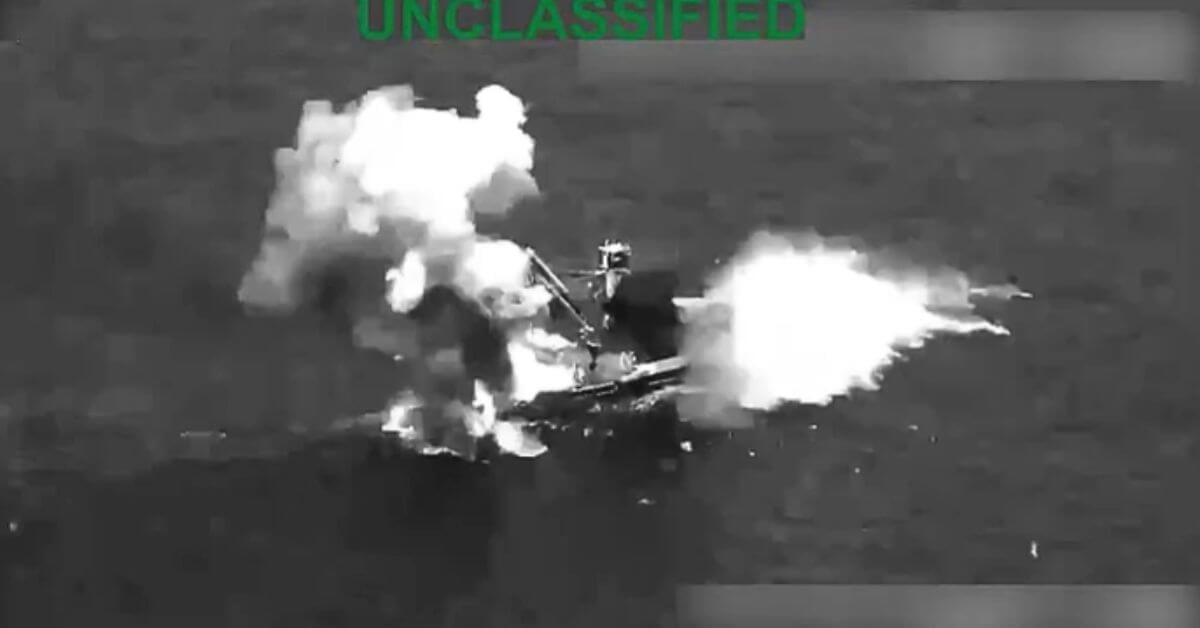
In the Eastern Pacific, a floating refueling station is no longer just a logistical asset, it has become a weapon in the drug trade. U.S. Southern Command recently disabled a fuel-support vessel linked to Los Choneros, a criminal organization operating across maritime corridors. This operation, reported by Marine Insight, underscores a critical reality for anyone tracking ocean security: the same waters that sustain global commerce also sustain illicit networks. For our readers, this is not a distant military bulletin. It is a measurable indicator of how ocean intelligence, the integration of real-time data, satellite monitoring, and naval assets, is being calibrated to disrupt threats that most people never see.
We have long argued that the ocean is not a void to be policed in isolation. It is an integrated data ecosystem, and this interdiction is a practical example of that principle in action. The vessel was not a submarine or a speedboat; it was a floating fuel depot, a slow-moving piece of infrastructure that enables faster traffickers to move product north. By targeting the refueling link, SOUTHCOM applied a longitudinal strategy: choke the supply chain at its weakest point. This is not a sensational victory. It is a validated, empirical approach to maritime security that relies on persistent observation and calibrated response. The takeaway for researchers and policymakers is clear: ocean stewardship extends beyond climate indicators. It includes the governance of every vessel, every buoy, and every fuel tanker that moves through these waters.
What does this mean in practical terms for our audience? If you are a student studying ocean policy, this case is a textbook example of how empirical data and operational action converge. If you are a researcher working on marine domain awareness, this event validates the need for integrated surveillance systems that track not just fish stocks or temperature anomalies, but anomalous vessel behavior. The ocean is not a passive resource. It is a highway for both legitimate trade and criminal enterprise. The challenge is not simply to react to seizures, but to build predictive models that flag support vessels before they become threats. That requires peer-reviewed data sharing across agencies and nations, something World Data Ocean advocates for as a core principle.
One specific consequence to watch is how this operation affects the operational calculus of Los Choneros. Will they shift to smaller, more distributed refueling methods, or will they invest in harder-to-detect assets? The answer will reveal whether our current ocean intelligence systems are reactive or truly forward-thinking. For now, the sinking of this vessel is a concrete data point. The next question is whether we are measuring the right variables to stay ahead.