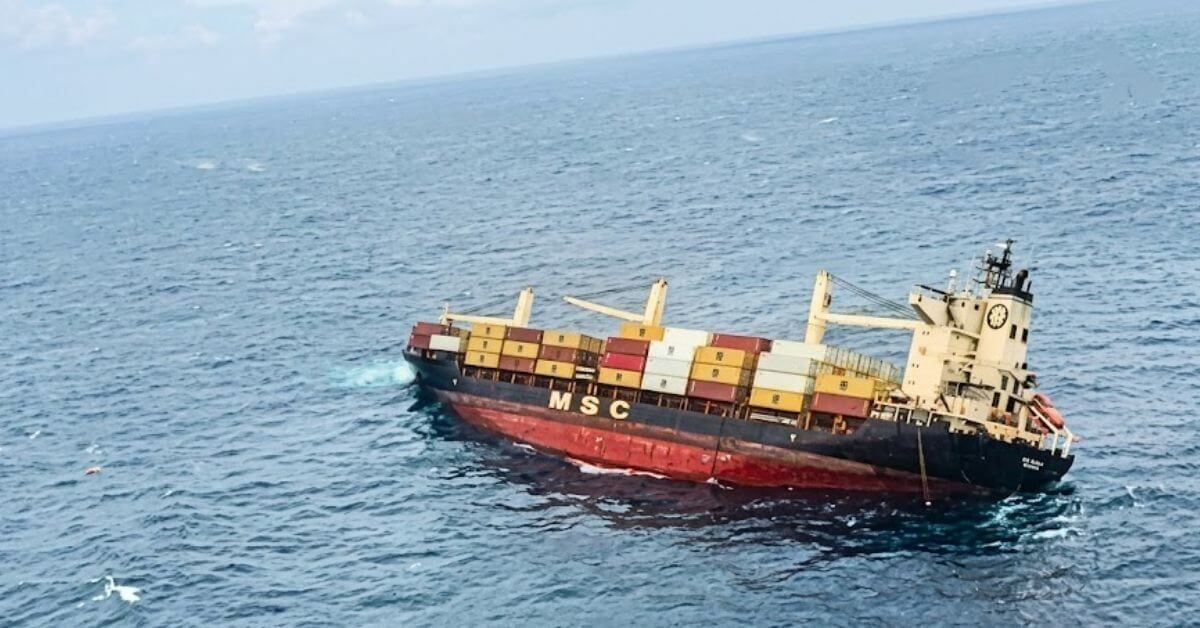
A year after the MSC ELSA-3 went down off the Keralam coast, the story has not ended. It has, in fact, become a longer and more instructive chapter in the annals of marine pollution. The persistence of nurdles along India's shoreline is not a surprise to those who track the behavior of plastic in the marine environment, but it is a stark confirmation that the timeline for recovery is measured in years, not months. When a container ship spills its cargo of plastic pellets, the initial slick is only the opening scene. What follows is a slow, grinding redistribution of a persistent pollutant that does not degrade; it simply moves.
For our readers, this is not a distant headline about a single incident. It is a case study in the gap between the visibility of a spill and the invisibility of its long-term consequences. The nurdles that remain are not just a problem for the immediate coastline; they are an ongoing source of microplastic generation. Each wave, each tide, and each bout of sunlight works to fragment these pellets further, integrating them into the sediment and the food web. This is where the concept of ocean intelligence becomes critical. We cannot manage what we do not measure, and the measurement here requires a sustained, longitudinal commitment that extends far beyond the initial emergency response. The real story is not the sinking; it is the continuous, unglamorous work of monitoring and understanding how these materials behave over time.
If a reader asked us what this means in practical terms, we would point to the need for a shift in how we assess risk. This incident is a clear indicator that maritime transport, for all its efficiency, carries a hidden liability that is not priced into the cargo. The takeaway is blunt: the current framework of liability and cleanup is designed for the acute phase, not the chronic reality. We would tell that reader to watch for the data that emerges in the coming years, specifically the studies on bioaccumulation in local species and the movement of these pellets through the littoral cell. The ongoing presence of the nurdles is a direct challenge to the idea that a spill is an event with a finite end date. It is a reminder that climate indicators are not just about temperature and acidity; they are also about the biological uptake of legacy pollutants.
The specific detail to watch is the rate at which these pellets are found in the guts of marine organisms along the Keralam coast. If that rate rises, we are not dealing with a cleanup problem but a food chain problem. That is the concrete point. The nurdles are not just sitting on the sand; they are entering a system that ultimately leads back to human consumption. The persistence of this contamination is the most important fact, and it demands a response that is as patient and relentless as the pollution itself. The ocean will not offer a quick pardon, and neither should we.