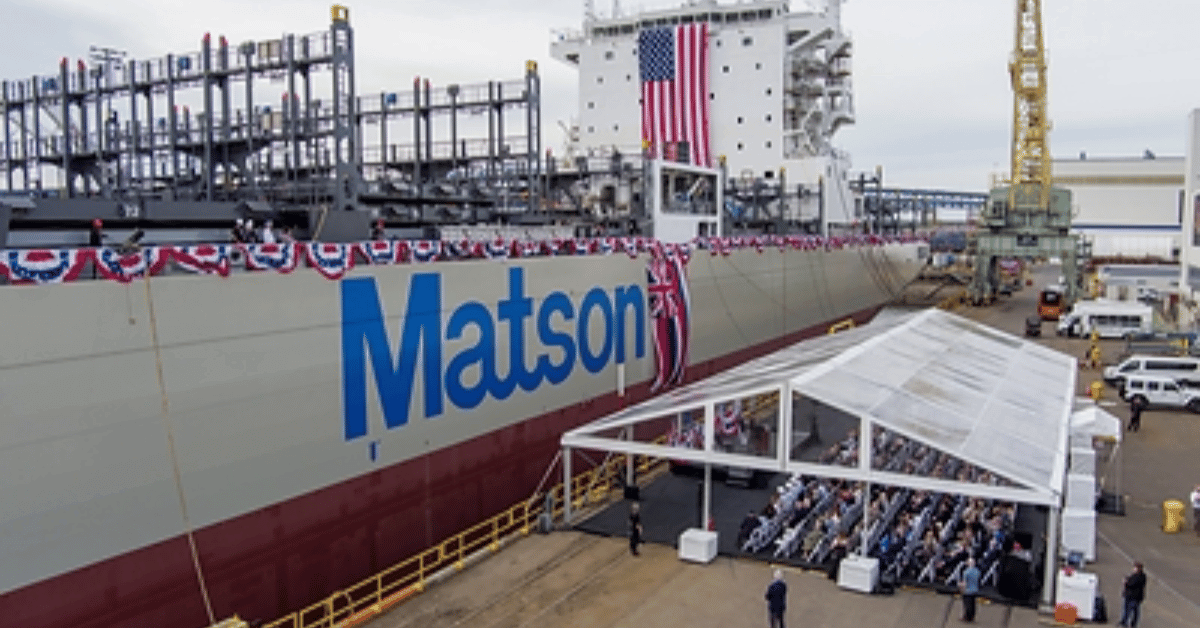
The christening of *Makua* marks a tangible, measurable step forward in fleet modernisation, not a symbolic gesture, but a $1 billion investment in vessels built to operate with immediate efficiency and future fuel flexibility. This is the kind of empirical progress that matters when the maritime industry must reconcile operational demand with environmental responsibility.
Matson's three new Aloha Class containerships, the first of which was christened at Hanwha Philly Shipyard, are being delivered with dual-fuel engines that are LNG-ready from the outset. This is a departure from the retrofit path taken by the earlier *Daniel K. Inouye* and *Kaimana Hila*, and it reflects a more integrated approach to vessel design. The ships will replace three older vessels, improving operating efficiency and increasing capacity across Matson's Hawaii and China-Long Beach Express services. Crucially, the engine technology is paired with a fuel-efficient hull, environmentally safe double hulls, and freshwater ballast systems, all validated, measurable features that reduce environmental impact without relying on hypothetical future fuels. This contrasts with the concrete but supply-chain-dependent promise of green ammonia, as seen in the recent ship-to-ship bunkering milestone 1 000 Metric Tons of Green Ammonia Delivered in First Ship-to-Ship Bunkering, where the fuel itself is proven but its bunkering infrastructure remains nascent. Matson's approach is more immediate: LNG infrastructure is operational, and the vessel can also run on conventional fuel. It is a calibrated risk, not a leap into the unknown.
The programme also reinforces the value of domestic shipbuilding. Hanwha Philly Shipyard is constructing these Jones Act-compliant vessels in the U.S., supporting hundreds of shipyard jobs and over 2,500 mariner career opportunities per ship. This is not incidental, it is a deliberate signal about supply chain resilience and workforce development. Pair this with the measured, robotic integration underway at Fincantieri Fincantieri commits nearly €100 million to robotic shipyard intelligence, and a pattern emerges: the most credible fleet modernisation programmes combine fuel flexibility with production-side innovation. Matson's billion-dollar outlay is not about being first; it is about being repeatable.
What matters now is the operational data. *Makua* is scheduled for delivery in the first quarter of 2027, with two sister ships, *Malama* and *Makena*, following through 2028. The real test will be how their dual-fuel engines perform under real-world Pacific transit conditions, and whether the LNG-ready design translates into measurable reductions in emissions across the full voyage cycle. That is the metric that will determine whether this class becomes a template or a one-off. The names themselves, meaning parent, to care for, and abundance, carry a weight that demands results, not rhetoric.