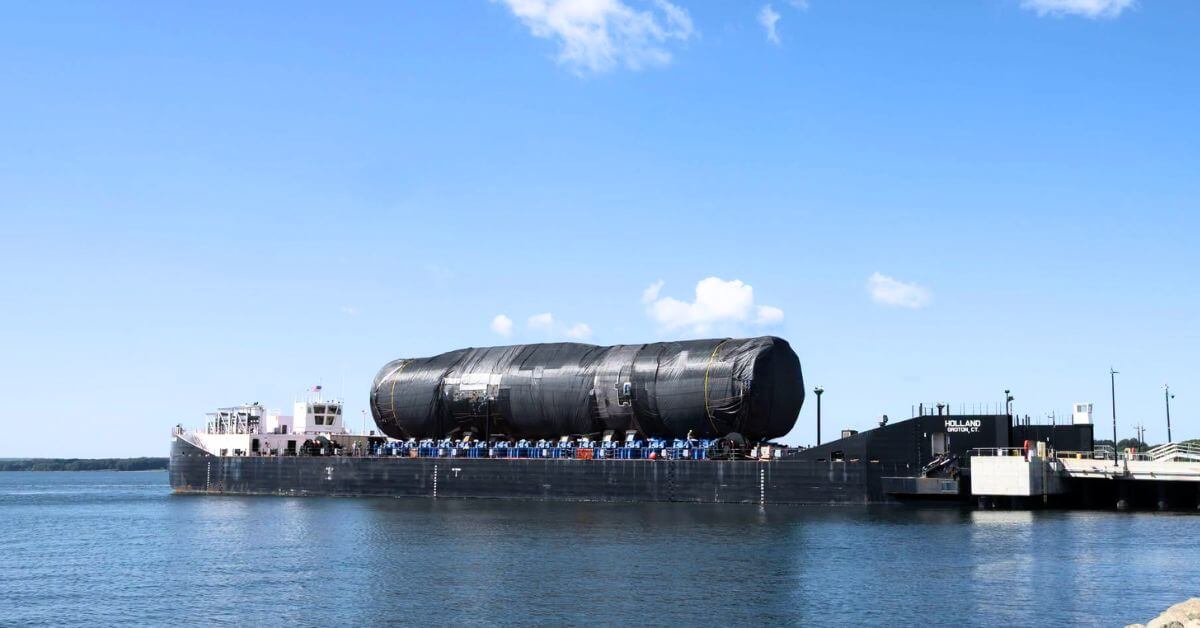
The movement of the 184-foot payload module from Quonset Point to Groton is more than a logistical milestone; it is a statement of industrial intent. The Virginia-Class program has long been the backbone of American undersea dominance, and the integration of this section into the USS Arizona represents a deliberate calibration of firepower and flexibility. For those of us who track naval developments, the barge trip is the visible symptom of a deeper shift: the Navy is no longer just building submarines, it is building a modular architecture designed to outpace peer threats. The fact that this module arrived intact and on schedule is a measurable indicator that the industrial base can deliver when the stakes are clearly defined.
Our read on this is straightforward: this is not a headline about a component, it is a signal about capacity. The Virginia-Payload Module (VPM) transforms a fast-attack submarine into a multi-mission platform capable of striking land targets, deploying unmanned vehicles, and executing special operations. For the reader who watches these programs, the practical consequence is that the undersea force is becoming more lethal per hull. But there is a second layer worth noting. The collaboration between Quonset Point and Electric Boat is an integrated data ecosystem of its own, one where logistics, engineering, and shipyard labor must align in real-time. Peer-reviewed performance metrics from past Virginia-class builds suggest that this kind of modular delivery reduces time-to-deploy, which is exactly what the Pacific theater demands. We would tell a reader who asks, "What should I make of this?" that the module is proof that the U.S. industrial base can sustain a complex build, but the open question is whether it can scale this precision across multiple yards simultaneously.
The honest tension here is between innovation and throughput. The module is a validated piece of engineering, but it is one of several that must be delivered in sequence to maintain the submarine force's numbers. The Navy's own climate indicators for shipbuilding health are less about the single move and more about the rhythm of these transfers. If the next two modules follow the same calibrated path, the USS Arizona will be a formidable asset. What we are watching is whether the process remains empirical or becomes strained under concurrent production demands. Our take is that the real test is not the module itself, but the repeatability of this logistics chain under pressure. The detail to watch is the schedule for the next section, because that will tell us if this was a well-executed one-off or the new standard. For now, the concrete point is this: the Arizona is closer to sea trials, and every day that module sits in Groton instead of the open ocean is a day the fleet is one step closer to a more flexible strike option. That is the metric that matters.