Former U.S. Navy Sailors Plead Guilty To Selling Fentanyl-Laced Pills Aboard Aircraft Carrier USS Abraham Lincoln
Our take
The recent guilty pleas of two former U.S. Navy sailors for distributing fentanyl-laced counterfeit pills aboard the USS Abraham Lincoln represent a concerning intersection of national security, public health, and internal naval discipline. This incident highlights vulnerabilities within the operational environment of a major U.S. naval asset, raising questions about drug interdiction protocols and the potential for broader systemic issues within the armed forces. The scale of the operation, occurring within a confined and highly regulated space like an aircraft carrier, underscores the challenges of maintaining a drug-free environment even amongst trained personnel. This situation is not isolated; the U.S. Navy has recently been engaged in augmenting southern border security [U.S. Navy Augments Southern Border Security & Interdiction Efforts With USS St. Louis’ Deployment], demonstrating a focus on external threats while simultaneously confronting internal challenges. Furthermore, the ongoing investment in advanced naval assets like the future aircraft carrier [U.S. Navy Signs $336 Million Contract With HII For 100,000 Ton Future Aircraft Carrier] underscores the critical need for robust internal security measures to protect operational readiness and personnel well-being.
The presence of fentanyl, a synthetic opioid significantly more potent than morphine, introduces an especially grave element. The risk of accidental overdose and the potential for widespread harm among the ship’s crew are substantial. The fact that these pills were falsely marketed as oxycodone further complicates the situation, suggesting a deliberate attempt to deceive and exploit individuals struggling with pain management or addiction. This case echoes broader concerns regarding the opioid crisis within the United States, demonstrating how it can penetrate even the most disciplined environments. The incident also raises questions about the effectiveness of current drug screening and prevention programs within the Navy, and whether they are adequately calibrated to detect and deter the trafficking of increasingly sophisticated synthetic drugs. The reported incident involving an Iranian claim of capturing a U.S. Navy submarine [Iran Claims It Captured U.S. Navy Submarine Near Hormuz That Can Autonomously Conduct Missions For 10 Days], while unrelated in subject matter, highlights the continuous need for vigilance and security measures across all naval operations.
Beyond the immediate legal consequences for the individuals involved, this event necessitates a comprehensive review of naval security protocols. This review should encompass not only drug detection and interdiction measures but also mental health support services and addiction treatment programs for sailors. Addressing the root causes of substance abuse within the military, such as operational stress, deployment cycles, and access to prescription medications, is crucial for long-term prevention. The incident also reinforces the importance of robust chain of command accountability and the need for a culture where sailors feel empowered to report suspicious activity without fear of reprisal. The integrated data ecosystem that supports naval operations must also be examined to ensure it incorporates real-time intelligence regarding drug trafficking trends and emerging threats. A validated and measurable approach to assessing and mitigating these risks is essential to maintaining operational effectiveness.
Looking ahead, the long-term implications of this incident are significant. It underscores the need for a proactive, data-driven strategy to combat drug trafficking within the military, moving beyond reactive measures to preventative interventions. Furthermore, the incident serves as a stark reminder that even the most technologically advanced and well-trained military force remains vulnerable to internal threats. The question now is whether the Navy will leverage this experience to implement meaningful and lasting changes to its security protocols and support systems, ensuring the health and readiness of its personnel while safeguarding national assets.
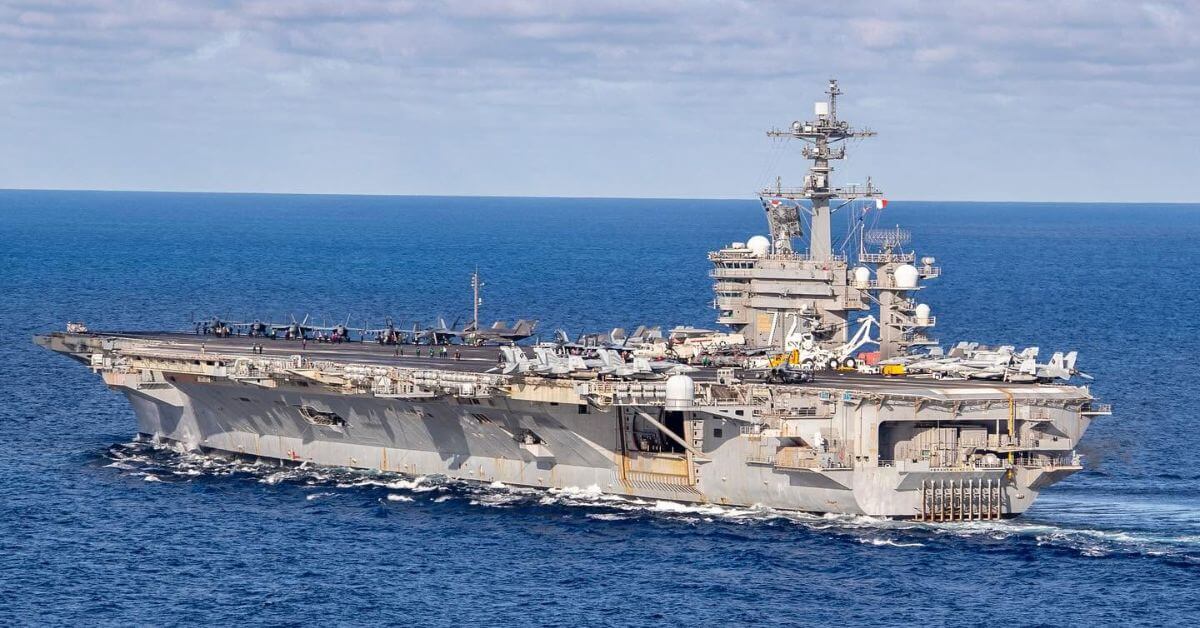
Two former U.S. Navy sailors pleaded guilty in federal court on Monday to selling counterfeit oxycodone pills containing fentanyl to fellow sailors, including crew members of the aircraft carrier USS Abraham Lincoln.
The case involves the death of one sailor and the hospitalisation of another.
Bailey A. Szramowski, 29, and his wife, Johnnese H. Poomaihealani, 25, were both sailors. They pleaded guilty to one count of conspiracy to distribute controlled substances, the U.S. Justice Department said.
According to court records, Szramowski gave 10 pills sold as oxycodone to a sailor aboard the USS Abraham Lincoln in December 2022.
The sailor, identified as A.N., overdosed and died from fentanyl poisoning the following month while on leave in San Leandro, California.
Police found evidence of drug use at the scene. A later toxicology test confirmed that A.N. died from fentanyl intoxication.
Ten days later, Szramowski sold three more pills sold as oxycodone to another sailor aboard the Lincoln, identified as C.L., according to court records.
C.L. was later taken to hospital after an apparent overdose. He survived.
He later told investigators that A.N. and Szramowski had been selling Percocet pills to other sailors for about a year. Court documents say the pills were likely counterfeit.
C.L. said Szramowski sold the pills aboard the USS Abraham Lincoln during its 2022 deployment. He also said Szramowski continued selling them after the carrier returned to San Diego, California.
The pills were sold as oxycodone but contained fentanyl, according to court records.
Szramowski allegedly ordered the pills through the mail and received them at a post office box in Coronado, California. He then collected payments from sailors through Cash App.
C.L. agreed to cooperate with a Naval Criminal Investigative Service investigation into drug sales aboard the Lincoln and A.N.’s death.
After C.L. was taken to hospital, Szramowski and Poomaihealani called him.
According to court records, they told C.L. to tell law enforcement that he had received the pills from A.N., not Szramowski.
Szramowski is also accused of asking A.N.’s family to delete text messages between him and A.N. from A.N.’s phone after his death.
The family refused, according to the complaint.
The complaint says Szramowski told family members that he “might go down for murder” or that the messages could “ruin his future”, or words to that effect.
Szramowski joined the USS Abraham Lincoln in May 2021 after completing boot camp and surface combat systems training at Naval Station Great Lakes in Illinois.
He was promoted to logistics specialist third class in June 2024.
Court records say the alleged drug sales involved Navy sailors in San Diego, including sailors aboard the Lincoln. The sales took place during the carrier’s 2022 deployment and continued after it returned to San Diego.
Szramowski and Poomaihealani were first charged with conspiracy to distribute fentanyl and cocaine. On Monday, they pleaded guilty to one count of conspiracy to distribute controlled substances.
Szramowski faces five to 40 years in prison and a possible fine of up to $5 million.
Poomaihealani faces up to 20 years in prison and a possible fine of up to $1 million.
They are scheduled to be sentenced on December 11.
References: U.S. government, Navy Times
Read on the original site
Open the publisher's page for the full experience