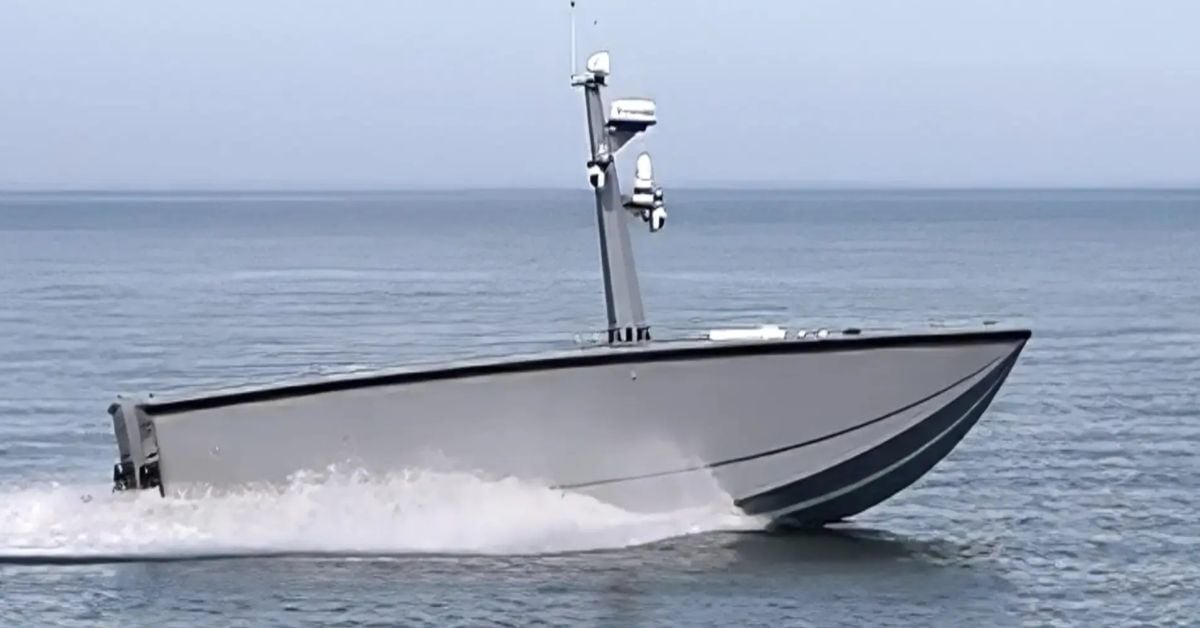
The U.S. Navy's decision to scale production of the Devil Ray USV through a new partnership between MARTAC and SOLACE Boats signals something more than a procurement update. It is a practical admission that persistent, distributed maritime awareness is no longer an experimental ambition but an operational requirement. The addition of 100 units annually does not just expand a fleet; it expands the Navy's capacity to observe, relay, and respond across vast ocean expanses where static assets and crewed vessels are increasingly insufficient. This is the kind of deliberate industrial scaling that turns a promising prototype into a dependable tool for ocean intelligence.
What makes this move notable is how it aligns with a broader trend across the maritime domain: the growing recognition that data collection and transmission are as vital as hull design and propulsion. As we have seen with Integrated Subsea Cables Enhance Data Transmission Across the Indian Ocean, the undersea and surface layers of ocean infrastructure are converging. Cables carry the data; unmanned surface vessels like the Devil Ray gather it. The Navy's investment in MARTAC's platform is not happening in isolation. It is part of an integrated data ecosystem where every sensor node, whether afloat or ashore, contributes to a more complete picture of what is happening on and beneath the surface.
There is also a human dimension worth acknowledging. The challenge of monitoring coastal zones and chokepoints is not purely technical; it is also a question of who gets to observe and who gets left out. As noted in Bridging Data Gaps: Integrating Citizen Science for Ocean Intelligence, traditional monitoring leaves significant gaps, especially near coastlines. The Devil Ray's role in this landscape is not to replace human judgment or community-based observation, but to extend the reach of validated, measurable data collection into areas where crewed operations are costly or risky. For researchers and policymakers, this means more frequent, higher-resolution data streams that can inform decisions with confidence rather than inference.
Our take is straightforward: this production increase is a step toward operationalizing ocean intelligence, but it also raises questions about data sharing, interoperability, and the balance between military and civilian applications. The Navy will benefit from more assets, but the broader oceanographic community should watch how this expanded capability integrates with existing research networks. The real test is not how many units are built, but how the data they collect is calibrated, validated, and made accessible to those who need it most. If the Devil Ray program evolves with that principle in mind, it will contribute meaningfully to the shared responsibility of ocean stewardship. If not, it risks becoming just another isolated tool in a fragmented observation system. The open question is whether the Navy will treat this as a closed loop or as a node in a larger, more collaborative framework. That is the detail to watch in the coming year.