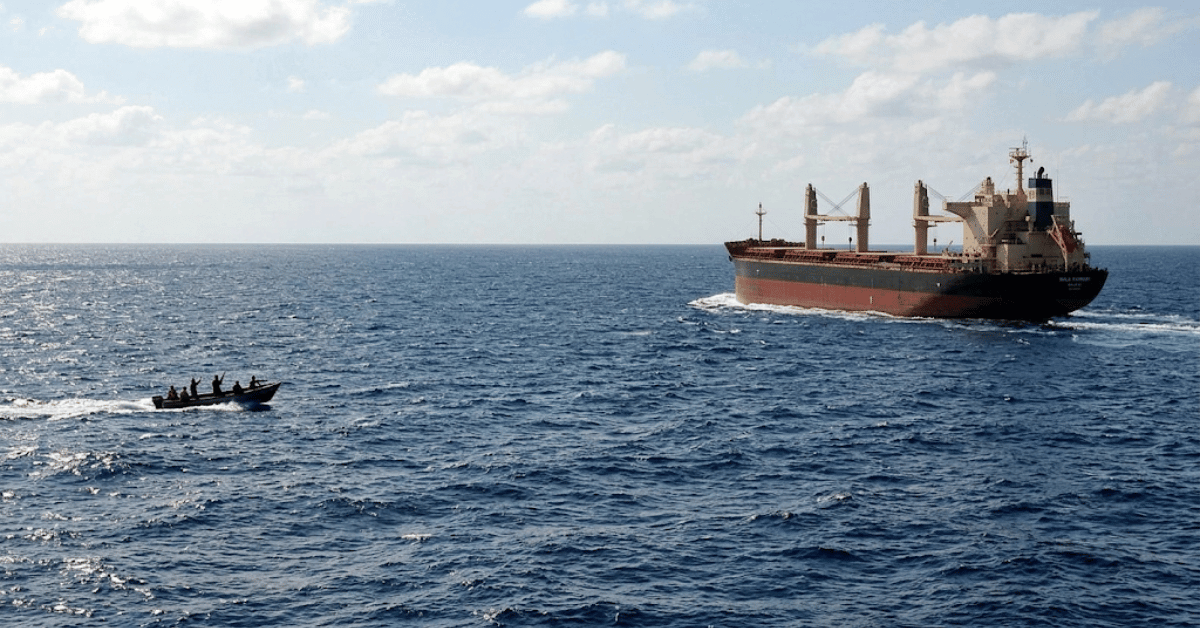
The data is unambiguous. Eighty attacks in the Strait of Hormuz since the US-Iran war began, twenty seafarers killed, and countless more injured. These are not abstract figures from a conflict simulation. They are the direct, human costs of a maritime corridor that remains the lifeblood of global energy supply. For those of us who track ocean intelligence, the pattern is deeply concerning: the rules of engagement that once provided a fragile order are being rewritten in real time, and the people who crew our merchant fleet are bearing the immediate brunt. This is not a regional inconvenience; it is a systemic failure of maritime security that has measurable, longitudinal consequences for every nation that depends on the sea.
Our take is straightforward: the industry cannot afford to treat these attacks as isolated incidents or accept them as the new normal. The practical implication for our readers, whether you are a fleet operator, a port authority, or a policy advisor, is that your risk assessments are no longer sufficient. A static security plan built on last year's threat level is obsolete. The escalation across the Middle East, Black Sea, and Red Sea demands an integrated data ecosystem that fuses real-time vessel tracking, conflict zone intelligence, and validated incident reporting. We would tell a reader who asks about this: do not wait for the next casualty to recalibrate. The data is already there, but it is only useful if it is calibrated into actionable routing decisions and crew protection protocols. The gap between what we know and what we act on is where the next tragedy will be born.
This also forces a harder conversation about the true price of global trade. We often speak of supply chain resilience in abstract terms, but here we have a concrete example of the human ledger. The seafarers transiting these waters are not collateral damage; they are essential workers executing a contract under fire. The IMO's disclosure of these figures is a necessary step, but it is not a solution. Acknowledging the problem does not protect a single crew member. What is required is a peer-reviewed, collaborative response that leverages shared intelligence across navies, commercial operators, and international bodies. The old silos between public and private maritime security have proven inadequate. The next step must be a unified, transparent mechanism for threat sharing, one that moves beyond reactive warnings to predictive deployment of protective assets.
The concrete point to watch is the next quarterly incident report. If the frequency of attacks does not decline, or worse, if the geographic spread expands toward the South China Sea or the West African coast, then we are no longer looking at a regional conflict. We are looking at a global maritime insurgency that will require a fundamental reassessment of how we insure, route, and crew our ships. The open question is whether the international community will treat this as a collective security issue or continue to accept a status quo that is costing lives. For our readers, the takeaway is stark: your next voyage plan is a decision about your crew's survival, not just your bottom line. The data is validating a grim trend, and we are all responsible for acting on it before the next twenty names are read aloud.