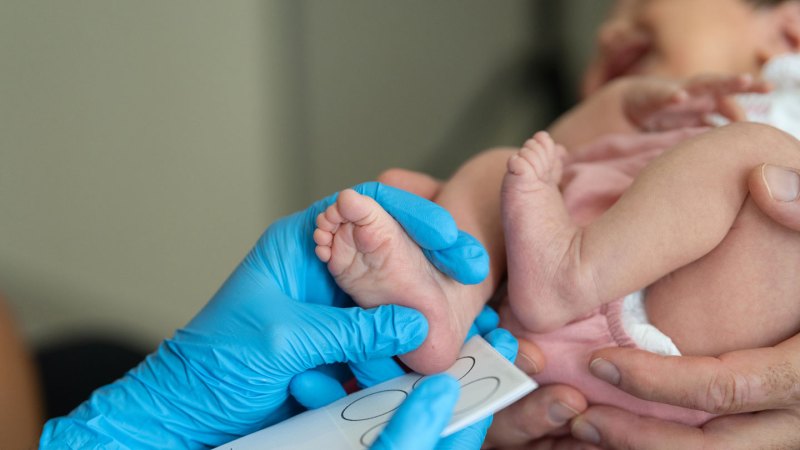
The decision to screen newborns for cancer-linked mutations is a study in calibrated judgment. The science is advancing rapidly, and the prospect of identifying a predisposed child at birth, before any cellular abnormality manifests, is a genuine milestone in preventive medicine. Yet the same genetic data that offers a head start carries a weight that demands we measure twice and cut once. We are not dealing with a binary of ignorance versus knowledge; we are dealing with the responsible application of predictive power.
This is where the conversation moves beyond the laboratory and into the messy, human terrain of decision-making. The value of early detection is undeniable when it translates into actionable surveillance or risk-reducing interventions. But for many of these mutations, the penetrance is incomplete, and the natural history is poorly understood. Telling a parent that their healthy child carries a variant associated with adult-onset cancer, without a clear protocol for what to do next, can create a state of chronic anxiety rather than empowerment. It is the difference between a useful climate indicator and a noisy data point that obscures the larger forecast. We must ensure that the promise of early genetic insight does not outpace our ability to interpret it responsibly.
The broader principle at play here echoes through our recent coverage of complex systems. Just as Mediterranean Tsunami Risk: Modeling Reveals Urgent Threat and Limited Warning shows that modeling a threat is only half the battle, the other half being the capacity to act on that warning, so too does newborn screening present a similar challenge. A risk signal without a response plan is merely a source of distress. Similarly, the Longitudinal Data Links Early Sugar Restriction to Reduced Dementia Risk reminds us that early-life exposures and interventions can have profound, decades-long consequences. The question is not whether early data is powerful, but how we translate that power into practical guidance without causing harm. We are, in effect, adding a new variable to the equation of a child's life, and we owe it to them to ensure that variable is both valid and useful.
Our take is not to retreat from this frontier, but to demand a rigorous, peer-reviewed framework for clinical integration. The takeaway for our readers, whether researchers, policymakers, or prospective parents, is this: ask what the protocol is *after* the result is delivered. If the answer is vague or contingent on a future research finding, then the screening is not yet ready for the nursery. We would tell a reader that this is not a reason to dismiss the technology, but a reason to demand that its deployment is as precise as the sequencing itself. The open question to watch is whether we can build a feedback loop where longitudinal data from these screenings is collected and analyzed to refine our risk models, or whether we are creating a generation of "at-risk" individuals without a clear off-ramp. That is the detail that will determine if this tool becomes a cornerstone of preventive health, or a source of unintended consequence.