The discovery of pyroclastic rocks at 6,148 metres in the Mariana Trench rewrites what we thought we knew about where explosive volcanism can occur, and that matters directly for how we model Earth's deep geochemical cycles. This is not merely a deeper depth record, it is empirical evidence that the conditions for violent eruptions exist far beyond the shallow settings where we have historically looked for them. For researchers and policymakers working with climate indicators or ocean intelligence, this finding adds a measurable variable to the integrated data ecosystem of seafloor processes.
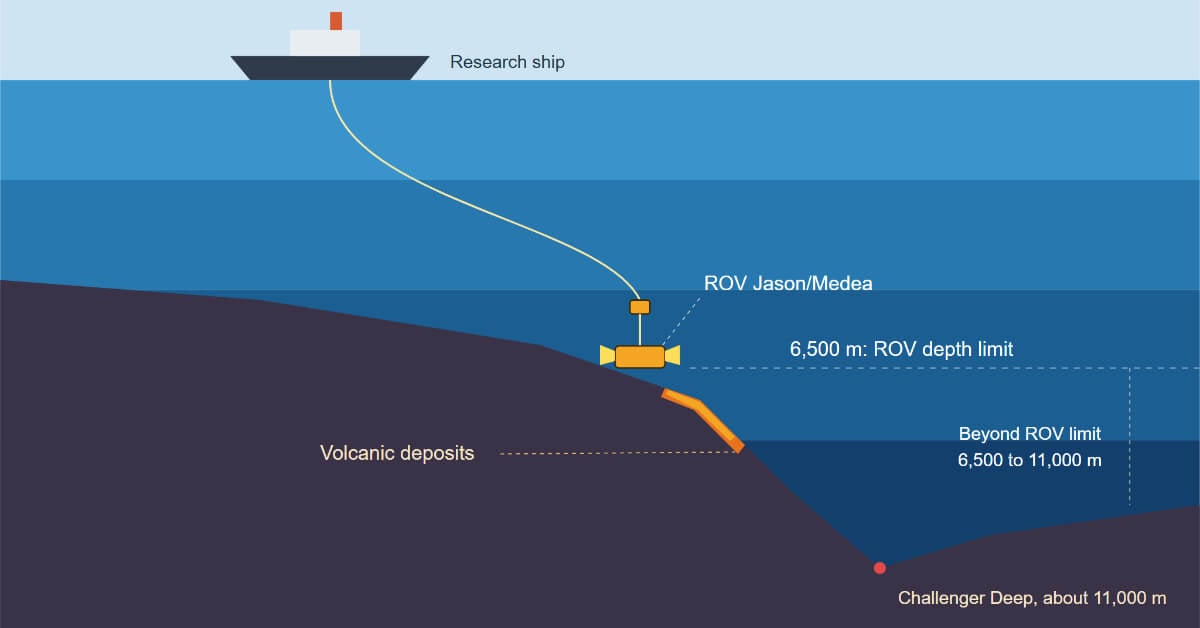
Dr. Robert J. Stern and his team used the ROV Jason/Medea to sample the trench wall along a 300-kilometre stretch, finding pyroclastic flows that had re-welded into hard rock before they could travel far. The western forearc, normally too cold for young lava, yielded these samples under immense pressure that dampens explosion force but does not eliminate it. This dovetails with what we reported in Volcanic remains beneath the seafloor reveal how Challenger Deep formed, where the deepest known remnants of explosive volcanism offered a new clue to how that abyssal point originated. Together, these studies suggest that the Mariana system is more volcanically active in its deep reaches than prevailing models account for. As we noted in Charting the Unseen: Measuring Our Ocean Knowledge Gap, only a tiny fraction of the ocean has been explored, and this discovery is a calibrated reminder that the seafloor still holds fundamental surprises.
The practical implications are immediate. If explosive eruptions can occur at these depths, then the transport of volcanic gases, nutrients, and heat into the deep-ocean water column must be reassessed. The team has not yet identified the exact eruption sites, and the eastern side of the trench appears to be stretching mechanically while the western side gathers magma from the mantle, but rock dating is needed to confirm that hypothesis. What is clear is that our current maps of seafloor volcanism are incomplete, and the tools to fill those gaps are unevenly distributed. Stern noted that only Chinese scientists and some wealthy entrepreneurs have equipment that can work between 6,500 metres and the bottom of the Challenger Deep. That limitation is not a future problem; it is a present constraint on the empirical data we can gather. The open question to watch is whether the western forearc's young volcanic rocks represent an ongoing process or a relic of a different tectonic regime, and that answer will require the kind of longitudinal sampling that only deeper-capable ROVs can provide.