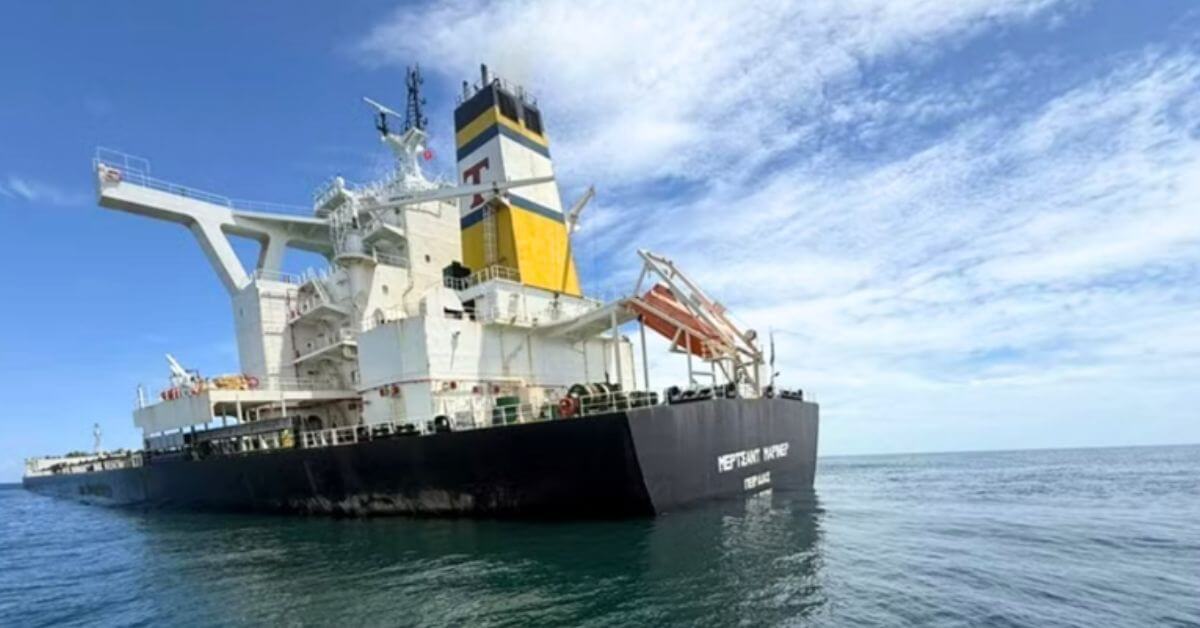
The report of the Greek bulk carrier *Merchant Mariner* taking on water in its ballast tanks roughly 15 nautical miles from Vietnam's Dung Quat anchorage is not just another incident report. It is a quiet alarm bell about the persistent gap between the data we collect and the decisions we make in real time. For a vessel carrying 175,000 tonnes of iron ore, the margin for error is measured in minutes, not hours. Water ingress in ballast tanks is a solvable problem when you have the right information at the right moment, but too often, the maritime industry still relies on periodic checks and delayed reporting rather than continuous, calibrated monitoring.
Our take is straightforward: this incident underscores why the industry must move beyond reactive data collection toward an integrated data ecosystem that flags anomalies the moment they occur. The vessel was close to anchorage, not in open ocean, which suggests that the damage or leak was detected through routine crew inspection rather than a proactive sensor network. That is the real story here. We have the technology to stream ballast tank levels, hull stress, and pressure differentials in real time, yet operational adoption lags behind the science. For our readers, whether you are a fleet operator, a marine insurer, or a port authority, this is a practical call to audit your own data pipelines. Would you have known about that water ingress within minutes, or would you have found out during the next round of manual sounding?
We would tell a reader who asked us directly: treat this as a case study in redundancy. You cannot control the sea, but you can control your awareness of your vessel's condition. A bulk carrier with 175,000 tonnes of cargo has immense kinetic energy; any shift in stability due to undetected water can turn a manageable situation into a catastrophic list. The fix is not necessarily expensive new hardware on every ship, but rather ensuring that the sensors you already have are calibrated, integrated, and feeding into a single command dashboard that alerts shore-based teams alongside the bridge. This is about closing the loop between empirical measurement and human response.
What we will be watching is how quickly the industry acts on this specific type of near-miss. The Dung Quat incident did not result in a sinking or loss of life, but it is a clear indicator that the margin for error is shrinking as vessels grow larger. The specific consequence to monitor is whether classification societies start mandating continuous ballast water ingress monitoring for large bulk carriers, similar to how voyage data recorders became standard after being recommended for years. For now, the takeaway you can quote: "If a 175,000-tonne vessel can take on water 15 miles from port without immediate detection, then real-time data is not a luxury; it is the only reliable lifebuoy." Do not wait for the next incident to make that investment.