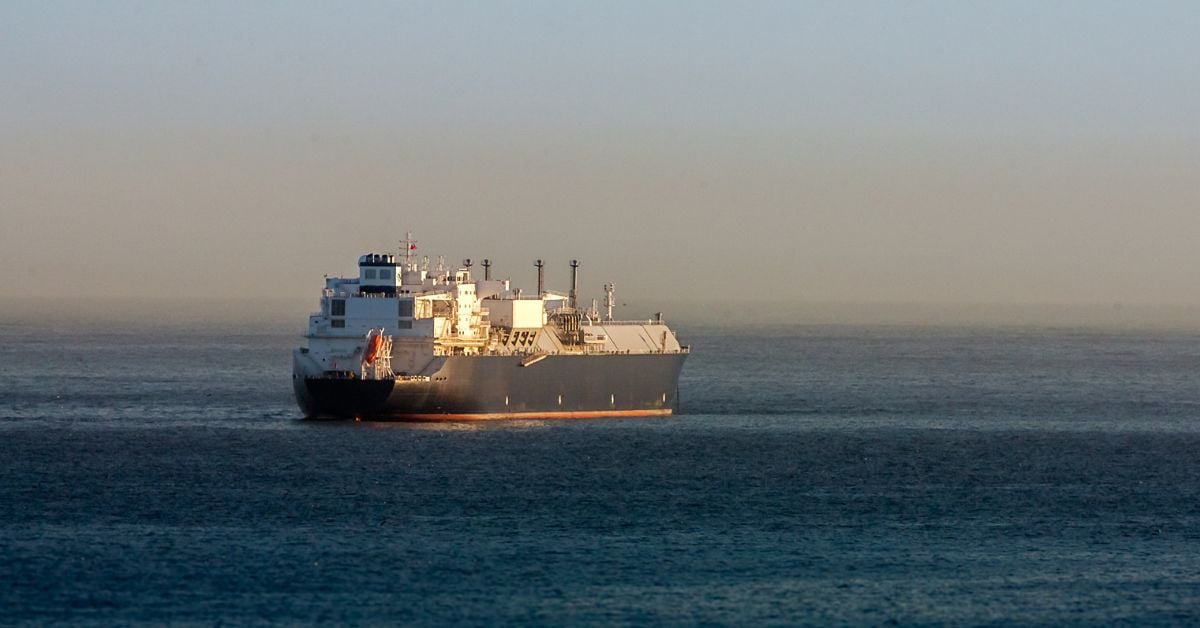
The Vivit Africa LNG was moving through the Mediterranean and Adriatic seas toward Italy when the crew reported a suspected cyberattack and turned the vessel back. The incident did not involve a collision, a grounding, or a cargo breach. It involved a systems compromise that eroded the crew's confidence in their own navigation and communication tools. That is a quieter failure, and in many ways a more instructive one. The maritime industry has spent years treating cybersecurity as an IT problem, a matter of firewalls and patches. This event suggests it is an operational problem, one that can stop a ship carrying liquefied natural gas in the middle of a transit.
For our readers, the practical takeaway is not that every LNG carrier is one click from disaster. It is that the threshold for disruption has lowered. The crew did not report a failed pump or a cracked pipeline. They reported a suspected cyberattack, and that suspicion was enough to alter the voyage. That is the new reality of ocean intelligence: the data ecosystem that keeps a modern vessel efficient is also the attack surface that can bring it to a halt. We have written before about the need for integrated systems and real-time data sharing across the maritime supply chain, but this incident underscores a point we have repeated in different contexts. The more we connect ships to shore, the more we must validate the integrity of every link in that chain. The crew's decision to turn back was not an overreaction. It was a calibrated response to an unquantifiable threat, and it should be treated as a legitimate operational decision, not a sign of technical weakness.
If a reader asked us what to make of this, we would say this: watch how the industry responds to the gap between the attack and the response. The cyberattack on the Vivit Africa LNG was not a spectacular breach. No data was released, no ransom was demanded, at least not publicly. But the disruption was real, and it carried a measurable cost in fuel, time, and delivery schedules. The open question is whether shipping companies will treat cybersecurity as a static compliance checkbox or as a dynamic risk that evolves with every new software update and every new sensor added to the bridge. We would tell that reader to pay attention to the post-incident reports, not the headlines. The details of what was targeted, whether it was the GPS, the cargo control system, or the internal communications, will tell us more about the threat than the fact that a tanker turned around.
The concrete point to watch is the investigation's findings on the specific vector of the attack. If it exploited a known vulnerability that went unpatched, that is a failure of maintenance. If it used a novel method that bypassed existing safeguards, that is a failure of foresight. Either way, the next step is not to build a taller wall. It is to assume the wall will be breached and ensure the crew has the training and the authority to act on that assumption, just as they did here. That is the takeaway we would quote: the crew's decision to turn back was not a sign of weakness but a model of operational prudence. The industry should study it, not second-guess it.