Chinese AI System Cuts Simulated Coastguard Weapons-Use Risk From 0.3% To Zero In Disputed Waters
Our take
The recent announcement of a Chinese AI system demonstrably reducing simulated risk of weapons use in disputed waters from 0.3% to zero presents a compelling, albeit complex, development within the evolving landscape of maritime security. This isn’t merely a technological advancement; it’s a potential shift in strategic calculus, particularly in regions characterized by heightened geopolitical tensions. The implications extend beyond the immediate reduction of simulated conflict, touching upon issues of autonomous decision-making, international law, and the very nature of maritime governance. As we’ve previously explored in Port Automation: The Reality Nobody Tells You, implementing advanced systems requires careful consideration of workforce skills and a phased approach; this AI system’s deployment undoubtedly necessitates a similarly thoughtful strategy to avoid unintended consequences. The potential for de-escalation through AI-mediated decision support is significant, but the reliance on algorithms in such sensitive situations warrants rigorous scrutiny.
The core innovation lies in the system's ability to model scenarios and suggest alternative responses, such as deploying water cannons instead of escalating to lethal force. This aligns with broader efforts to mitigate risk in complex operational environments, and echoes the strategies being implemented within commercial shipping, as seen in MOL Merges 6 Ship Management Companies To Strengthen Safety Across 200+ Vessels. However, the context of disputed waters introduces a unique set of challenges. The system’s effectiveness is predicated on the accuracy of its data, the completeness of its scenario modeling, and the alignment of its algorithms with international maritime law. Furthermore, the very act of deploying such a system could be perceived as a provocative move by other nations, potentially exacerbating tensions rather than easing them. The recent incident involving the Iran Says It Shot Down US MQ-9 Reaper Drone Over Strait Of Hormuz serves as a stark reminder of the potential for miscalculation and escalation even with established protocols.
The use of AI in maritime security raises fundamental questions about accountability and transparency. While the system demonstrably reduces simulated risk, its decision-making process remains opaque. How are potential biases in the data addressed? What mechanisms are in place to ensure human oversight and intervention when the system’s recommendations deviate from established protocols? The absence of clear answers to these questions could erode trust and undermine the system’s long-term viability. Moreover, the proliferation of similar AI systems by other nations could lead to a fragmented and potentially unstable security environment, where competing algorithms interact in unpredictable ways. The development highlights the critical need for international collaboration in establishing ethical guidelines and technical standards for the use of AI in maritime operations. Validation through longitudinal, empirical data collection will be essential to ensure the system’s effectiveness and prevent unintended consequences.
Ultimately, this development underscores the growing convergence of artificial intelligence and maritime strategy. While the prospect of reduced conflict through AI-mediated decision support is undeniably appealing, it’s crucial to approach this technology with a healthy dose of skepticism and a commitment to rigorous oversight. The potential benefits are substantial, but the risks are equally significant. The key question moving forward is not simply whether AI *can* reduce maritime risk, but whether it *will* do so in a way that promotes stability, transparency, and adherence to international law. How will the international community calibrate the deployment of these systems to foster ocean intelligence and shared responsibility, rather than contributing to further geopolitical fragmentation?
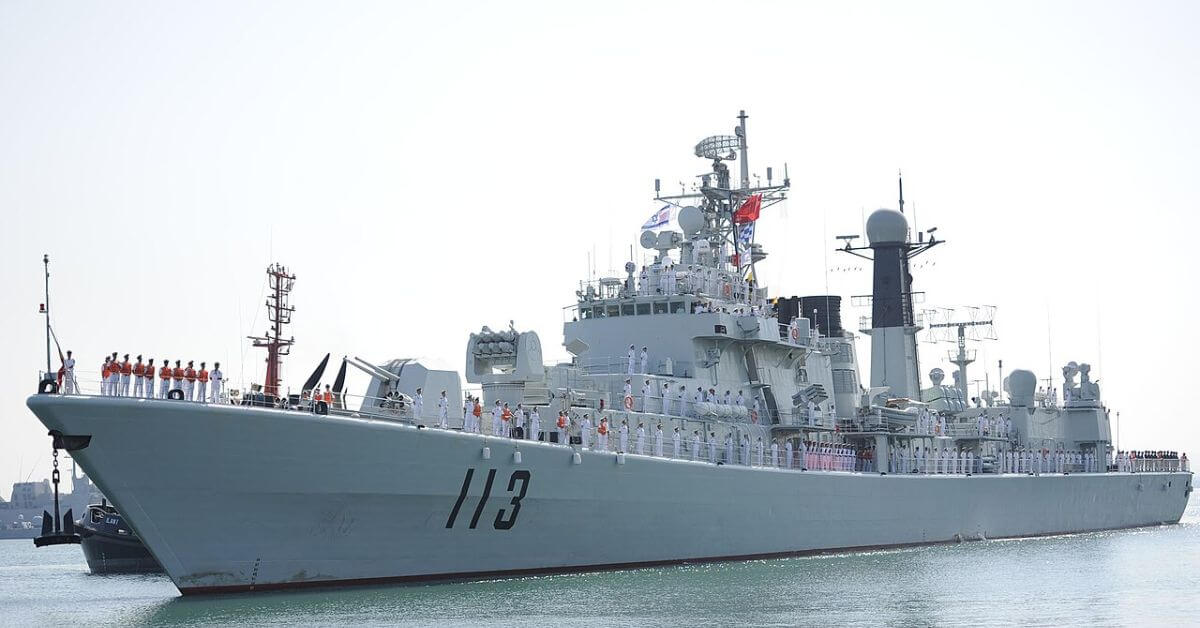
A new AI system developed by Chinese researchers could help coastguard commanders avoid using lethal force during tense encounters at sea.
In computer simulations, the system reduced the risk of a simulated Chinese coastguard vessel using lethal weapons from 0.3% to zero.
The system helps commanders understand what another vessel may be trying to do. It can assess whether a vessel is simply passing through, fishing, or deliberately trying to probe or harass the coastguard.
In simulations, the AI correctly identified a vessel’s intentions 89.6% of the time, compared with 68.5% for the existing rule-based system.
The researchers said the AI could help commanders use less force, such as water cannons instead of lethal weapons.
The study was led by Sun Shengzhi, a professor at the China Coast Guard Academy, and was published on Aug. 10 in the Chinese journal Command Control & Simulation.
How the AI Was Tested?
The researchers created a computer-based war game involving a Chinese coastguard vessel protecting fishing boats from foreign vessels.
In the simulation, four to six foreign vessels carried out surveillance and low-level harassment near the fishing boats.
The scenario was based on situations that can happen in disputed waters, where vessels may act aggressively without starting an open conflict.
The vessels had to stay at least 0.5 nautical mile, or about 0.9 km, apart and follow rules on the use of weapons.
Under the existing rule-based system, the simulated Chinese coastguard vessel used lethal weapons in 0.3% of the scenarios.
The researchers said that even such a small risk could become a serious problem during a tense encounter at sea.
AI Changes Its Assessment
The system uses radar and other sensor data to understand why a vessel is moving in a certain way.
In one simulation, the AI first assessed that there was a 72% chance that a nearby vessel was simply passing through.
However, its assessment changed after three vessels formed a wedge-shaped formation and approached from different directions. The AI then calculated that there was a 68% chance the vessels were carrying out coordinated probing.
It responded by ordering the use of a water cannon to deter them.
The researchers said the AI did not cause any violations of weapons-use rules during the simulations. It also reduced other rule violations.
For example, the rate of vessels getting too close to each other fell from 1.2% under the rule-based system to 0.8% with the AI system.
AI Also Tested Against Deception
The researchers also tested the AI in a scenario involving possible deception.
In the simulation, fishing boats appeared to move away while other vessels approached the coastguard ship at higher speed from another direction.
The AI identified this as a possible attempt to deceive the coastguard and held its position instead of reacting to the boats moving away.
The researchers said the test showed that the system could assess the movements of several vessels together instead of looking at each vessel separately.
Human Commanders Would Still Make Decisions
The researchers said AI is not meant to replace human commanders.
Instead, they see it as a tool that can help human operators assess vessel intentions and choose a response within set rules.
The team plans to test the system in more complex scenarios involving different operational areas. It will also study how humans and AI can work together in decision-making.
The researchers said more work is needed to ensure AI decisions follow higher-level strategic goals and ethical rules.
References: interestingengineering, scmp
Read on the original site
Open the publisher's page for the full experience