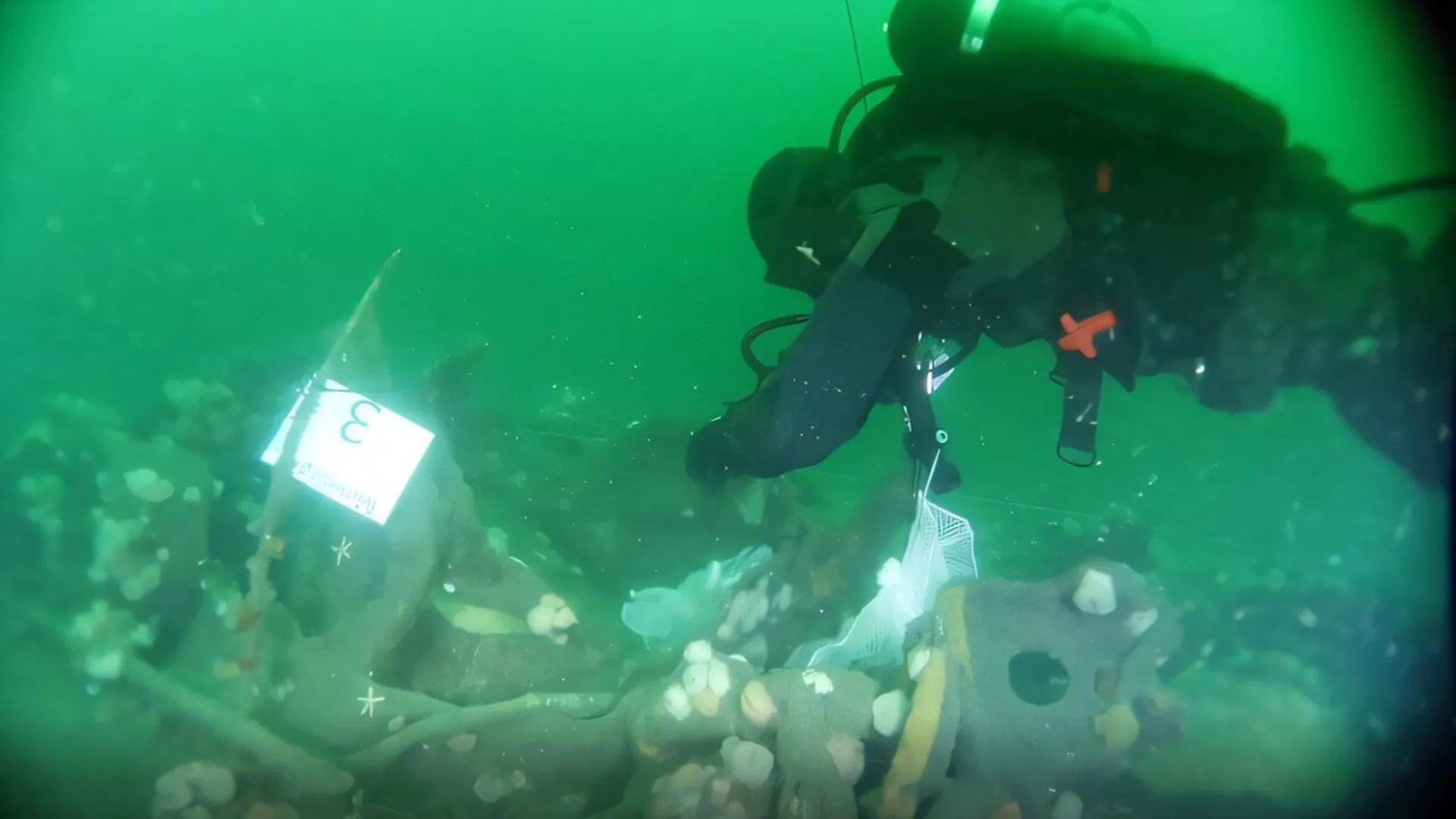
A World War I submarine wreck off Denmark is leaking TNT into the surrounding water, seabed, and marine life more than a century after it sank. Scientists warn that thousands of similar wrecks could pose growing environmental risks as they continue to corrode. This finding is not a hypothetical projection; it is an empirical, measurable event happening now, and it forces a hard look at the integrated data ecosystem we are only beginning to build around our ocean heritage. The risks from these wrecks are often discussed in terms of immediate safety or salvage, but the Danish case reveals a slower, more insidious threat: the chronic release of toxic compounds into benthic environments. Compare this with the forward-looking maritime posture examined in India Projects Expanded Naval Fleet to Navigate Evolving Maritime Landscape, where nations plan for future fleet capabilities. The contrast is instructive, while we project power and investment into new vessels, we have yet to calibrate a systematic response to the legacy of old ones sitting on the seabed.
Our take is straightforward: the ocean is a repository of history that we have not fully accounted for. The TNT leak is a validated, peer-reviewed data point that should accelerate the creation of a global survey of submerged military wrecks. We know from the Vindnes and Vestnes: New Fallpipe Vessels Advance Subsea Rock Installation that advanced subsea engineering is already operational, capable of precise intervention on the seafloor. The same technical capacity that installs rock for pipelines can be adapted to assess and, where necessary, contain leaking ordnance. The question is not whether we have the tools; it is whether we have the will to prioritize a century-old problem over newer infrastructure. For our readers, researchers, policymakers, and ocean enthusiasts, the takeaway is that corrosion is a clock we cannot reset. Every year that passes increases the probability of a breach, and the Danish wreck offers a real-time climate indicator of that decay.
What would we tell a reader who asks about this? Act on the data. The leak is measurable and localized, but the scale of the risk is global. Thousands of wrecks from both World Wars lie in waters from the Baltic to the Pacific, many carrying fuel oil, munitions, or unexploded ordnance. We need an integrated data ecosystem that combines historical records, corrosion models, and real-time chemical sampling to prioritize the most dangerous sites. This is not alarmist, it is empirical. The scientific community has the longitudinal studies to show that corrosion rates accelerate as steel thins, and the Danish wreck is a validated case of that acceleration reaching a critical point. Without a coordinated effort, we are relying on chance to tell us which wreck leaks next.
The concrete point to watch is the corrosion rate of the Danish submarine itself. Scientists will now monitor whether the TNT concentration increases as the hull continues to degrade. That longitudinal data will either confirm a gradual release pattern or reveal a tipping point where structural failure leads to a pulse of contamination. Either outcome carries specific consequences for how we manage the thousands of other wrecks. The answer to a century-old problem lies not in panic, but in precise, calibrated observation.