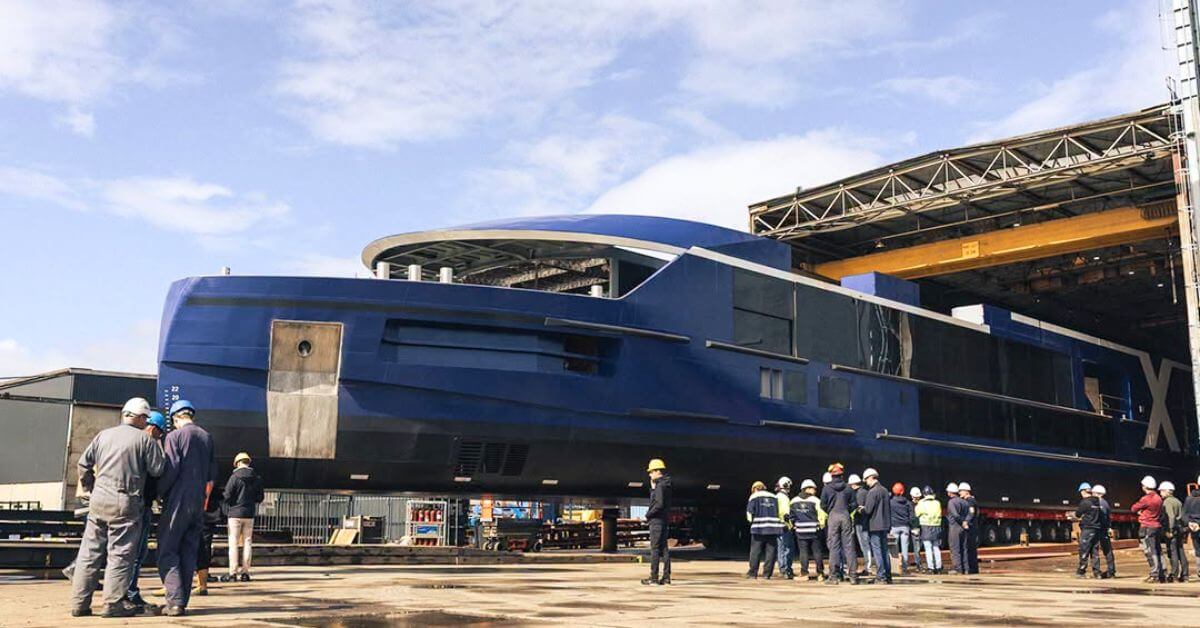
Celebrity Cruises' announcement that it has floated out the first of twenty river ships, with plans to deploy them on the Rhine and Danube by 2031, is not just a fleet expansion. It is a deliberate statement about where ocean intelligence meets inland waterways. For an industry often measured by scale, this move trades the open sea for a narrower, more intimate corridor, and that changes the operational calculus in ways our readers should note carefully.
From a practical standpoint, river cruising operates on a different set of constraints than ocean voyaging. The ships are smaller, the itineraries are fixed by lock schedules and docking windows, and the environmental scrutiny is more localized. Celebrity's entry into this space, at this scale, signals that they see a durable demand for expedition-style access to cultural hubs rather than purely open-water transit. For our readers, the takeaway is not about the ship itself but about what it represents: a shift in how major lines are allocating capital toward high-density, low-impact routes. The Rhine and Danube are not remote frontiers; they are among the most regulated and visited rivers in Europe. That means the real test will be in the integration of shore-side logistics and real-time operational data, not just the hardware.
We would tell a reader who asks about this that the twenty-ship target is the number to watch, not the first launch. Ordering one vessel is a trial; committing to nineteen more by 2031 is a thesis. The practical consequence is that river capacity on these routes will increase significantly, which could pressure smaller operators who have historically dominated the segment. But there is also a data angle. Ocean lines have spent years perfecting weather routing, fuel optimization, and guest-flow management. Applying that same integrated data ecosystem to river navigation, where currents and water levels fluctuate daily, is a different challenge. If Celebrity can calibrate those systems effectively, they will not just be adding ships; they will be setting a new benchmark for operational precision on inland waters.
The specific detail we will be tracking is how they handle lock congestion and low-water events, which are the two variables that most often disrupt river itineraries. No amount of brand equity solves a closed lock. So our honest take is measured: this is a sound strategic bet, but the proof will be in the execution of the second and third ships, not the debut. The question worth asking is whether the promised twenty will be built as designed or quietly revised downward as operational realities set in. That is the number to verify in 2031, and we intend to hold them to it.