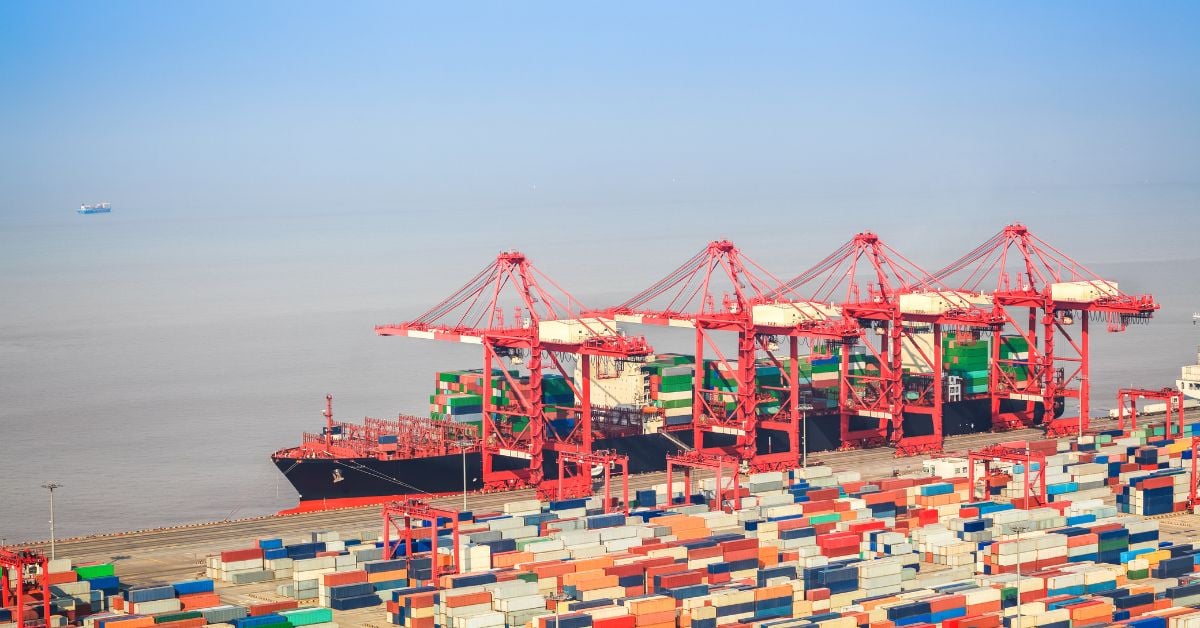
The contract signed at SMM 2026 in Hamburg brings together Shanghai Merchant Ship Design, CMA CGM, and Bureau Veritas around a single premise: that vessel design should no longer be an isolated engineering exercise, but an integrated data ecosystem drawing on ocean intelligence. The collaboration is notable not because it is the first time artificial intelligence has touched naval architecture, but because it embeds real-time environmental and operational data directly into the design loop. This is a move from static specifications toward vessels that are calibrated for the conditions they will actually face, not the idealized ones on a blueprint.
This matters in a context where the industry is already wrestling with how to make sense of abundant, messy information. The Eighty Nations Urge Reopening of Vital Strait of Hormuz Shipping Lane story reminds us that geopolitical friction can disrupt shipping lanes overnight, and the ability to adapt vessel performance to changing routes and constraints becomes a practical advantage, not a theoretical one. Meanwhile, the exploration of leaner AI reasoning in AI Reasoning Explored: Novel Model Omits Words to Reduce Computation suggests that efficiency in machine intelligence is itself a frontier. The shipping industry is now asking the same question: how do we get the same or better results with fewer computational and fuel costs? The He Dreiht wind farm's contribution to the German grid, detailed in He Dreiht Wind Farm Powers German Grid, Boosting Renewable Capacity, also signals that the maritime sector's energy transition is not a distant ambition but a current infrastructure reality, and vessel designs must align with that shift.
Our take is that this agreement signals a maturation of the industry's approach to AI. The language of the announcement is measured, focused on validated and measurable outcomes rather than flashy promises. That is the right tone. But the open question is whether the data integration will extend beyond design phase into the full vessel lifecycle. Will the ships continue to feed operational data back into the design ecosystem, creating a longitudinal feedback loop that improves the next generation? That is where the real value sits, and it is also where many projects falter.
For a reader asking what this means practically, we would say this: watch whether the data sharing agreement includes provisions for ongoing, peer-reviewed performance validation after the vessels are launched. If it does, this could set a benchmark for how the industry handles climate indicators and efficiency claims. If it does not, it risks being another well-intentioned but one-off design exercise. The takeaway worth quoting: the contract is not about building smarter ships, it is about building ships that keep learning. The specific detail to watch is how Bureau Veritas will verify the AI-generated design choices against real-world performance, because that will determine whether this integration is genuine or merely cosmetic.