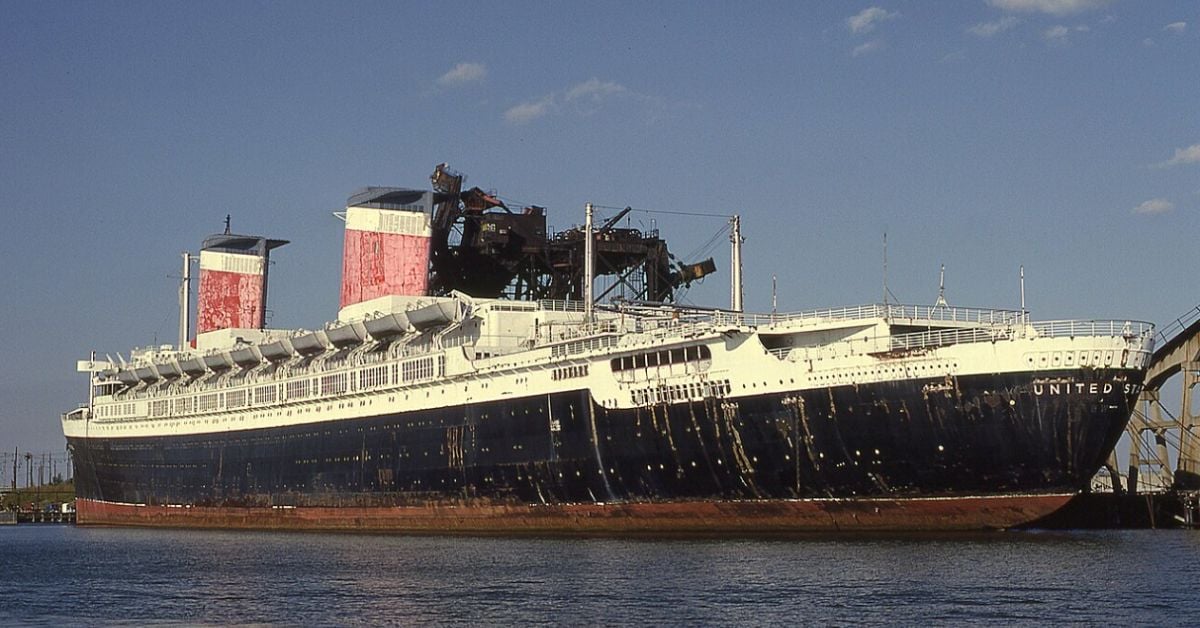
The SS United States will soon become the world's largest calibrated artificial reef, and we consider this a measured, purposeful end to a remarkable career. Rather than letting a historic vessel rust away in storage or be scrapped for parts, Okaloosa County has chosen to transform it into a living marine habitat. That decision aligns with a principle our readers know well: understanding drives protection.
The 'Big-U' carried presidents and celebrities across the Atlantic at record speed, but its second life will serve something larger than luxury travel. Steel wreckage provides a solid surface for algae, corals, and fish to colonize in an otherwise sandy seabed. Researchers from several U.S. institutions will monitor marine growth and ecological effects for years, turning the ship into a long-term scientific asset. This is not a sentimental gesture; it is a replicable model for coastal restoration. As Marine biologists share the unsettling truths that data confirms, the ocean's health demands interventions that are validated by empirical observation. The SS United States project offers exactly that opportunity.
The practical implications for our readers are concrete. Recreational and technical divers will soon have access to a 990-foot structure at 55 metres depth, with upper decks sitting 17 to 18 metres below the surface. That access is not incidental; it is engineered. Openings have been cut into the hull to allow entry, and controlled flooding, not explosives, will place the ship upright on the seafloor. Local dive shops, hotels, and businesses stand to gain millions annually from tourism drawn to the wreck, a point reinforced by the Coastal Conservation Association Florida's $500,000 donation, the largest it has made in four decades. Compare this to the pressures documented in King Tides Test South Florida's Coastal Water Quality and Marine Habitats, where rising water levels threaten existing ecosystems. Here, the county is actively building habitat resilience rather than merely reacting to loss.
Environmental concerns about the ship's zinc chromate primer are legitimate and were litigated. A lawsuit to stop the sinking was dismissed last year, and officials confirm the project follows EPA rules. The 128 fuel and lubricant tanks will be emptied, paint and coatings removed, and all funnels, propellers, and masts sent to a museum. Those steps are not optional; they are the baseline for any responsible reefing operation. The county already manages over 500 artificial reefs in the region, including the carrier USS Oriskany sunk off Pensacola in 2006, so this is not an untested experiment.
One detail to watch: the ship will sit just 12 nautical miles from the Oriskany, creating a paired wreck complex that could function as a longitudinal study site for species succession and reef development. If researchers coordinate monitoring across both sites, the data could inform how steel structures of different ages and configurations support marine life in the Gulf. That is a measurable outcome worth following.