46 Containers Fall Overboard From Cargo Ship Off Philippines, Coast Guard Warns Ships
Our take
The recent incident off the Philippines, where 46 containers fell overboard from a cargo ship near Hamilo Point, serves as a stark reminder of the inherent risks within global maritime transport and the escalating challenges of ocean stewardship. Such events, while not unprecedented, contribute significantly to marine pollution and underscore the need for enhanced safety protocols and improved tracking technologies. The ongoing efforts by the Philippine Coast Guard to recover the containers are crucial, but the long-term environmental impact, particularly if the containers hold hazardous materials, remains a serious concern. This incident echoes similar maritime safety concerns highlighted in related events, such as the [Real Life Incident: Tug Name Mix-Up Causes Tanker To Strike Pier During Departure] demonstrating the potential for seemingly minor errors to trigger significant consequences, and the concerning [Cargo Ship Carrying 23 Indian Seafarers Catches Fire After Drone Strike En Route To Pakistan] which highlights the increasing vulnerability of maritime trade to geopolitical instability.
The scale of container loss incidents has been gradually increasing in recent years, often attributed to factors like adverse weather conditions, inadequate securing practices, and the sheer size and complexity of modern container ships. The potential for ecological damage is considerable. Depending on the cargo within the containers, pollutants can be released directly into the marine environment, impacting marine life, coastal ecosystems, and potentially even human health through contaminated seafood. Moreover, the physical debris from the containers themselves – plastic, metal, and other materials – contributes to the growing problem of marine plastic pollution, a well-documented threat to ocean health. The recovery operation will require a coordinated effort utilizing validated tracking technologies and calibrated response strategies, something that highlights the ongoing need for integrated data ecosystems within maritime operations. The complexity of these situations is further exemplified by incidents like [1 Dead, 6 Missing After Tugboat Sinks While Towing Container Ship Off Busan], demonstrating the inherent dangers faced by maritime personnel and the importance of robust safety regulations.
Beyond the immediate environmental impact, this incident underscores the broader implications for global supply chains. Disruptions to shipping routes and port operations, even temporary ones, can have cascading effects on international trade, impacting businesses and consumers worldwide. The increasing frequency of such incidents necessitates a shift towards more resilient and sustainable maritime practices. This includes investing in improved container securing systems, implementing real-time monitoring of cargo integrity, and developing predictive models to anticipate and mitigate risks associated with weather patterns and other environmental factors. Peer-reviewed research into the long-term impacts of container loss on marine ecosystems is also vital to inform effective mitigation and remediation strategies. The imperative to move towards measurable and longitudinal data collection on maritime incidents is clear; only through such rigorous empirical analysis can we hope to develop truly effective preventative measures.
Looking ahead, the confluence of factors – increasing global trade volume, more frequent extreme weather events linked to climate change, and emerging geopolitical tensions – suggests that incidents like this are likely to become more common. The question then becomes: how can we leverage ocean intelligence, enhanced by integrated data ecosystems, to proactively manage these risks and safeguard the health of our oceans? A shift towards a more collaborative approach, involving governments, shipping companies, and research institutions, will be essential to develop and implement robust solutions. Furthermore, the development of standardized protocols for container securing and emergency response, coupled with rigorous enforcement, is paramount to minimizing the frequency and severity of these incidents and ensuring the long-term sustainability of global maritime trade.
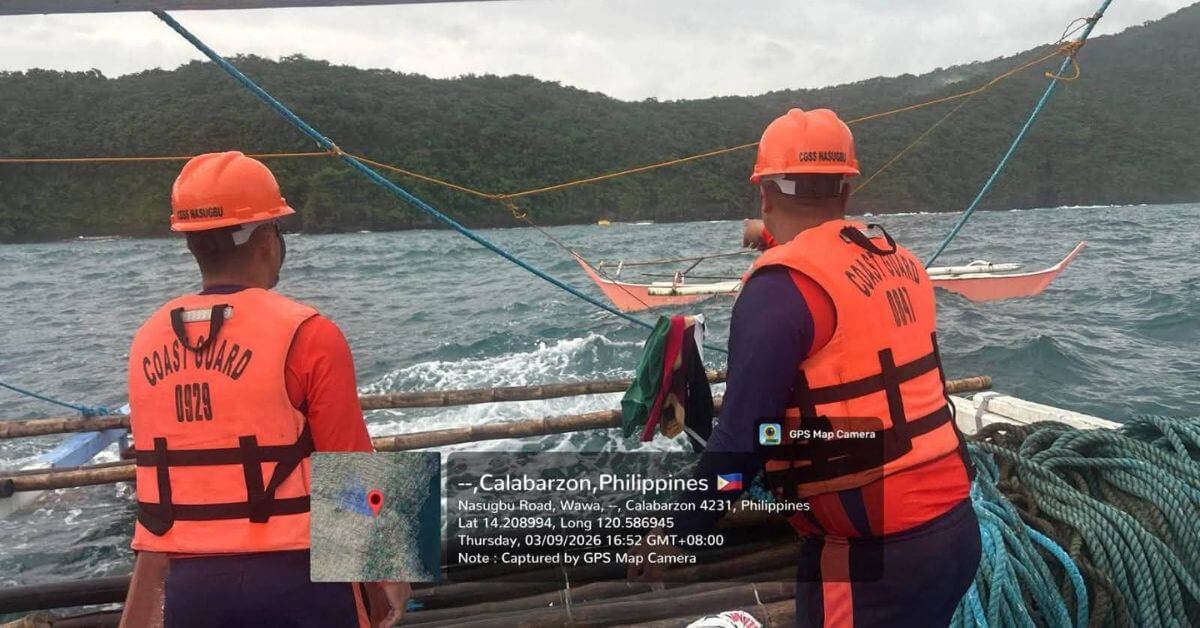
The Philippine Coast Guard (PCG) has warned vessels in waters off Batangas after 46 empty containers fell from the cargo ship MV Span Asia 39 on Sept. 3.
The ship is registered under Philippine Span Asia Carrier Corp.
The containers fell into the sea near Hamilo Point in Nasugbu, Batangas. The Coast Guard has started operations to find and recover the containers.
The incident took place about 1.78 nautical miles west of Hamilo Point. The ship was about 1.5 nautical miles from the nearest shoreline when its container lashings reportedly came loose.
The master of MV Span Asia 39 told the Coast Guard that the ship left the Davao International Container Terminal in Panabo, Davao del Norte, at 3:42 p.m. on Aug. 31.
The ship was carrying 332 container units and was heading to Manila North Harbour.
At about 11 a.m. on Sept. 3, the ship was approaching the waters off Calatagan, Batangas, when it ran into rough sea conditions and heavy, continuous rolling.
The Coast Guard said the container lashings loosened while the ship was near Hamilo Point. Forty-six containers then fell overboard.
They included thirty 20-foot containers, eleven 40-foot containers and five open-type containers.
Coast Guard Southern Tagalog District Commander Commodore Geronimo Tuvilla said the ship’s captain reported that large waves had dislodged the containers.
Coast Guard Warns Vessels
A drone from Coast Guard Station Cavite was also used to locate and monitor the containers from the air.
The Coast Guard issued a navigational warning and sent VHF SECURITE broadcasts to vessels in the area.
Ships and other watercraft passing through or near the area were told to keep a sharp lookout, stay away from the floating containers and take the necessary precautions for safe navigation.
Another Container Sank
Another container fell from MV Span Asia 39 later that day.
At about 2 p.m., while the ship was moving toward the Manila North Anchorage Area, another container fell overboard and later sank, the PCG said.
The Coast Guard District Southern Tagalog contacted the Coast Guard Sub-Station North Harbour under the Coast Guard District National Capital Region to keep in direct contact with the ship’s master.
The communication was used for operational updates and efforts to reduce the hazard from the lost containers.
The PCG said BRP Malapascua, its 44-meter multi-role response vessel, will be deployed to help with the search, drift-tracking and containment work.
The Coast Guard is also checking nearby marine protected areas for possible environmental and coastal impacts.
The Marine Environmental Protection Force-Southern Tagalog identified four areas for monitoring: Taytayin Cove, Santelmo Cove, Pico de Loro (Cutad) Cove and Fuego Point Marine Sanctuary.
The Coast Guard Civil Relations Group-Southern Tagalog also carried out community outreach in coastal areas. The work included social engineering, raising public awareness and promoting safety precautions.
Reference: PCG
Read on the original site
Open the publisher's page for the full experience