U.S Navy
79 stories filed under U.S Navy on World Data Ocean. The newest of them: “Boxer's Extended Overhaul: Maintaining Naval Readiness Through Integrated Data.”, “Naval Tensions Rise: Incident Near Sabina Shoal During Joint Exercises”, and “U.S. Actions Disrupt Iranian Shipping Amidst Regional Tensions”. USS Boxer will spend the next several years in a San Diego shipyard, with BAE Systems handling an extended overhaul that runs through October 2028. The sight of Chinese warships shadowing Australian, Philippine, and U.S. A Global Hub for Ocean Intelligence 4 World Data Ocean is a centralized digital platform where researchers, scientists, and ocean enthusiasts converge to… The list below is every U.S Navy story on World Data Ocean, newest first.
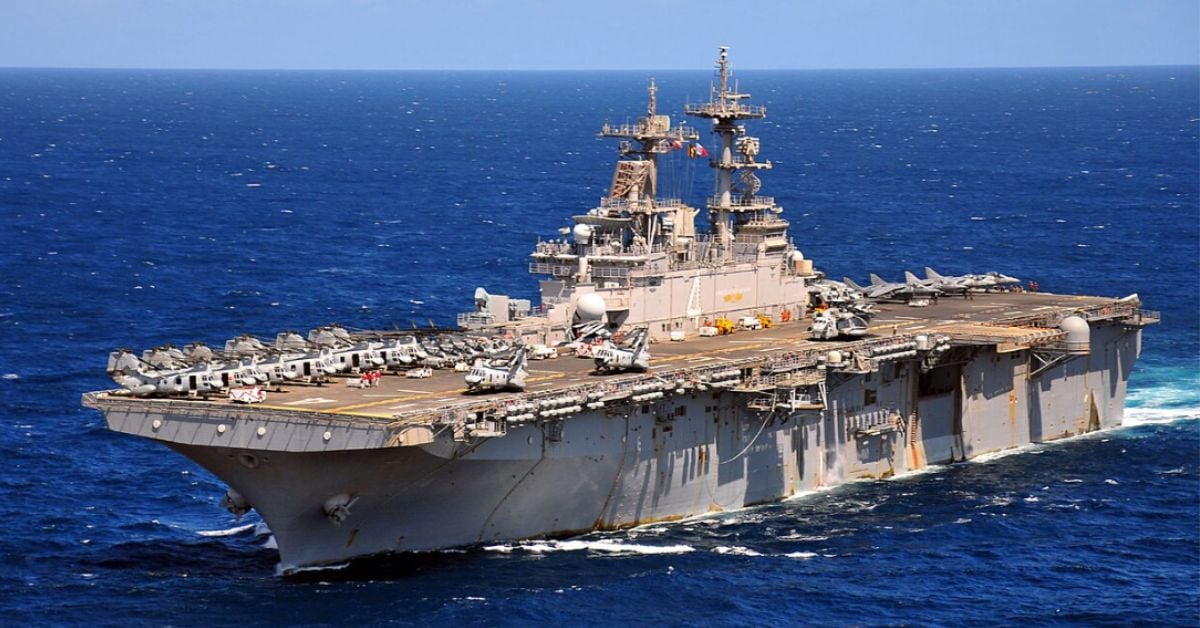
Boxer's Extended Overhaul: Maintaining Naval Readiness Through Integrated Data.
USS Boxer will spend the next several years in a San Diego shipyard, with BAE Systems handling an extended overhaul that runs through October 2028. The work is about more than hull maintenance; it is the deliberate integration of data systems into a warship built for adaptability. Naval readiness now depends on how well platforms share and process information. As autonomous systems reshape operations, as the Navy's new integration center signals, this overhaul positions Boxer for what comes next.
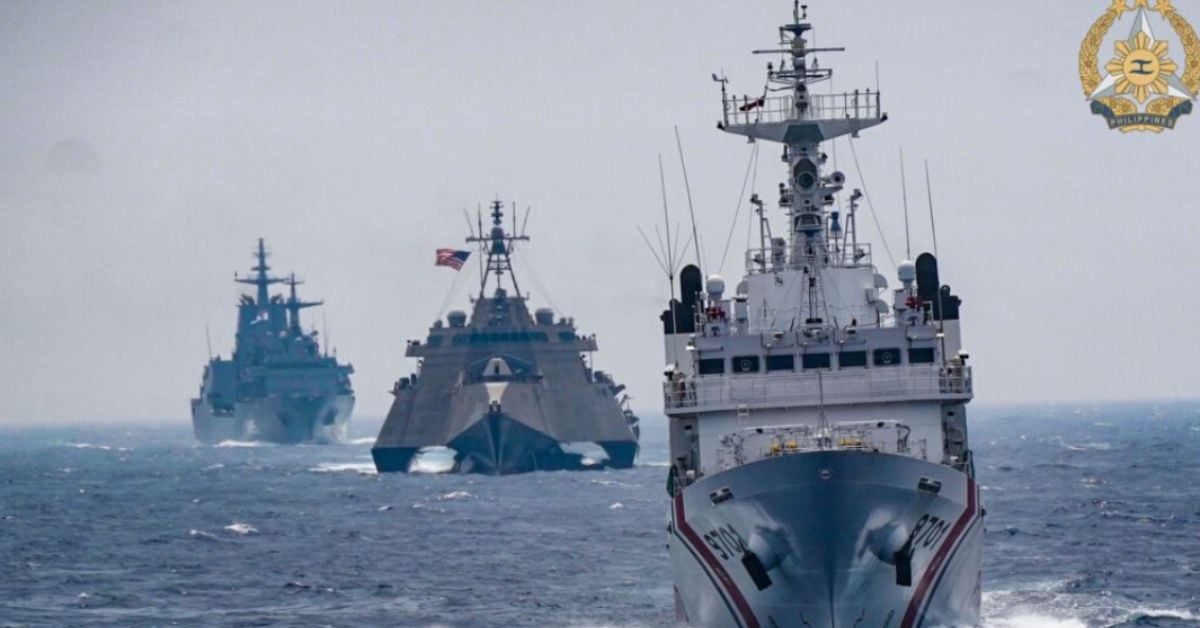
Naval Tensions Rise: Incident Near Sabina Shoal During Joint Exercises
The sight of Chinese warships shadowing Australian, Philippine, and U.S. vessels near Sabina Shoal during joint exercises is a measured reminder of how tense the region has become. These maneuvers are not accidents; they are calibrated signals of presence and intent. The West Philippine Sea demands precise observation, not alarm. For readers tracking the broader picture, our coverage of China's new nuclear carrier offers useful context on how such naval ambitions are being extended. For now, the message is clear: vigilance remains the operative word.

U.S. Actions Disrupt Iranian Shipping Amidst Regional Tensions
U.S. Central Command reports that its forces have redirected 70 merchant vessels, boarded two, and disabled three since reimposing the blockade on Iran. These actions disrupt shipping lanes already strained by regional tensions. Measured enforcement, yes, but the ripple effects demand attention. For context on how these routes are evolving, our related piece, "Gulf of Oman STS Transfers Max Out Amid Rising Saudi Oil Exports," details the capacity pressures amplifying this pressure.

Integrated Radar Demonstrates Enhanced Maritime Defense Capabilities in Pacific Dragon
The AN/SPY-6 radar has proven its mettle, completing operational tests alongside allied warships during the Pacific Dragon 2026 exercise. This isn't just another system check; it's a calibrated step forward in integrated maritime defense. The data validates that coordinated, real-time ocean intelligence is within reach. We see this as a practical demonstration of how allied forces can operate as a single, cohesive unit.

Engineering Casualty Impacts US Navy Destroyer Operations in South China Sea
An engineering casualty aboard the USS Benfold has sidelined the destroyer's generators during routine South China Sea operations. The incident underscores how mechanical reliability remains the quiet backbone of naval power, even as the fleet pushes toward autonomous systems and expanded reach. For a region where readiness is measured in real-time, a single malfunction carries strategic weight. The Navy's broader push, including its new center for autonomous integration, signals a shift worth watching. Operational resilience, after all, starts below deck.

Expanding Tomahawk Production: A Seven-Year, $22.9 Billion Investment.
Raytheon's seven-year, $22.9 billion agreement to scale Tomahawk production from roughly 60 missiles annually to more than 1,000 marks a measured, strategic response to global demand. This is not hyperbole; it is industrial recalibration. The numbers carry weight, and the commitment signals a long view on maritime deterrence. For context on how such capabilities intersect with diplomatic pressure, our related piece on phased negotiations to ease Strait of Hormuz restrictions offers a parallel read on leverage.

On-Demand Repairs: Navy Ships Leverage 3D Printing at Sea
The USS Theodore Roosevelt printed replacement parts at sea on July 3, 2026, using a hybrid-metal 3D printer during Rim of the Pacific exercises. This is maintenance redefined: repairs happen where the ship is, not where the supply chain says it should be. The capability shortens downtime and extends operational reach, a practical answer to a persistent logistical problem. For context on how navies are adapting to broader strategic pressures, India's fleet expansion offers a useful parallel.

Expanding Naval Capacity: Pentagon Explores International Shipbuilding Options
President Donald Trump's memorandum directing the Pentagon to explore foreign-built warships and auxiliary vessels marks a pragmatic recalibration of U.S. naval strategy. Expanding capacity through international shipbuilding is not an admission of weakness; it is an acknowledgment that timelines and industrial output matter. The move invites scrutiny, but it also opens a lane for allied integration. For deeper context on how other nations are scaling maritime assets, our coverage of China's new nuclear carrier signals extended naval operations capability offers a useful comparison.

Sustained U.S. Naval Presence Ensures Ongoing Iranian Port Restrictions.
Defense Secretary Pete Hegseth confirmed the U.S. retains sufficient naval resources to sustain the blockade of Iranian ports indefinitely. That is not a posture of bluff; it is a statement of calibrated, measurable capability. The pressure remains deliberate, and the strategic intent is clear. For readers tracking the broader maritime picture, our related coverage on Gulf of Oman STS transfers maxing out offers useful context on regional shipping pressures. The blockade holds, and the message is consistent: persistence is part of the strategy.

Geopolitical Tensions Mount: Strait of Hormuz Control Disputed.
The Strait of Hormuz remains a flashpoint, with Iran holding the waterway's reopening hostage to unmet US demands. This is not posturing; it is a calculated standoff with global energy implications. The pressure is measurable, and the stakes are empirical. For deeper context on how such tensions shape regional flows, our piece on "Gulf of Oman STS Transfers Max Out Amid Rising Saudi Oil Exports" offers a related view. The channel's status is not a given; it is a condition under negotiation.

Austal USA Delivers First U.S. Navy Floating Dry Dock in Decades
On Saturday, July 25, 2026, Austal USA launched the AFDM 15, the first U.S. Navy floating dry dock delivered in decades, moving it from its Alabama Shipyard assembly site to the water. The achievement restores a critical capability long absent from the fleet, signaling renewed industrial momentum for naval infrastructure. It also pairs with our coverage of the Navy's accelerated submarine strategy, reinforcing a broader push toward sustained maritime readiness. Precision in execution here is measurable, and the strategic timing is hard to ignore.

Autonomous Refueling: U.S. Navy Advances Maritime Aviation Capabilities
The MQ-25A unmanned aerial tanker is set to operate directly from U.S. aircraft carriers, a capability designed to extend the reach of carrier air wings without relying on shore-based support. This is a practical step toward integrating autonomous systems into the heart of naval operations. The platform's success will depend on rigorous testing and seamless integration with existing carrier procedures. For a broader view of how the Navy is structuring these efforts, our related piece on the Navy's new autonomous systems center offers useful context.

Autonomous Resupply Demonstrates Ocean Intelligence for Naval Operations
Splash Industries has completed the world's first fully autonomous underway resupply of a U.S. Navy warship, using an Unmanned Surface Vehicle to transfer supplies without a single human touch on deck. It is a practical proof that autonomy can handle the most demanding naval logistics. This milestone pairs naturally with our coverage of India's expanded fleet plans, a reminder that resupply is the quiet backbone of any blue-water ambition.

Autonomous Vessels Chart Ocean Depths in Navy Mapping Project
The U.S. Navy's selection of Boston-based Blue Water Autonomy to map ocean floors with uncrewed surface vessels marks a practical step forward in maritime intelligence. This is not flashy technology; it is calibrated, real-time data collection that strengthens navigational safety and operational awareness. The project reflects a growing trust in autonomous systems to perform precise, sustained work where crewed vessels face greater risk.

Unresolved Loss: Navy Declines Salvage of Sunken Fishing Vessel, Lily Jean
The U.S. Navy has declined to salvage the *Lily Jean*, the fishing vessel that sank in Atlantic waters earlier this year, claiming seven lives. The decision leaves unresolved questions for the families and for maritime safety oversight. Salvage operations are complex, but the choice to forgo recovery is stark. For context on how the Navy prioritizes its maritime assets, our coverage of the U.S. Navy's accelerated submarine production strategy offers a telling counterpoint. Some losses, it seems, are measured in strategic terms, not human ones.

Rapid AI Sonar Retraining Boosts Navy’s Deep-Sea Monitoring Capabilities
Lockheed Martin reports that rapid AI sonar retraining now lets naval helicopter operators monitor twice as many sonar feeds as older systems allowed. That is not incremental improvement; it is a measurable leap in how much underwater intelligence a single crew can process in real time. The capability feels less like a convenience and more like a necessity, given the growing complexity of deep-sea operations.

Naval Investment: Trump-Class Battleships to Reach $275 Billion
The Trump-Class Battleship program carries a $275 billion price tag, with the lead vessel alone reaching $23.4 billion. That is a staggering commitment, but it signals a deliberate move toward sustained maritime dominance. We see this as a statement of intent, not just a budget line. For context on how other nations are scaling their fleets, our coverage of India's expanded naval projections offers a useful counterpoint. Battleship investments of this scale demand scrutiny, yet they underscore a clear strategic calculus.

Iranian Official: U.S. Naval Blockade Risks Escalation in Persian Gulf
Iran's military adviser, Mohsen Rezaei, has made the position unmistakable: Tehran will not tolerate a continued U.S. naval blockade in the Persian Gulf. The warning carries weight, but the region's maritime tensions are already stretching elsewhere. As our coverage notes, Gulf of Oman STS transfers are maxing out amid rising Saudi exports, and India is expanding its fleet for a more contested sea. These pressures do not exist in isolation. The Strait of Hormuz remains the fault line where economic pressure meets strategic risk.

Unmanned Systems Enhance Maritime Security, Intercepting $81M in Cocaine.
A single unmanned surface vehicle turned the tide of a multi-million-dollar drug run. Operating ahead of the interdiction, the system tracked the target, relayed real-time coordinates, and enabled a U.S. Navy crew to close in and seize $81 million in cocaine. This is not just a successful bust; it is a measurable demonstration of how autonomous systems are redefining maritime law enforcement.

Navy Removes Submarine Commander Citing Loss of Confidence
The U.S. Navy's decision to relieve a submarine commander over a "loss of confidence" underscores the uncompromising standard required for those entrusted with silent service. This is not a casual rebuke; it is a calibrated judgment that leadership is about more than technical skill. Such decisions, while stark, reinforce the discipline that underpins our naval power. For context on how this fits into broader force readiness, our piece on the U.S.

Refrigerant Leak Prompted Emergency Response Aboard Navy Vessel in Newport News
Aboard a U.S. Navy vessel in Newport News, a refrigerant leak triggered a swift emergency response, with fire crews arriving at 1201 Terminal Ave. just after 7:43 p.m. The incident underscores how routine operations can escalate into urgent situations, demanding calibrated, real-time reactions. While details remain limited, the response reflects the discipline required in maritime environments. For broader context on vessel emergencies, our report on the cargo ship fire near Mykonos offers additional perspective.

Automated Welding Pilot to Enhance Shipbuilding Efficiency and Safety
HII and HD Hyundai Heavy Industries are testing intelligent mechanised welding systems at Ingalls Shipbuilding, a move that pairs proven industrial capability with emerging automation. The pilot targets efficiency and safety, two metrics that matter when every weld holds both steel and schedule together. This is practical innovation, not spectacle. For broader context on how shipyards are adapting, our piece on the U.S. Navy's integrated submarine production strategy offers useful comparison. Measured steps like these compound into real operational gains.

Expanding Naval Capacity: $71.6 Billion Investment in Submarine Fleet
A $71.6 billion investment in the U.S. submarine fleet signals a decisive commitment to naval readiness. Electric Boat, General Dynamics' nuclear submarine unit, anchors this effort through design, construction, and modernization. This scale of funding reflects measured confidence in long-term maritime strategy. For context on how allied and competing navies are expanding, our coverage of China's new nuclear carrier highlights parallel developments in extended operations. Together, these stories underscore a shifting global balance beneath the waves, where capability and endurance define influence.

Nuclear Propulsion Powers Next-Generation U.S. Battleship Program
Nuclear propulsion is set to power the U.S. Navy's next-generation Trump-class battleship, a decision that pairs long-range endurance with strategic staying power. This is not just a propulsion choice; it is a statement about sustained presence. For readers tracking parallel developments, China's new nuclear carrier signals similar ambitions, but the U.S. program grounds its advantage in validated, peer-reviewed operational planning. We see this as a calibrated step forward: nuclear energy offers real-time readiness without the logistical drag of refueling.