risk assessment
15 stories filed under risk assessment on World Data Ocean. The newest of them: “Agulhas Leakage reveals intensifying compound ocean extremes”, “Cross-border radioactive risks test China's unified ocean code”, and “Optimizing Tunneling Risk: Mud Cake Formation in Varied Seabed Strata”. The Agulhas Leakage is revealing intensifying compound ocean extremes, and the findings demand our attention. Radioactive contamination does not respect maritime borders, and China's shift toward a unified legal code reflects that reality. A Global Hub for Ocean Intelligence 4 World Data Ocean is a centralized digital platform where researchers, scientists, and ocean enthusiasts converge to… The list below is every risk assessment story on World Data Ocean, newest first.

Agulhas Leakage reveals intensifying compound ocean extremes
The Agulhas Leakage is revealing intensifying compound ocean extremes, and the findings demand our attention. Marine heatwaves and ocean acidity extremes are co-occurring more frequently after the 2000s, with cumulative MHW intensity rising from approximately 29.95 to 109.51 °C-year in the original data. Detrending confirms that long-term warming and acidification trends drive most of this increase, while anticyclonic eddies trap warm, high-[H+] waters in the dynamically active Agulhas Retroflexion. This is empirical, measurable evidence that baseline choice critically shapes compound-extreme risk assessment.
Cross-border radioactive risks test China's unified ocean code
Radioactive contamination does not respect maritime borders, and China's shift toward a unified legal code reflects that reality. The Ecological and Environmental Code now bans radioactive discharge and waste disposal at sea, while extending domestic law to overseas conduct that threatens Chinese waters. That is a meaningful step, but enforcement gaps remain, unclear procedures, vague regulatory scope, and weak coordination weaken its reach. The framework is promising, yet implementation, not intent, will determine whether it truly protects the ocean.
Optimizing Tunneling Risk: Mud Cake Formation in Varied Seabed Strata
Cutterhead clogging from mud cake formation remains one of the most disruptive risks in subsea shield tunneling, especially when the machine crosses alternating soft, hard strata. Conventional soil index boundaries, we find, are too blunt for these conditions. This study sharpens the picture by redefining plasticity and liquidity index ranges through laboratory tests, then weighting geological and operational factors with AHP. The result is a four-level risk system that outperforms standard criteria.

Rising Battery Shipments Demand Enhanced Safety Protocols.
Global lithium-ion battery deployments in 2025 reached six times the volume of 2020, a validated surge that demands calibrated safety protocols. This rapid scaling of energy storage is measurable progress, but it also introduces new risks we must address with the same empirical rigor that drives ocean intelligence. Understanding drives protection. For deeper context on maritime safety, our analysis of the NTSB's 2025 Safer Seas Digest offers peer-reviewed lessons from recent casualties.

Shifting Malaria Risks: Climate Change Reshapes Disease Patterns in Africa
Climate indicators now show a measurable shift in malaria's footprint across Africa. Historic data and validated predictions point to rising case counts in East Africa and southern regions, while the threat may ease in West and Central Africa. This is not alarmism, it is empirical evidence demanding adaptive planning. Understanding drives protection. For deeper context on climate-driven systems change, see our related analysis on "Transformative Coastal Adaptation: Analyzing Systems for Climate Resilience."

Maintenance Incident Highlights Risks of Solo Hatch Cover Handling
A routine engine maintenance task turned dangerous when a heavy hatch cover slipped onto a crew member's hand. This incident underscores a simple but critical truth: solo handling of heavy equipment introduces measurable risk. Safety protocols exist for a reason, and shortcuts invite consequences. For a deeper look at how operational risks are managed across industries, our coverage of "Optimizing Tunneling Risk: Mud Cake Formation in Varied Seabed Strata" offers a parallel perspective on hazard mitigation.
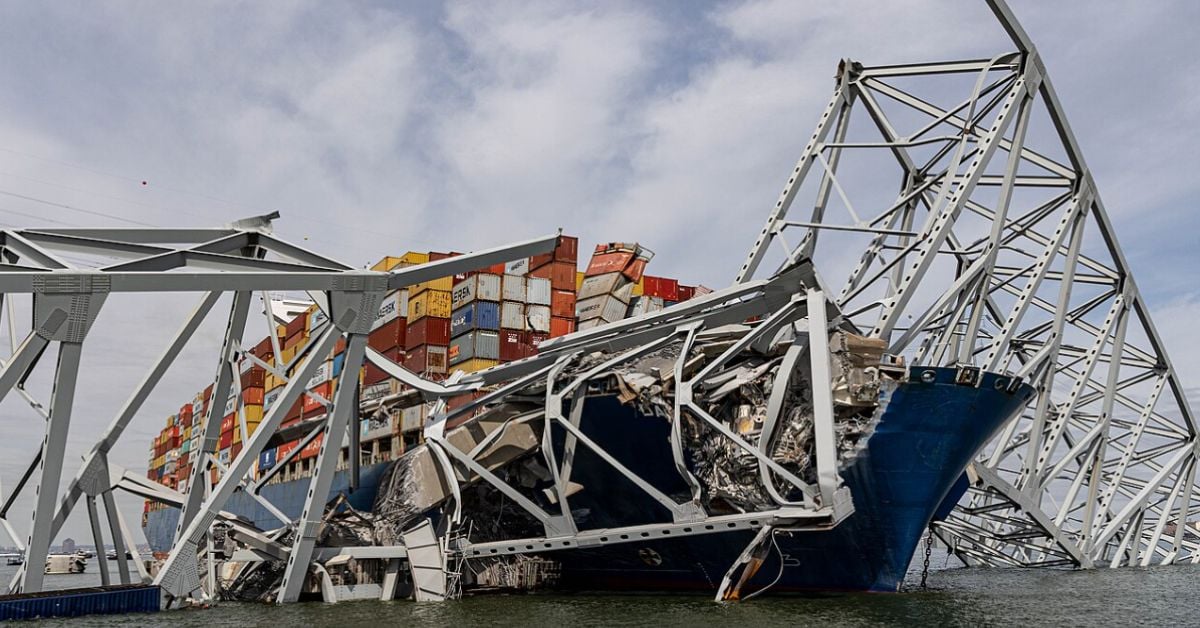
Key Bridge Collapse Reveals Critical Gaps in Port Safety Assessments
The final report on the Key Bridge collapse confirms what empirical data has long indicated: waterway risk assessment tools remain underutilized, leaving port infrastructure vulnerable to evolving threats. This is a measurable failure, not an abstract one. Validated, real-time ocean intelligence must be integrated into safety protocols, understanding drives protection. For deeper context on maritime infrastructure development, see our coverage of Paradip Port's designation as a Mega Port, anchoring Eastern India's growth.
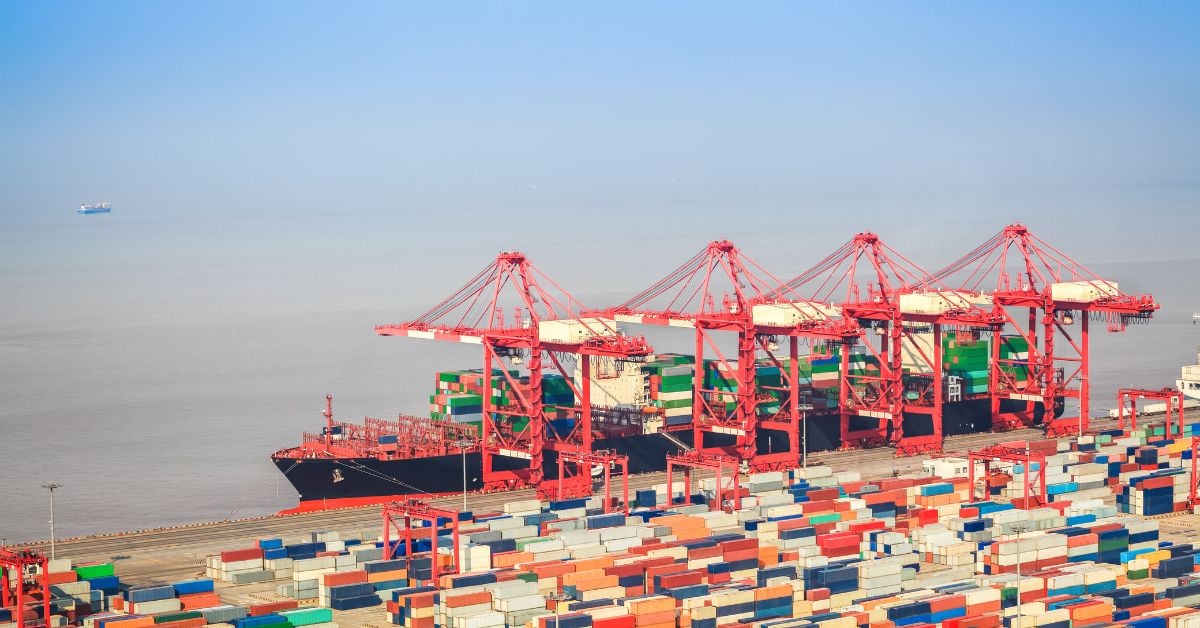
AI-Powered Vessel Design Integrates Ocean Data for Enhanced Efficiency
At SMM 2026 in Hamburg, Shanghai Merchant Ship Design, CMA CGM, and Bureau Veritas signed a contract to integrate ocean data directly into vessel design. This is not a small step; it is a calibrated move toward measurable efficiency. Pairing validated, real-time climate indicators with empirical engineering gives the industry a clearer path forward. For readers tracking maritime logistics, our coverage of the Strait of Hormuz shipping lane dispute offers useful context on why such efficiency matters now.
OODA-Informed Navigation: Enhancing Autonomous Ship Decision-Making at Sea
The OODA loop, long a mainstay of tactical decision-making, now finds a compelling application in maritime autonomy. This study confronts a core challenge head-on: collision avoidance systems that falter in complex encounters. By structuring navigation through Observe, Orient, Decide, and Act, the framework creates a closed loop where situational awareness directly informs validated maneuvering decisions. The results, verified on OpenCPN, show all target vessels cleared with DCPA well above safety thresholds. This pragmatic approach to integrating ship domain models with velocity obstacles yields COLREGs-compliant strategies.
Dynamic Coastline Modeling Improves Oil Spill Risk Assessment.
A finite shoreline cannot absorb oil indefinitely, yet that is the static assumption most spill models rely on. This study replaces that flawed premise with a dynamic adsorption-desorption mechanism, integrating substrate-specific retention and release into the SCHISM model. The result is a rise-then-fall evolution of stranded oil, not a static partition. Applied to the Zhoushan Archipelago, it reshapes risk zoning by revealing how tidal flats trap while gravelly shores permeate.

Alternative Fuels: UK Shipping Assesses Safety for a Net Zero Transition
Safety is the quiet foundation of shipping's energy transition, and the UK Chamber of Shipping's new report ensures it is not overlooked. The assessment addresses the practical risks of alternative fuels, grounding the net zero shift in empirical, peer-reviewed scrutiny rather than optimism alone. That measured approach matters for an industry where precision is non-negotiable. For those tracking how such operational data integrates with broader ocean intelligence, our related piece on bridging data gaps through citizen science offers a useful complement to this safety-first perspective.

Red Sea Risk Zone Expands as Insurers Respond to Houthi Actions
London's marine insurance market has widened the Red Sea's high-risk zone following Houthi attacks on Saudi-linked vessels, a measured response to a volatile reality. This is prudent, not panicked. Insurers are calibrating risk with precision, and the expansion reflects empirical threats rather than speculation. For those tracking regional chokepoints, our coverage of Gulf of Oman STS transfers offers useful context. Understanding drives protection, and here, the data speaks clearly.

Heightened Maritime Security: India Bolsters Protection for Seafarers in Gulf of Aden
Piracy incidents in the Gulf of Aden have prompted India to act, with the DGMA issuing Circular No. 40 of 2026 to bolster seafarer protection. This measured response reflects a practical understanding of the risks, prioritizing crew safety without alarmism. It is a decisive step toward safeguarding vital shipping lanes. For broader context on regional threats, readers may consult our coverage of "Puntland Forces Intercept Hijacked, US-Sanctioned Oil Tanker After 48 Hours."
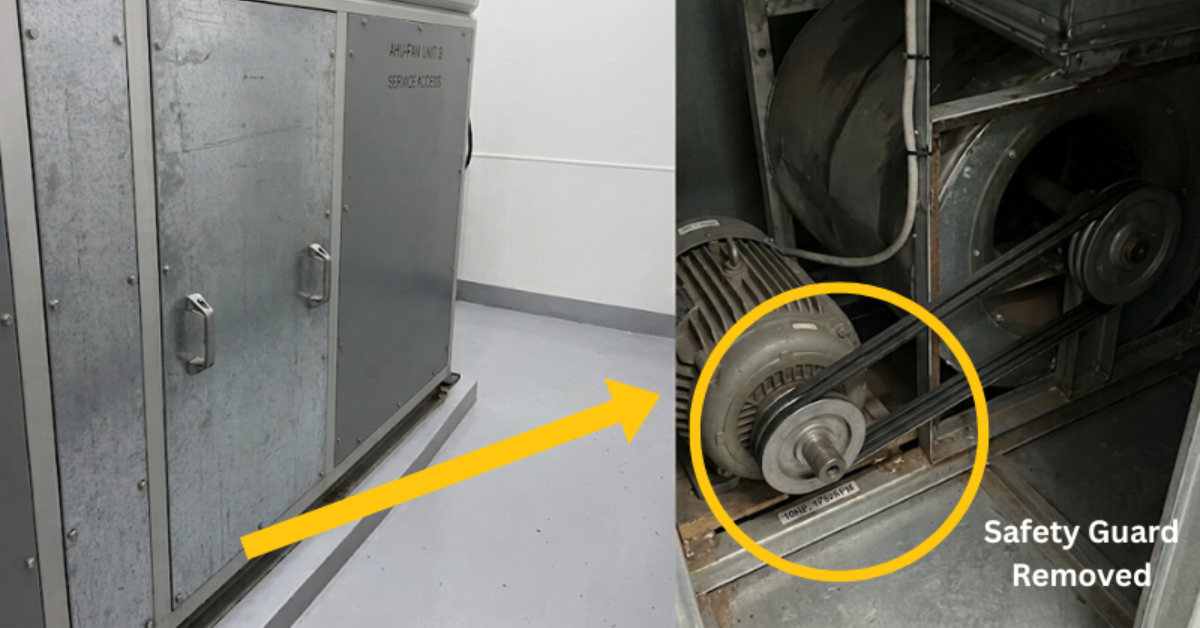
Calibration Error: Incident Highlights Importance of Safety Protocols at Sea
A single misstep in rough seas turned routine maintenance into a serious incident, as an engineer lost balance and contacted a running A/C compressor belt. The injury underscores a plain truth: protocols exist to be followed, not admired. Safety at sea is not theoretical, and this event is a measured reminder that operational discipline is the difference between a close call and a casualty.
China's Law Extends Environmental Protection Beyond Its Borders.
China's new Ecological and Environmental Code marks a defining step in ocean governance. For the first time, a fundamental environmental law asserts extraterritorial jurisdiction over transboundary marine harm, using the possibility of damage as a trigger. It is a bold translation of the precautionary principle into legal practice. Yet the gap between legislative ambition and judicial or enforcement reality remains wide. Turning this provision into action will require calibrated standards, cross-border cooperation, and a realistic path for judgment enforcement.