navigation
World Data Ocean keeps navigation in one place: 40 stories so far. The section currently leads with “Iran Asserting Control Over Vital Strait of Hormuz Passage”, “PLA Navy Expands Capabilities with Combat-Ready Amphibious Assault Ship”, and “Missile Attack on ADNOC Vessel Highlights Regional Maritime Risks”. Iran's assertion that it manages and controls the Strait of Hormuz is a statement of strategic fact, not posturing. The PLA Navy's fourth Type 075 amphibious assault ship, Hubei, has officially entered service, joining Hainan, Guangxi, and Anhui in a fleet built for combat-ready operations. A Global Hub for Ocean Intelligence 4 World Data Ocean is a centralized digital platform where researchers, scientists, and ocean enthusiasts converge to… The list below is every navigation story on World Data Ocean, newest first.

Iran Asserting Control Over Vital Strait of Hormuz Passage
Iran's assertion that it manages and controls the Strait of Hormuz is a statement of strategic fact, not posturing. For a nation whose economy and security are tied to the waterway, claiming this position is both logical and consequential. The strait's role as a global energy artery makes such declarations inherently significant, and we should treat them with the gravity they demand. For broader context on regional shipping pressures, our coverage of Gulf of Oman STS transfers offers a useful parallel.

PLA Navy Expands Capabilities with Combat-Ready Amphibious Assault Ship
The PLA Navy's fourth Type 075 amphibious assault ship, Hubei, has officially entered service, joining Hainan, Guangxi, and Anhui in a fleet built for combat-ready operations. This is a deliberate expansion, not a ceremonial one. Each vessel adds measurable amphibious reach, strengthening maritime response where it matters. For those tracking regional stability, the pattern is clear: capability is being calibrated in real time.

Missile Attack on ADNOC Vessel Highlights Regional Maritime Risks
On August 8, 2026, a missile attack on an ADNOC vessel crossing the Strait of Hormuz underscored the fragility of regional maritime routes. The incident is a measured reminder that shipping lanes remain exposed to geopolitical friction. Such strikes do not occur in isolation; they strain the integrated data ecosystems that monitor these waters. For context on diplomatic efforts, our related piece, "Phased Negotiations Aim to Ease Restrictions on Strait of Hormuz," outlines ongoing talks.

Attacks on ADNOC Vessels Disrupt Oil Flow Through Strait of Hormuz
Three ADNOC vessels came under attack this week, with one crew member killed and 20 injured, the company confirmed. This is not an isolated incident; it is a direct strain on the flow of oil through the Strait of Hormuz, a corridor the entire region depends on. The human toll is unacceptable, and the disruption to global energy routes demands a measured, empirical response. Our related coverage on phased negotiations to ease restrictions in the strait offers essential context for what comes next.

Collision on Houston Ship Channel: Distraction a Factor in Fatal Incident
A fatal collision on the Houston Ship Channel has placed a harsh spotlight on human error, with distraction emerging as a likely factor. Four crew members were pulled to safety by the tugboat George M, yet the fifth was discovered dead within the wreckage. This loss is a sobering reminder that vigilance is non-negotiable at sea. While investigations will determine the precise sequence of events, the incident underscores how a single lapse can cascade into tragedy.

Shipping Industry Cautions Against Transit Tolls in Strait of Hormuz
The shipping industry is pushing back against proposed transit tolls in the Strait of Hormuz, urging caution as Iran and Oman reportedly near an agreement to manage the waterway. The stakes are measurable: this is a critical artery for global energy, and adding costs now could ripple across supply chains still recalibrating from past disruptions. The concern is legitimate, though negotiation details remain thin.
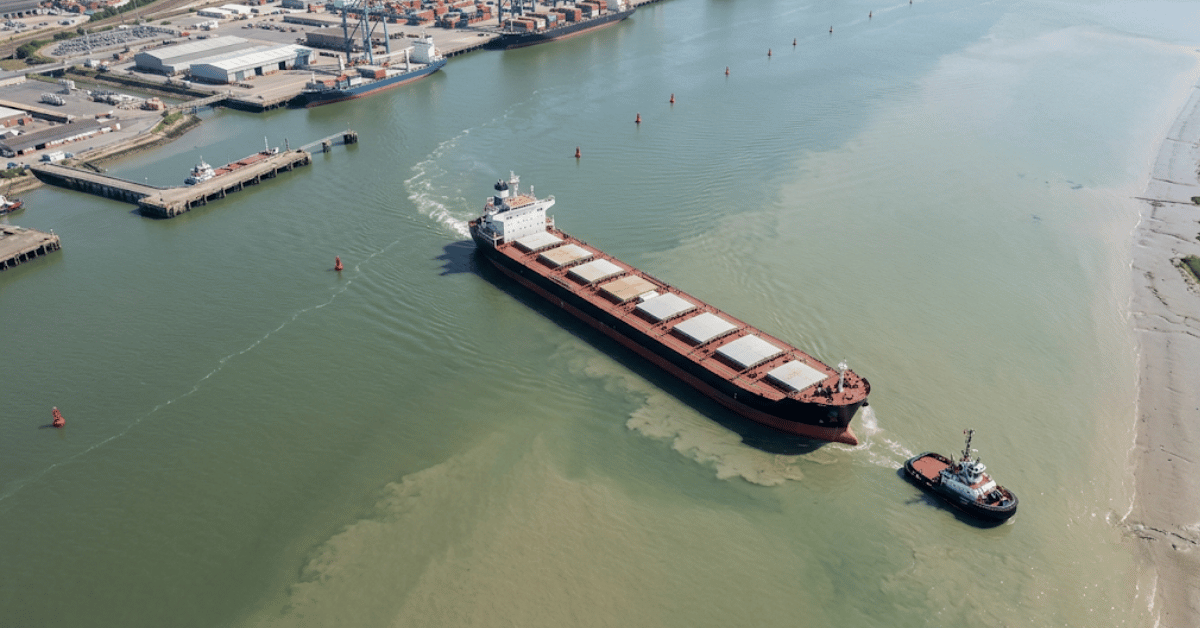
Navigation Error Highlights Risk of Expectation Bias at Sea
A pilot's error outside the dredged channel grounded a bulk carrier twice, a stark reminder that expectation bias can override even the most familiar waterway. We often trust what we think we see at sea, yet this incident shows how quickly assumption undermines navigational safety. The lesson is not new, but it bears repeating: verify every fix, question every turn. For those tracking similar risks, our coverage of the bulk carrier freed after prolonged grounding near Gladstone offers further context worth reviewing.

Exploring the Cook Islands Depths: A 2026 ROV Expedition.
In 2026, a new ROV expedition will descend into the waters surrounding the Cook Islands, aiming to transform our understanding of a region whose depths remain largely unmeasured. This is not a hunt for spectacle; it is a methodical effort to gather empirical data where none currently exists. The mission's value will be defined by its calibrated instruments and the peer-reviewed findings they produce.

Disagreement Over Hormuz Strait Impacts Vital Shipping Route Accessibility.
The latest disagreement over the Strait of Hormuz marks a direct setback to reopening one of the world's most vital energy arteries after months of conflict. Progress was never guaranteed, but this stalling carries measurable weight for global shipping and climate-dependent supply chains. The path forward demands calibrated negotiation, not posturing. For context on how regional pressures are already reshaping oil flows, our related coverage on Gulf of Oman STS transfers maxing out offers a clearer picture of the strain.
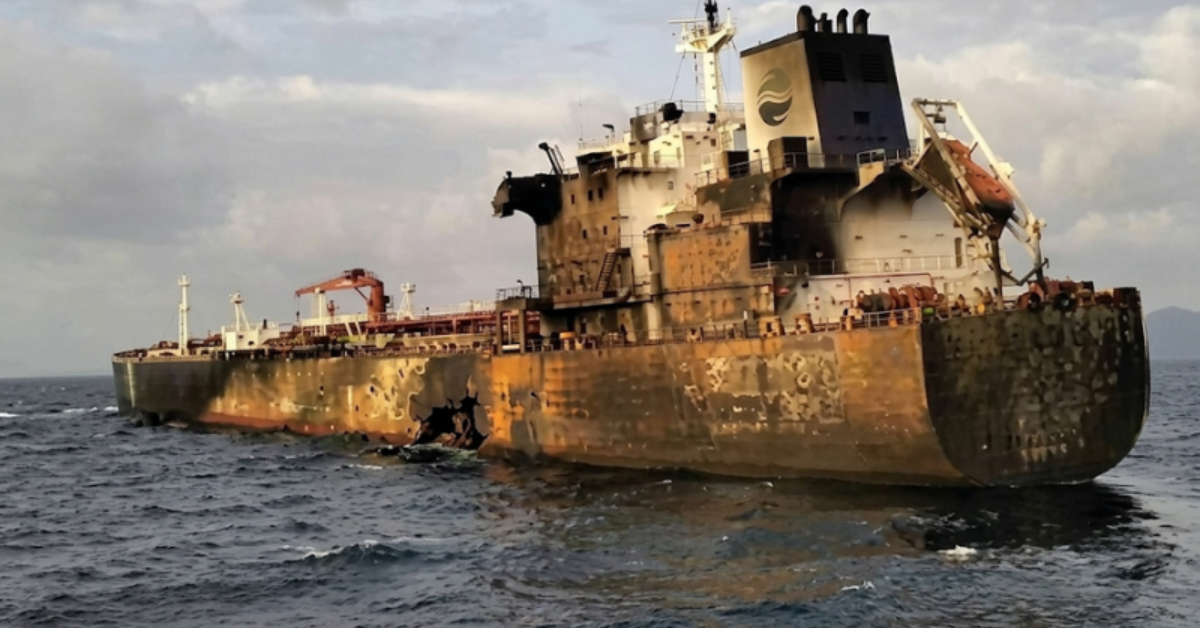
Fatigue and Navigation Error Spark Vessel Collision Incident
A fatigued officer of the watch made navigational errors that sent a tanker into an anchored vessel, sparking fires and forcing both crews to abandon ship. It is a stark reminder that human endurance has limits, and those limits have consequences. Fatigue is a measurable risk factor, and this collision shows what happens when it is not managed. For deeper context on regional shipping pressures, see our coverage of "Eighty Nations Urge Reopening of Vital Strait of Hormuz Shipping Lane."

Maritime Safety: Integrated Systems and Procedures for Complex Operations
A commercial voyage is won long before the gangway comes ashore; it is secured in the orchestration of mooring lines, cargo holds, and the discipline of enclosed space entry. These integrated systems and procedures form the real ballast of maritime safety. We see this complexity as a strength, not a burden. Vessels that master this coordination operate with a quiet authority.

AI Space Navigation: Current Limitations Demand Human Oversight.
In science fiction, AI navigates the unknown and keeps travelers safe. In reality, it cannot yet be trusted to do so alone. Current limitations in machine reasoning demand human oversight for complex space navigation. This is not a failure; it is a calibration of roles. As our related coverage on the Navy's autonomous systems integration shows, measured human control remains central to operational success. Understanding these boundaries drives both safety and progress.

Trade Focus Alters Transit Fees in Gulf Region
President Trump's plan to pivot toward direct trade and investment agreements with Gulf allies signals a calculated shift in regional economics. By prioritizing bilateral deals, the administration aims to recalibrate transit fees and commercial leverage, a move that could yield mutual gains if executed with precision. The timing is telling, given the strain on Gulf of Oman STS transfers, as detailed in our related coverage. Trade policy here is not abstract; it is measured in barrels, routes, and renegotiated terms.

Maritime Security Imperative: IMO Condemns Attacks on Shipping Lanes
The IMO's condemnation of attacks on shipping lanes is a measured, necessary response to a crisis that threatens the very framework of global trade. The Secretary-General's call for an end to unwarranted strikes is not just diplomatic language; it is a demand for the rules that keep our integrated data ecosystem moving to hold firm. Geopolitical friction cannot be allowed to destabilize the maritime routes we all depend on.

Safeguarding Seas: IMO Council Underscores Navigation and Seafarer Safety.
The IMO Council closed its 137th session by reaffirming what should never be negotiable: the right to safe passage. Safeguarding Seas: IMO Council Underscores Navigation and Seafarer Safety reflects a measured, necessary stance amid rising geopolitical friction. Navigation rights are not abstract; they are the backbone of global trade and humanitarian access. The Council's clarity is welcome, especially as pressure on chokepoints intensifies.
Real-Time Wave and Boat Motion Estimation with Kalman Filtering
A Kalman filter is a precise tool for a chaotic environment, and that is exactly what this work brings to marine navigation. The open-source `ocean-imu` project, built for the atomS3R, delivers real-time heave and wave-direction estimates by fusing IMU data through an OU-driven quaternion MEKF. It is a practical, peer-reviewed approach to a complex problem. For those interested in the broader context of maritime data systems, our piece on Ukraine's Black Sea shipping initiative offers a relevant policy perspective.