marine pollution
12 stories filed under marine pollution on World Data Ocean. The newest of them: “Drone damage and severe weather ground two vessels near Istanbul”, “New container ship design eliminates manual lashing to boost capacity and safety”, and “Mapping Ocean Plastic Accumulation to Future Climate Indicators”. Two commercial vessels have grounded near Istanbul, one after drone damage and another following severe weather. Manual lashing has long been a bottleneck in container shipping, a labor-intensive process that limits both capacity and crew safety. A Global Hub for Ocean Intelligence 4 World Data Ocean is a centralized digital platform where researchers, scientists, and ocean enthusiasts converge to… The list below is every marine pollution story on World Data Ocean, newest first.
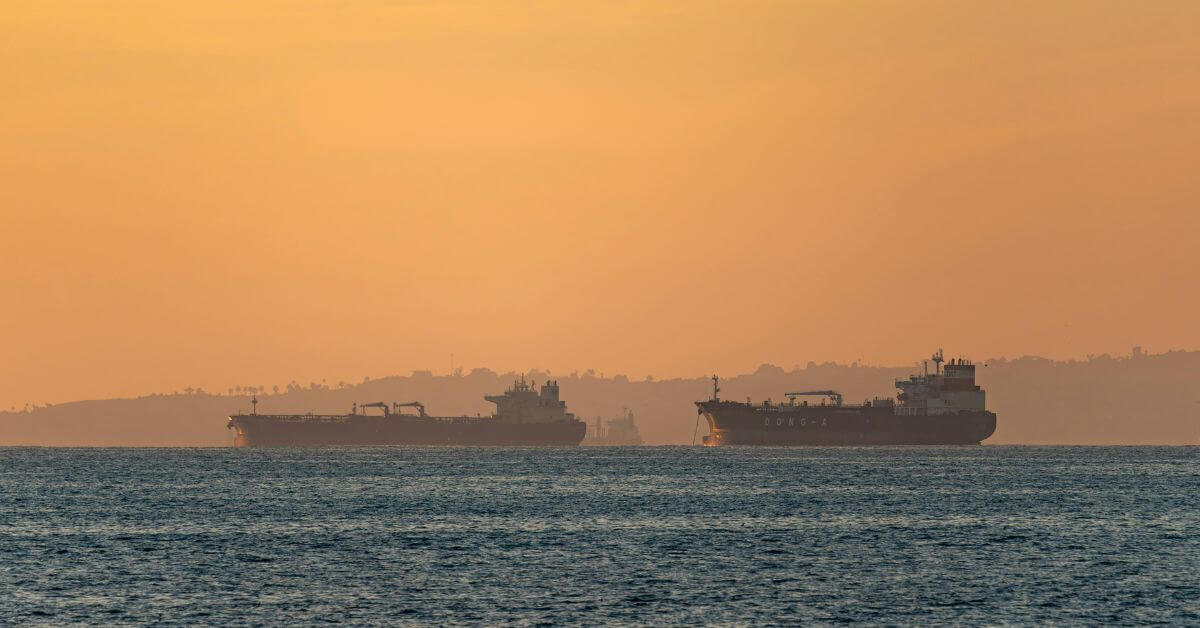
Drone damage and severe weather ground two vessels near Istanbul
Two commercial vessels have grounded near Istanbul, one after drone damage and another following severe weather. These incidents follow multiple reported drone attacks on commercial shipping in the Black Sea throughout October. The convergence of conflict-driven threats and natural hazards in a single maritime corridor is a measurable risk that demands integrated monitoring. For deeper context on regional drone escalation, see our coverage of the Black Sea tanker attacks off Romania.
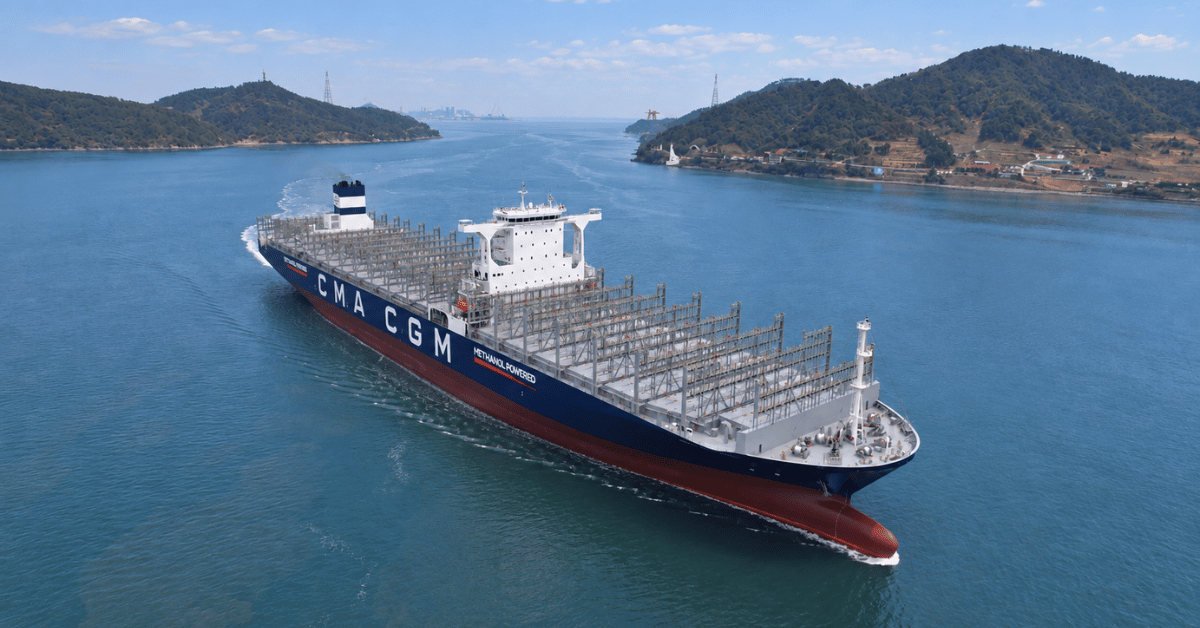
New container ship design eliminates manual lashing to boost capacity and safety
Manual lashing has long been a bottleneck in container shipping, a labor-intensive process that limits both capacity and crew safety. HD Hyundai's new lashing-free container ship changes that calculus. By eliminating manual securing, the design boosts cargo capacity while reducing risk for workers. This is measurable innovation: empirical gains in efficiency paired with validated safety improvements. For deeper context on how maritime operations are evolving, see our coverage of the coordinated medical evacuation in the Andaman Sea.
Mapping Ocean Plastic Accumulation to Future Climate Indicators
Plastic doesn't just float; it accumulates in distinct ocean zones that now serve as measurable climate indicators. Understanding where our debris settles reveals more than pollution patterns, it exposes future warming trajectories. Our World in Data maps this convergence, connecting observable accumulation zones to broader environmental shifts. The findings are empirical, calibrated, and urgent. For deeper context on how integrated data reshapes ocean observation, see our related piece "From orbit to ocean floor: integrated data reshapes our view of the sea."

Leveraging Ship Recycling: A Boost for India’s Domestic Steel Production
India is turning to a practical source of secondary steel: the hulls of retired ships. Recovered scrap from decommissioned vessels is being directed toward domestic production, a move that strengthens material security while reducing reliance on primary ore. It is a measured, industrial-scale form of recycling, one that aligns with broader efforts to build circular supply chains. For related context on maritime infrastructure, see our coverage of Paradip Port's designation as a Mega Port. The opportunity here is clear, and the timing is right.

Pipeline Integrity at Risk: Understanding Vibration and Scour in Unsteady Flows
A suspended pipeline on an erodible bed does not fail all at once; it fails through a quiet accumulation of vibration and scour, each cycle eroding the margins of safety. Our experimental work shows that the clearance ratio, not just the flow rate, governs this process. As \( e_0/D \) crosses from 0.8 to 1.2, the cross-flow amplitude surges by 76% while the in-line response lags, revealing a partial decoupling that challenges steady-flow assumptions. This selective amplification, coupled with a frequency lock near 2.
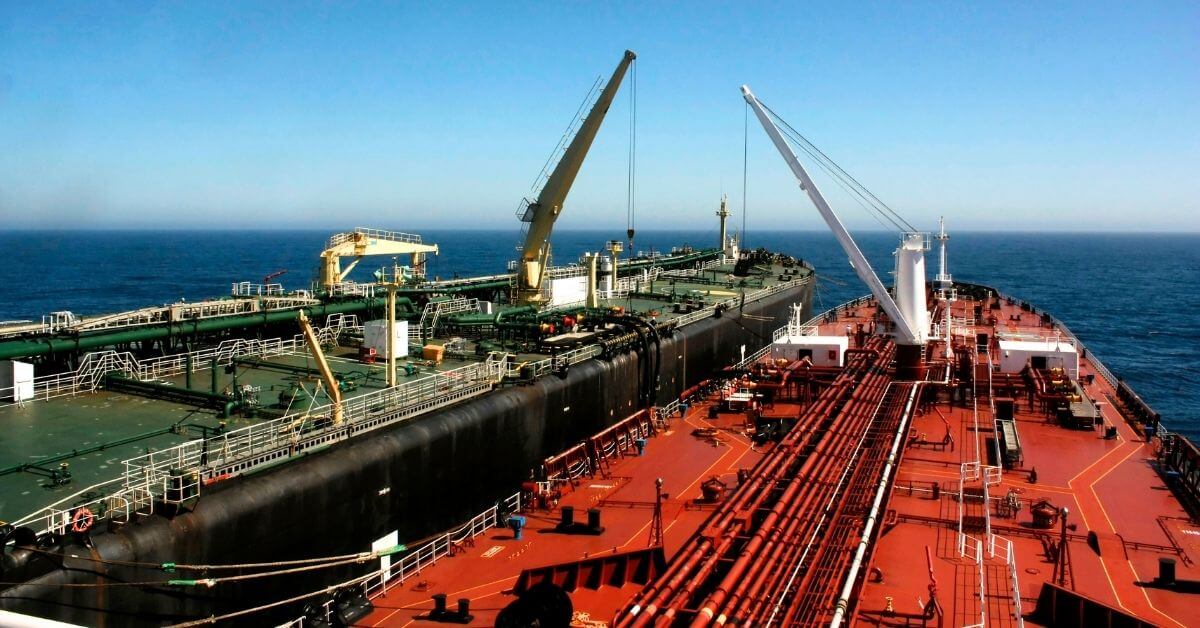
Yemen Oil Spill: Integrated Data Reveals Impact on Marine Ecosystems
The validated data emerging from the Yemen oil spill paints a precise picture of ecological disruption, one that reaches beyond the immediate slick to the coastal economies and fisheries that depend on these waters. Integrated monitoring confirms the pollution's reach, yet the focus remains on measurable recovery pathways. For those tracking regional maritime risk, our related coverage on the Gulf of Oman STS transfers offers useful context on the pressures shaping these waters. Understanding these impacts is the first step toward calibrating an effective response.
Microplastic Ingestion Threatens Endangered Marine Otters Along Peruvian Coast
Microplastic contamination has reached a top predator along Peru's central coast, with microparticles detected in marine otter scats across all three surveyed localities. The study, which examined spring and autumn samples, found fibers dominating at 88.41 percent, with Pucusana showing the highest occurrence. These findings provide baseline evidence that endangered species are ingesting anthropogenic particles, underscoring the need for targeted waste management in human-impacted habitats.
Data-Driven Solutions for a Sustainable Ocean Future
Every observation we log, from a chiton's unexpected presence in Puerto Rico to a mystery specimen washing ashore in California, sharpens our collective picture of the ocean. These are not isolated curiosities; they are data points that refine the models guiding our stewardship. We treat each report as a signal worth integrating into a larger, peer-reviewed framework. Understanding drives protection, but only when we connect the dots.
Microplastic Pollution Assessed Across Key International Shipping Routes
Aboard the research vessel *Jaywun*, 100 surface-water samples now trace a microplastic story across the Atlantic, Mediterranean, Red Sea, and Arabian Gulf. Concentrations swung from 4 to 290 particles per liter, with polyester and PET dominating the mix. The Arabian Sea carried the heaviest load, while the Strait of Gibraltar surprised with a localized peak.
Pakistan's Coast: Balancing Livelihoods, Biodiversity, and Sustainable Ocean Management
Pakistan's 1,046 km Arabian Sea coastline sustains over 1.5 million livelihoods, yet it now bears the weight of untreated sewage, industrial waste, and accelerating coastal erosion. This study's composite SDG 14 score of 4 out of 20 underscores a stark reality: legal commitments remain unmet, even as binding obligations under UNCLOS and MARPOL hold firm. The proposed National Marine Protection Act offers a calibrated path forward, one grounded in evidence rather than alarm.
Collaborative Governance: Addressing Cross-Border Marine Pollution in the Greater Bay Area
Three legal systems, one bay, and a shared problem that refuses to respect borders. The Greater Bay Area's marine pollution challenge is as much about law as it is about water, with inconsistent standards and unclear liability stalling effective action. This study cuts through the complexity, examining Zhuhai-Macau and Shenzhen-Hong Kong cases to compare soft law cooperation against administrative models. The findings are practical, not theoretical, offering a rule-based framework where regulatory alignment and institutional synergy do the heavy lifting.

Assessing Seabed Impact: India Considers Naval Survey of MSC Elsa-3 Site
The decision to deploy naval survey vessels near the MSC Elsa-3 site signals a rigorous commitment to empirical assessment. Understanding the physical scars left on the seabed is not merely procedural; it is the first calibrated step toward meaningful environmental accountability. This is not about alarm, but about measurable data. We commend this move toward precise, peer-reviewed intelligence.