marine biology
126 stories filed under marine biology on World Data Ocean. The newest of them: “Coastal Discoveries: Identifying Shark Teeth from Tybee Island and Hilton Head”, “Bridging Biology and Writing: Finding Remote Ocean Science Careers”, and “Leopard Shark Patterns: Variation or Life Stage Indicators?”. Identifying shark teeth from Tybee Island and Hilton Head starts with reading the sediment as much as the shape. A biology degree paired with editorial experience is a strong foundation, yet the remote science job market often rewards those who can prove their skills are transferable. A Global Hub for Ocean Intelligence 4 World Data Ocean is a centralized digital platform where researchers, scientists, and ocean enthusiasts converge to… The list below is every marine biology story on World Data Ocean, newest first.

Coastal Discoveries: Identifying Shark Teeth from Tybee Island and Hilton Head
Identifying shark teeth from Tybee Island and Hilton Head starts with reading the sediment as much as the shape. The user's find from Fish Haul Beach and the Tybee sites shows how each beach delivers different clues, and that larger tooth likely holds a deeper story. We'd point to comparative jaw structure and serration patterns, though without a scale, species ID stays provisional.
Bridging Biology and Writing: Finding Remote Ocean Science Careers
A biology degree paired with editorial experience is a strong foundation, yet the remote science job market often rewards those who can prove their skills are transferable. Your background in managing publications and writing a novel suggests a capacity for clear, precise communication, which is exactly what scientific and technical writing demands. The challenge is not your qualifications but finding the legitimate remote roles that fit your profile.

Leopard Shark Patterns: Variation or Life Stage Indicators?
Two leopard sharks glide through the same coastal waters, yet their skin tells two different stories. One displays bold, dark bands; the other shows a pattern of faint, scattered spots. For researchers, the question is whether these differences are simple variation or reliable indicators of age. This distinction matters for field identification and population studies. The variation we observe is real, but it does not obscure a clearer biological signal.

Unraveling a Great Barrier Reef Mystery: Identifying This Coral Skeleton
Identifying a coral skeleton down to genus requires patience, and this dense, bushy specimen from the Great Barrier Reef is a compelling puzzle. The absence of obvious axial corallites does challenge the Acropora label, but that doesn't diminish the value of the inquiry. The irregular, tiny radial corallites suggest a closer look at Anacropora or Montipora is warranted. Such diagnostic details are exactly what peer-reviewed identification guides are built on.

Unexpected Coastal Species Spotted Inland in Texas.
A coastal species has turned up inland in Texas, and that raises questions worth tracking. When a marine organism appears far from its expected range, it signals shifts in environmental conditions that demand empirical attention. This is not an anomaly to dismiss; it is a data point for ocean intelligence. For context on how such distribution surprises unfold, our related piece, "Unexpected Chiton Discovery in Puerto Rico Challenges Species Distribution Models," offers a useful parallel.

Differentiating Dorids: Oregon Coast Sea Slug Identification Challenge
A 2- to 3-inch Heath's or Monterey dorid is a fair identification puzzle, and the confusion is understandable given how closely these species mirror one another. The range of smaller sizes observed that day adds useful context, though it doesn't settle the matter on its own. For those chasing ocean intelligence, such field distinctions matter.

Mysterious Shells Wash Ashore in Providence, MA – What Species Do They Hide?
A cluster of shells on a Providence beach raises a straightforward question: what species are we looking at? For a coastal community, this is more than a casual find. It is a chance to turn curiosity into observation, to test identification skills against the empirical evidence scattered in the intertidal zone. The mystery invites patience, not speculation.
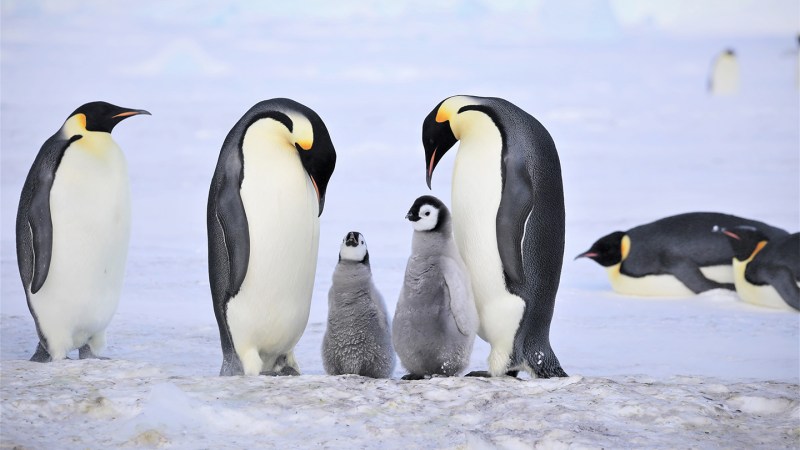
Iceberg's Presence Linked to Significant Chick Decline in Emperor Penguin Colony
A 2025 emperor penguin colony saw a sharp decline in chicks, and the likely culprit is the grounded iceberg nearby. The contours of that ice mass appear to have disrupted the colony's usual breeding conditions, a stark reminder of how local geography can tip the scales for a species already under pressure. It is a measurable, empirical signal of change. For broader context on Antarctic dynamics, our piece on Antarctic krill reproduction offers a complementary thread.
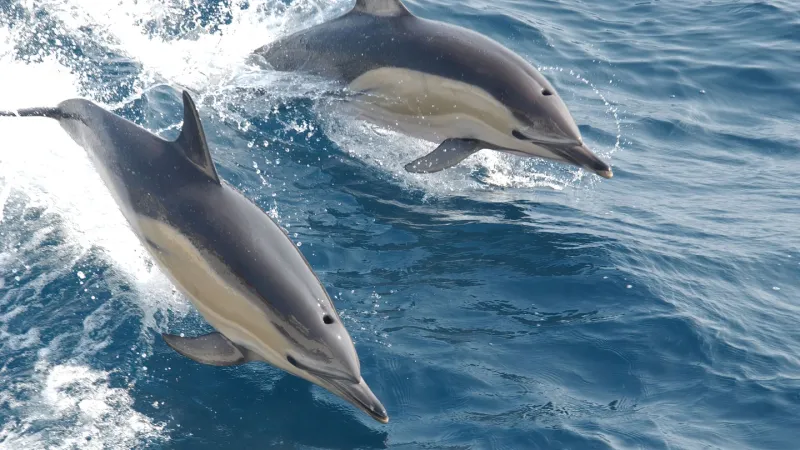
New Zealand Dolphins Show Accelerated Aging Linked to Environmental Contaminants
New Zealand's common dolphins are aging faster than their years, and the evidence points to a toxic burden we can no longer ignore. Trace metals and per- and polyfluoroalkyl substances, the so-called forever chemicals, are likely accelerating biological aging in these animals. This is more than a striking data point; it is a measurable indicator of ocean health that demands our attention.
Bridging Research and Collaboration: Marine Science Opportunities in Indonesia
A Fulbright research grant is a commitment to shared understanding, and for this student, it starts with a practical problem: securing a sponsor. The visa requires a named partner, even when funding is self-arranged. This is a common hurdle, but one that demands creative networking. The request is straightforward, and the solution lies in connection. For those in Indonesian marine science, your networks are the bridge. We recommend reading *Bridging Data Gaps: Integrating Citizen Science for Ocean Intelligence* for related context on collaborative research.
Following My Passion: An Oceanography Journey, Despite Doubts
A degree in oceanography is not a detour from stability; it is a direct route to a field where demand for ocean intelligence is rising. This student's choice to pursue the discipline despite family doubts reflects a clear-eyed commitment to a measurable, peer-reviewed career path. The concern about salary is valid, but it is worth noting that oceanographers with calibrated, integrated skills in data systems and climate indicators often find stable roles in research, government, and industry.
Exploring the Cook Islands Depths: A 2026 ROV Mission.
In early 2026, an ROV mission will descend into the waters surrounding the Cook Islands, where the seafloor remains largely uncharted. This is the kind of methodical, empirical work that turns raw data into ocean intelligence. By capturing validated, real-time imagery from the depths, the mission strengthens the integrated data ecosystem that researchers and policymakers rely on. For those tracking how these efforts connect, our piece on NOAA's calibrated ocean intelligence offers useful context. Understanding drives protection, and this expedition brings us closer to both.
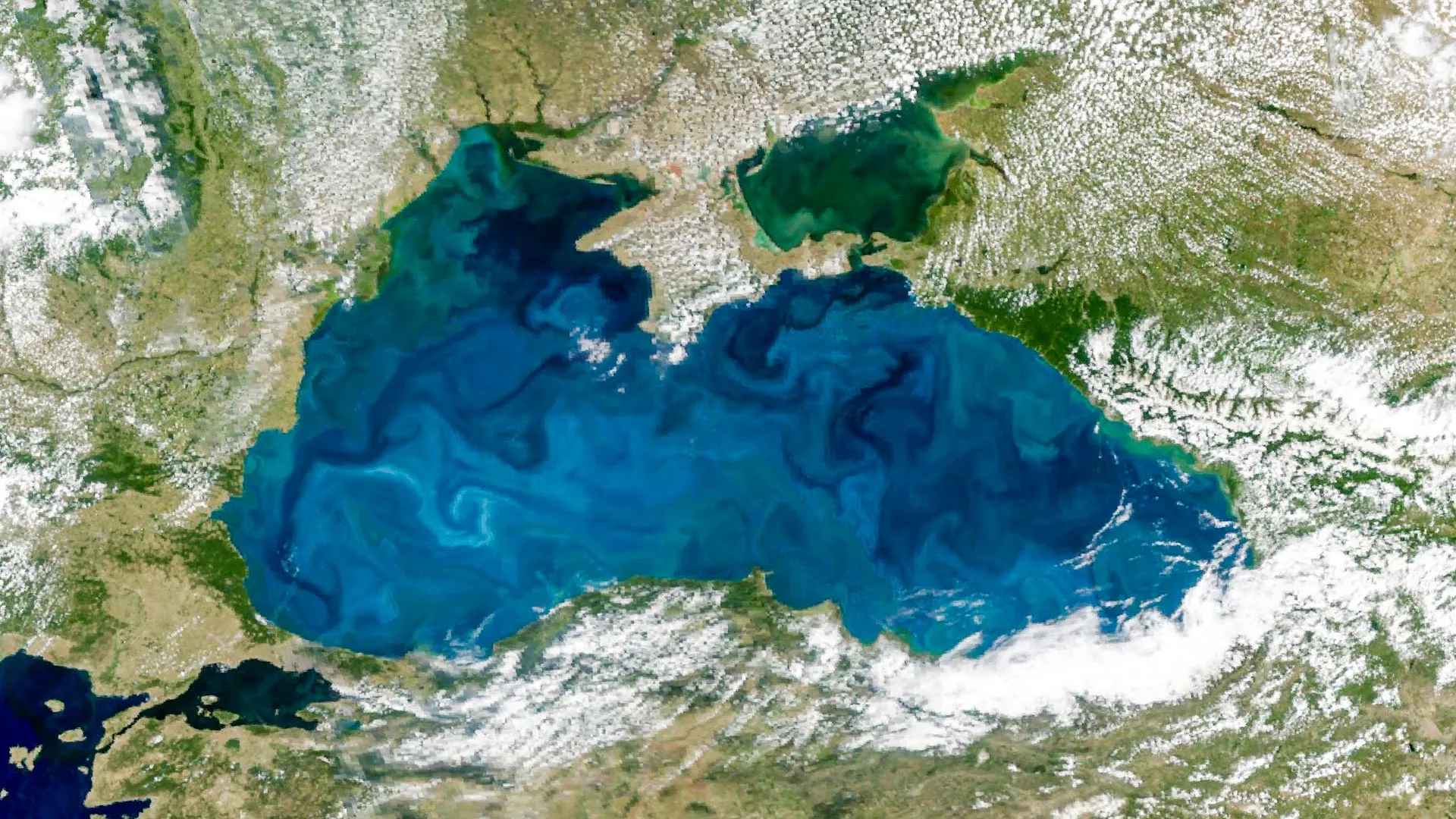
Black Sea Bloom: Satellite Data Reveals Turquoise Waters from Space
From orbit, the Black Sea has turned turquoise. NASA's PACE satellite captured the annual phytoplankton bloom, its reflective coccolithophore shells brightening the water enough to be seen from space. An astronaut on the International Space Station also photographed the bloom threading through the Bosphorus, where swirling currents reveal its reach. It is a striking reminder that ocean intelligence begins with observation, and that such calibrated data is essential for tracking the health of our shared seas.

Mud Crab Sex Differentiation Unveiled Through New Transcriptome Data
Precision in aquaculture often begins with a single genetic readout, and new transcriptome data now clarifies how mud crabs differentiate by sex. This is not just a win for crustacean biology; it offers a measurable step toward more efficient hatchery management and selective breeding. The findings give researchers a clearer framework for integrating molecular markers into stock improvement programs.
Florida Gap Year: Charting a Course for Marine Biology Exploration
A gap year after college is a strategic investment, not a pause. For this graduate, the Disney College Program offers a unique base for marine biology exploration. The best courses in Orlando are those that provide practical, transferable skills, such as GIS mapping or data analysis, complementing the SCUBA certification already in motion.
Charting a Course: Top Colleges for Marine Science and Campus Life
Choosing a college means weighing the depth of its marine science program against the energy of its campus life. You want a place where you can study ocean ecosystems and still pack the stadium on a Saturday. That balance is achievable, but it takes a specific kind of institution to pull it off. We've pinpointed several large universities that offer both strong research opportunities and a vibrant social scene.
Coastal Enigma: Identifying a Rocky Shore Creature in Costa Rica
A rocky tidepool in Costa Rica's Central Pacific holds a small mover that retreats into a hole after a brief appearance. This video, shared by a curious observer, captures a creature that stays active yet wary, a reminder that low-tide zones are busy with life we often overlook. Identifying it takes patience and a good look at its habits. For those drawn to such puzzles, our piece on calibrated ocean intelligence offers a starting point for exploring how data helps name what we see.
Bridging Marine Biology and GIS: Mastering Ocean Geospatial Analysis
From orbit to ocean floor, the gap between marine biology and geospatial analysis has never felt wider, or more bridgeable. One environmental scientist in Colorado, trained in fisheries sustainability, now spends days wrangling Esri databases at 9,000 feet, building policy-focused GIS workflows while quietly missing the tide. That pivot, born from a 2020 job market that offered no harbor, is not a detour. It is an integrated data ecosystem waiting to be recalibrated.
Atlantic Great White Population Significantly Higher Than Previously Estimated
New survey data indicate the Atlantic's great white population is significantly larger than prior estimates, a finding that recalibrates what we thought we knew about this apex predator. The numbers matter, but so does the method: validated, peer-reviewed counting that sharpens our ocean intelligence. This is encouraging for the species, yet it also raises pressing questions about ecosystem balance. For those tracking the broader picture, our coverage of Atlantic Circulation Weakens: Global Climate Reshaping Predicted offers useful context on the shifting forces at play.

Galapagos Seal Identification: Validating Observations with Ocean Intelligence.
A single photograph can spark a genuine question about the creatures sharing our shores. This observer's instinct to verify rather than assume is exactly the kind of caution that strengthens marine knowledge. The Galapagos fur seal is a valid guess, though confirming its distinct features requires a closer look. We appreciate the curiosity and the careful approach to observation.

Microcosms of the Pacific: Exploring Oregon's Tide Pool Ecosystems.
At Cape Blanco, Oregon, the tide pools reveal a world that feels almost alien up close. This July, photographer /u/JamTrackAdventures captures that otherness, showing how these microcosms shift perspective entirely. Each pool is a calibrated snapshot of life, measurable and immediate. The image reminds us that ocean intelligence starts at the shoreline, where small observations build larger understanding. For those exploring similar pathways, our related article, "Navigating a Marine Studies BA: Pathways to a Marine Biology Career," offers practical direction.
Beyond the Lab: Finding Your Ideal Marine Science College
Choosing a college means weighing the program against the pulse of campus life. You want rigorous marine science, but you also want the roar of a Saturday stadium and a campus that feels alive. That balance is achievable. Large universities with strong research programs and vibrant social scenes do exist. For a student seeking warm weather, school spirit, and a path into marine ecology, the search should focus on institutions where both the lab and the lawn are inviting.

Orca Ecotypes: Species Distinction or Genetic Nuance?
The classification of orca ecotypes hinges on genetic and behavioral evidence, yet the line between species and nuance remains contested. A forest ecologist's skepticism about interbreeding assumptions and the weight placed on learned behavior raises valid questions. Intelligence complicates taxonomy; diverse actions do not always signal reproductive isolation. While publish-or-perish pressures may incentivize reclassification, the genetic data, though incomplete, points to real divergence. We should demand rigorous, peer-reviewed validation before dismissing or embracing species status.

A Tiny Ghost Pipefish: New Species Echoes Sesame Street's Snuffleupagus
A tiny new species of ghost pipefish has surfaced, and its resemblance to Sesame Street's Snuffleupagus is as charming as it is scientifically intriguing. The discovery reminds us that ocean intelligence still holds countless surprises, even in well-trodden waters. While this find is a delight, it also underscores the need for validated, peer-reviewed cataloging of marine life.