marine biology
126 stories filed under marine biology on World Data Ocean. The newest of them: “Deep-Sea Spiders Illuminate Trench, Echoing Historical Accounts”, “Ocean Ingestion: Could a Whale Swallow a Diver Whole?”, and “Aquabots: Engaging Young Players with Real Ocean Science and Conservation.”. A recent expedition to a deep-sea trench near Australia has confirmed that certain sea spider specimens emit a bioluminescent glow, one that may have been documented by 19th-century naturalists. A sperm whale's throat is large enough to swallow a human, but the mechanics of such an event are far from cinematic. A Global Hub for Ocean Intelligence 4 World Data Ocean is a centralized digital platform where researchers, scientists, and ocean enthusiasts converge to… The list below is every marine biology story on World Data Ocean, newest first.
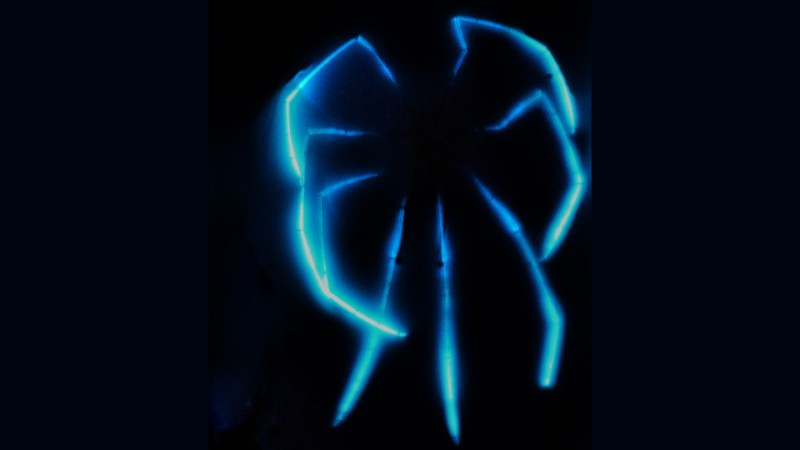
Deep-Sea Spiders Illuminate Trench, Echoing Historical Accounts
A recent expedition to a deep-sea trench near Australia has confirmed that certain sea spider specimens emit a bioluminescent glow, one that may have been documented by 19th-century naturalists. This is empirical evidence bridging historical accounts with modern ocean intelligence. Understanding drives protection. For more on maritime narratives, see our coverage of the bulk carrier grounding near Gladstone. These stories remind us that the ocean's stories, whether biological or industrial, demand our calibrated attention.

Ocean Ingestion: Could a Whale Swallow a Diver Whole?
A sperm whale's throat is large enough to swallow a human, but the mechanics of such an event are far from cinematic. The animal's esophagus is designed for squid, not scuba gear, and its instinct would be to reject anything unfamiliar. Understanding these biological limits sharpens our respect for ocean life. For more on how we track such creatures, explore "Integrated Subsea Cables Enhance Data Transmission Across the Indian Ocean." Curiosity and precision drive real ocean intelligence.

Aquabots: Engaging Young Players with Real Ocean Science and Conservation.
Aquabots turns play into purpose. Built inside Roblox, the game sends players on drone-led coral restoration missions, pairs them with a battle system, and opens an aquarium where fish, corals, and fossils are explained through verified research. A trivia quiz rewards correct answers with in-game currency, keeping learning tied to action. The goal is direct: counter the platform's brainrot with something measurable. For those tracing how species persist, the fossil record offers context, including recent findings on feathered dinosaurs. Curiosity, here, is the real currency.
Southeast Florida Waters Yield Unexpected Fish Species Observations.
Routine surveys off Southeast Florida were expected to confirm known species, yet these waters delivered observations that defy existing distribution models. The findings suggest our understanding of regional marine life remains incomplete, and that is precisely why sustained monitoring matters. Observations like these are not anomalies to dismiss but empirical signals to investigate. They remind us that ocean intelligence grows through calibrated, real-time data collection, not assumption.
Oarfish Cuisine: Unraveling the Diet of a Deep-Sea Giant
A deep-sea giant with a diet that remains stubbornly out of focus, the oarfish presents a unique challenge for your ceramic work. While squid are indeed part of their menu, pinning down a single species is rare, as their feeding is opportunistic rather than specialized. You can confidently sculpt a squid without locking onto a precise genus.
Exploring BIO 19: A Guide to UC's Marine Biology Course
Choosing a marine biology course without firsthand insight is a familiar puzzle. BIO 19 at UC stands out as a practical option, yet the lack of shared student experiences makes the decision harder than it should be. That gap in resources is precisely why community knowledge matters. For those weighing similar academic paths, our related article "Expanding Oceanography Career Options: Evaluating International Master's Programs" offers a broader look at where such study can lead.
Bridging the Gap: Oceanography Certificates to Enhance Your Chemistry Background
A bachelor's in chemistry is a strong foundation for oceanography, where the same quantitative rigor applies to seawater chemistry and climate indicators. For a year between degrees, a certificate in data analysis or GIS would complement your lab skills, as these are practical tools used in marine research. Given your diving plans, consider a seminar on ocean observation. Our related article, "Bridging Data Gaps: Integrating Citizen Science for Ocean Intelligence," offers a useful perspective on how field data is gathered.
Empowering Future Ocean Stewards: Citizen Science for Inland Marine Biology Clubs
The Texas Gulf is not the only place where ocean stewardship begins, and your club's location is no barrier to meaningful impact. Starting a Marine Biology Club without beach access is a common hurdle, but the data you can gather from inland is just as valid. Citizen science platforms are your direct line to real-world action, and your instinct to connect battery drives to ocean health is spot on.

Mysterious Remains Wash Ashore in Lewis Bay: Can You Identify It?
A single bone fragment on a gusty September shoreline can raise more questions than answers. When the remains are unrecognizable, the instinct to identify them is both practical and primal. This Lewis Bay discovery, submitted by a curious beachcomber, is a reminder that ocean intelligence begins with observation. We cannot validate what we cannot first see. Identifying a specimen is the first step toward understanding its role in the ecosystem.

Fiji's Tide Pools Teeming with Colorful, Fast-Moving Mantis Shrimp
A mantis shrimp's strike is fast enough to vaporize water, and in Fiji's tide pools, these hunters are putting on a living display of speed and color. Green, black, orange, the variety here is remarkable. Observing them zooming through the shallows is a reminder that ocean intelligence often hides in plain sight. For those tracking marine biology careers, this behavior offers a compelling case study. We've covered how such ecosystems connect globally in "Integrated Subsea Cables Enhance Data Transmission Across the Indian Ocean."
Beyond Dolphins: The Realities of a Career in Marine Biology
The public's image of marine biology often skips straight past the lab work, the data analysis, and the permit applications. It is a field defined by rigorous methodology, not casual swims. The misconception that professionals take time off to play with dolphins dismisses the scientific discipline at the core of this work. As this conversation notes, regional challenges, like those in Brazil, add further layers of complexity.
Charting a Course: Combining Oceanography Studies for Career Options
Choosing between marine biology and geography is a decision about data as much as passion. A double major in oceanography and geography builds the spatial-analysis skills that hydrographic surveyors rely on daily, and that path offers a clearer return on investment than a marine biology pairing. The job market rewards calibrated, measurable skills. Geography grounds your degree in practical, integrated data ecosystems, while marine biology often requires advanced study for similar stability. For a stable career, geography is the pragmatic choice.

Identifying Tropical Sea Stars: A Guide for Aquariums and Beyond
Identifying tropical sea stars by sight alone is a familiar frustration, and the gap between "easy" Chocolate Chips and a generic "Cushion" label is wider than most guides admit. You are right to question the Caribbean assumption; many Indo-Pacific species masquerade under that common name. Validated identification requires looking past color to plate arrangement and pore patterns. For a broader maritime context, our piece on China's new nuclear carrier shows how ocean intelligence extends beyond biology into strategic operations.
Bull Shark Brain Resilience: How Long Do Jaws Function Post-Mortem?
A bull shark's jaws snapping shut after evisceration is not a sign of life, but neither is it simple myth. The fish's nervous system retains function after blood loss, driving reflexive muscle contractions that can persist well beyond the five-minute mark you assumed. Your mammalian baseline undersells marine resilience; sharks rely on decentralized neural circuits. The angry commenters mislabel this as abuse, but the animal was already dead.

Deep Ocean Warming: Longitudinal Data Reveals a Concerning Trend.
The ocean's abyss was long considered a stable, slow-motion frontier, but new longitudinal data now shows the deepest layers are warming. This is not a distant anomaly; it is a measurable shift in a system we rely on for climate stability. We find this trend deeply concerning, yet it reinforces why sustained observation matters. As we track these changes, we must connect them to broader disruptions, much like our recent analysis of Atlantic Circulation Weakens, to fully grasp the scale of what is unfolding.

Microbiome Manipulation Reveals Coral Health and Resilience Insights.
Coral health is not a fixed state but a dynamic balance, and a new study shows that manipulating the microbiome can tip that balance toward resilience. This research offers a measurable, peer-reviewed path forward for reef conservation, moving beyond observation to intervention. We see this as a vital step in building ocean intelligence, and it pairs well with our coverage in "Magma and microbial activity may rewrite a 2-billion-year-old carbon signal." Understanding these biological levers is how we turn insight into protection.
Beyond the Waves: Oceanographers Share Their Experiences and Insights
Choosing a career path without knowing what the daily reality entails is a valid concern, and it is exactly the kind of transparency that strengthens the field. Oceanography is not a single job; it is a spectrum of disciplines, and the honest answers you are seeking from practitioners are invaluable. For a deeper look at how we gather such data, our article "Bridging Data Gaps: Integrating Citizen Science for Ocean Intelligence" explores collaborative observation methods.
San Francisco Bay Gray Whale Deaths Linked to Foraging Challenges
New necropsy findings from San Francisco Bay link gray whale deaths to foraging challenges, a shift that points to deeper stress in the species' habitat. When feeding grounds fail to deliver, the whales pay the price. This is not just a local concern; it is a measurable signal of changing ocean conditions. We should read it as a call to integrate these observations into broader marine monitoring. For more on how governance can respond, see our coverage of MPA networks bridging conservation gaps.
Anatomical Discovery: Clarifying Cauda Equina Location in Harbor Seals
A harbor seal necropsy led one researcher to an unexpected finding: the cauda equina positioned in the mid-thoracic spine. It's a detail that challenges assumptions, yet the lack of a definitive reference on seal spinal cord anatomy is telling. Drawings without citation aren't enough. This moment underscores why empirical, peer-reviewed documentation matters in marine anatomy. For those navigating similar gaps, our related article, "Navigating a Marine Studies BA: Pathways to a Marine Biology Career," offers context on building the expertise such questions demand.
Bridging Biology and Writing: Finding Remote Ocean Science Careers
A degree in marine biology and a portfolio of editing and writing work is a strong foundation, but the gap between that and a legitimate remote career can feel wide. This recent post from a graduate navigating that exact challenge shows the value of persistence in a niche job market. For those seeking similar paths, integrating citizen science for ocean intelligence offers a practical example of how data and communication converge.

Tasmanian Intertidal Mystery: Seeking Identification of Unusual Marine Growth
A single find in a northern Tasmanian tide pool can raise questions that reach far beyond the shoreline. A user on our platform has asked for help identifying an unusual marine growth from the Don Reserve in Devonport, caught between sponge and algae. That moment of uncertainty is where ocean intelligence begins. We encourage the community to examine the images closely; the answer may be a familiar species in an unfamiliar form.
Illuminating the Deep: A Conversation with Ocean Pioneer Dr. Sylvia Earle
Dr. Sylvia Earle has spent a lifetime making the invisible visible, and her latest conversation cuts straight to the heart of why ocean intelligence matters. She speaks with the calm authority of someone who has seen the deep transform, yet her urgency is unmistakable. We admire how she translates complex marine systems into calls for action that feel both personal and collective. For those inspired to explore further, our piece on integrating citizen science for ocean intelligence complements her perspective beautifully.

Philippine Shell Mystery: Identifying a Unique Ocean Treasure
A single shell, carried from Philippine shores to an unknown origin, has sparked a familiar confusion. The distinction between a volute and a conch is more than a label; it is a matter of structural nuance. For this gift, the answer lies in the shell's spire and aperture. Such identification challenges are common, and our related piece on unexpected discoveries, "Unexpected Chiton Discovery in Puerto Rico Challenges Species Distribution Models," highlights how easily marine specimens defy our assumptions. The ocean's taxonomy rewards patience.

Coastal Discoveries: Identifying Shark Teeth from Tybee Island and Hilton Head
Identifying shark teeth from Tybee Island and Hilton Head starts with reading the sediment as much as the shape. The user's find from Fish Haul Beach and the Tybee sites shows how each beach delivers different clues, and that larger tooth likely holds a deeper story. We'd point to comparative jaw structure and serration patterns, though without a scale, species ID stays provisional.