autonomous underwater vehicles
World Data Ocean keeps autonomous underwater vehicles in one place: 35 stories so far. The section currently leads with “Naval Expansion: Battleships and Robotic Vessels to Enhance Maritime Capabilities”, “Charting a Course: U.S. Navy Plans Decades-Long Fleet Expansion”, and “Integrated Ocean Defense: Orca Submarine Expands Underwater Capabilities.”. The U.S. A Global Hub for Ocean Intelligence 4 World Data Ocean is a centralized digital platform where researchers, scientists, and ocean enthusiasts converge to… The list below is every autonomous underwater vehicles story on World Data Ocean, newest first.

Naval Expansion: Battleships and Robotic Vessels to Enhance Maritime Capabilities
The U.S. Navy has announced a significant expansion plan, set to procure 15 new battleships by 2055 and over 80 robotic boats within the next five years. This strategic initiative underscores a commitment to enhancing naval capabilities amid evolving maritime challenges. The integration of robotic vessels aims to modernize operations and improve efficiency in various missions. For further insights into maritime security developments, read our related article, “Russia Cages Black Sea Fleet ‘Grachonok’ Patrol Boats After Repeated Ukrainian Drone Strikes.”

Charting a Course: U.S. Navy Plans Decades-Long Fleet Expansion
The U.S. Navy is embarking on the most significant fleet expansion since the Cold War, aiming to increase its fleet to 450 ships under a new 30-year shipbuilding plan announced in May 2026. This strategic move is designed to bolster maritime capabilities in response to growing challenges, particularly from China. As part of this initiative, the Navy also plans to procure 15 battleships by 2055 and 80 robotic boats in the next five years. For further insight, explore our article, "U.

Integrated Ocean Defense: Orca Submarine Expands Underwater Capabilities.
The unmanned 19.8-ton strike submarine, Orca, represents a significant advancement in naval technology, designed to address emerging underwater threats effectively. With the capability to launch drones, torpedoes, missiles, and mine warfare payloads, Orca enhances operational flexibility and precision in maritime defense. This innovative platform is poised to transform naval strategies, allowing for real-time responses to complex underwater challenges. As global security dynamics evolve, the Orca submarine underscores the importance of integrating cutting-edge technology into defense systems, ensuring readiness for future threats beneath the waves.

Endurance Tested: Hydrogen AUV Completes 2,000km Submerged Mission
The Envoy Autonomous Underwater Vehicle (AUV) has achieved a remarkable milestone by surpassing 2,000 kilometers during a fully submerged mission lasting 385 hours. This innovative hydrogen-powered AUV successfully executed over 4,000 intricate turns and maneuvers, each demanding additional energy compared to steady, linear travel. This achievement not only showcases the vehicle's advanced engineering and efficiency but also highlights the potential of hydrogen technology in enhancing underwater exploration. The mission stands as a testament to the future of sustainable ocean research and monitoring.

Autonomous Vessels: A Potential Shift in PLAN Maritime Strategy.
As tensions escalate between China and Taiwan, the People's Liberation Army Navy (PLAN) is reportedly considering the deployment of large autonomous underwater vehicles for mine-laying operations. This strategy aims to obstruct the First Island Chain, a crucial maritime zone that includes Taiwan and several other key territories. By leveraging advanced drone technology, the PLAN seeks to enhance its strategic positioning in the region, raising concerns about increased military activity and potential conflicts over maritime sovereignty. This development underscores the growing complexity of regional security dynamics.

AI-Powered System Enhances Maritime Security and Ocean Intelligence.
Thales has unveiled the Expeditionary PathMaster, an AI-powered mine warfare system designed to enhance the security of global sea lanes. Originally developed for the Marine Nationale, this innovative solution offers scalability and interoperability, addressing the complexities of modern maritime threats. By leveraging advanced technology, Expeditionary PathMaster enhances situational awareness and operational effectiveness, ensuring a proactive approach to maritime safety. This launch underscores Thales' commitment to providing cutting-edge solutions that support global maritime security and foster collaborative defense efforts across nations.
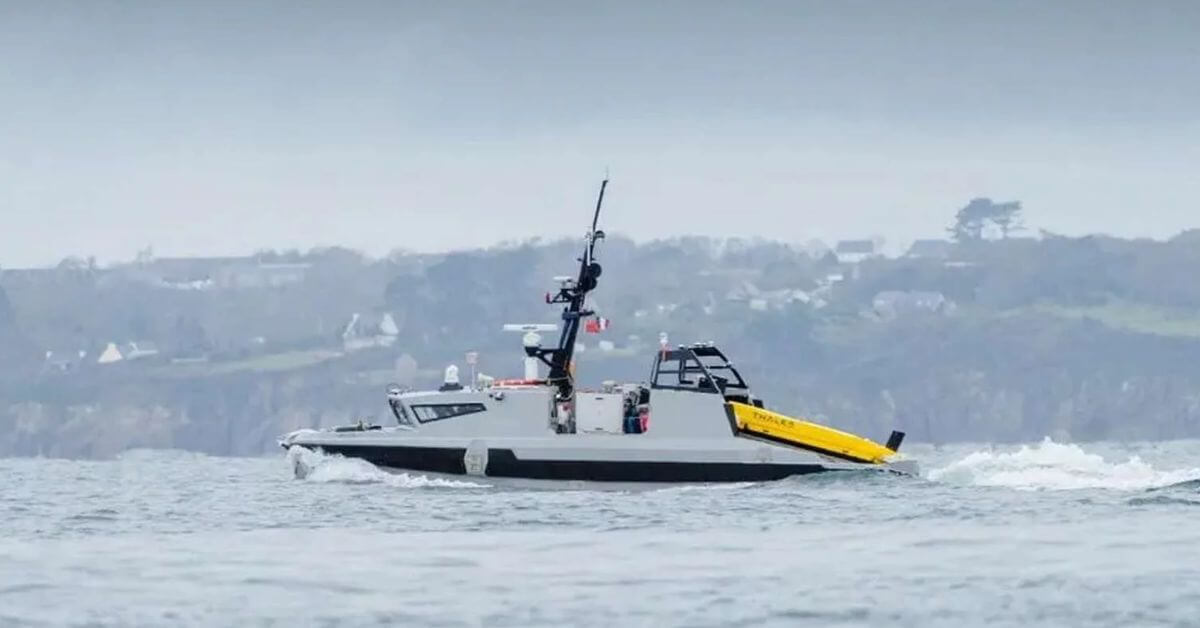
Autonomous Minehunter Enhances Maritime Security Through Integrated Ocean Intelligence
The Royal Navy has launched the £500 million Autonomous ‘Adventure’ minehunter, a groundbreaking 12-meter uncrewed surface vessel designed to enhance maritime safety. This innovative technology is specifically engineered for mine countermeasure operations, allowing for the detection and destruction of naval mines without risking crew lives. By integrating advanced autonomous systems, Adventure represents a significant advancement in naval operations, showcasing the Royal Navy's commitment to leveraging technological innovation for effective and safe maritime security.

Optimizing Underwater Sensor Networks for Sustained Marine Ecosystem Monitoring
Reliable long-term monitoring of coral reefs and marine ecosystems is challenged by harsh underwater conditions, limited sensor battery life, and the high energy demands of acoustic communication. This study presents an innovative clustering-based routing architecture for Underwater Wireless Sensor Networks (UWSNs), enhancing energy efficiency, security, and data reliability.
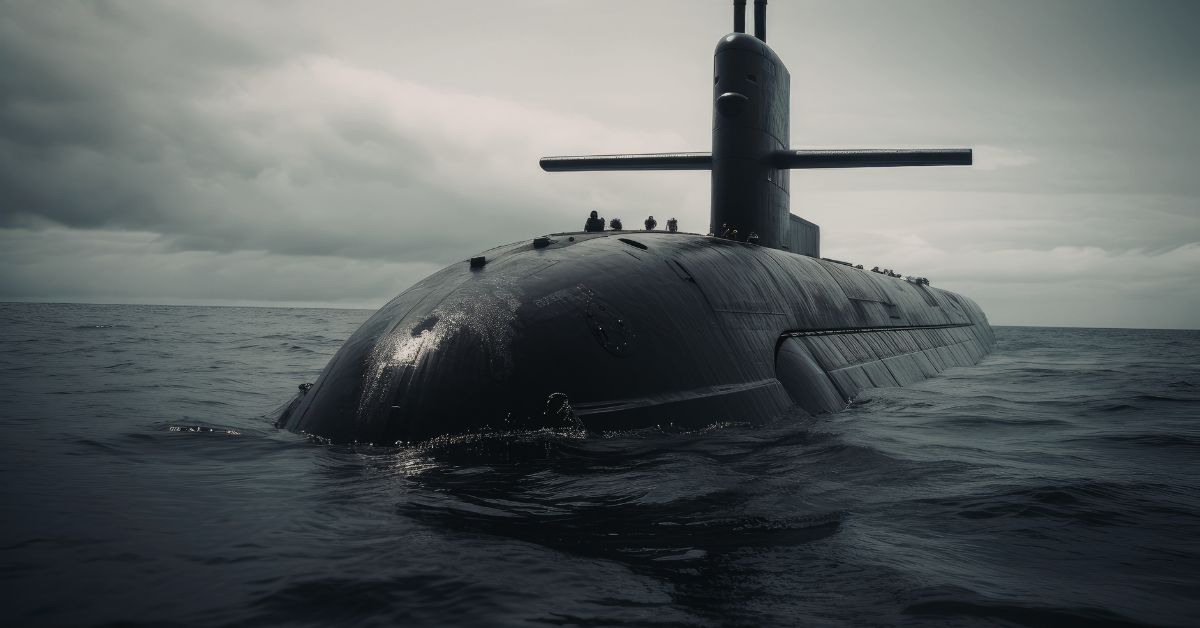
Submarine Torpedo Tubes to Deploy Autonomous Underwater Vehicles
The U.S. Navy is set to enhance its underwater capabilities with the deployment of the Torpedo Tube Launch and Recovery (TTLR) system, awarded to L3Harris Technologies by the Department of War’s Defense Innovation Unit. This innovative system will enable the launch and recovery of stealth autonomous underwater vehicles (AUVs) directly from submarine torpedo tubes. By integrating advanced technology, the TTLR system aims to improve operational efficiency and expand the Navy's strategic reach in complex underwater environments, demonstrating a commitment to technological advancement in national defense.
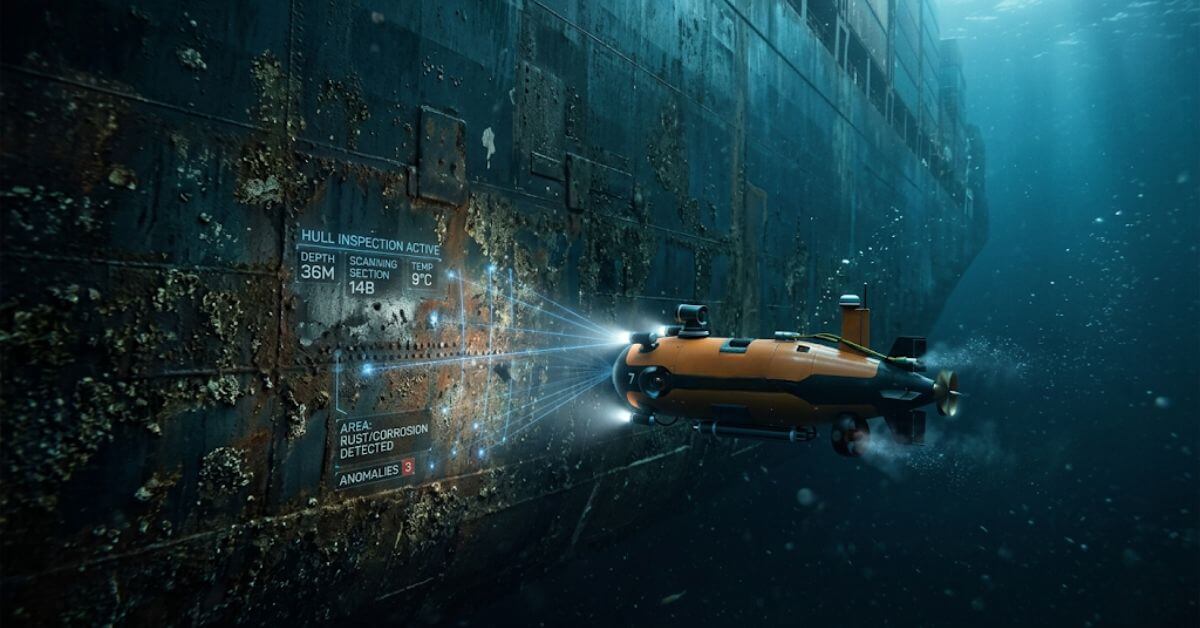
Autonomous Inspections: Validating AUV Technology for Safer, Efficient Ship Hulls
IQUA Robotics has successfully validated the use of autonomous underwater vehicles (AUVs) for ship hull inspection, eliminating the need for human divers. This innovative approach enhances safety and efficiency in maritime operations. The team is also set to explore the application of 3D sonar technology, which aims to improve the detection of sudden changes in hull shape and optimize navigation control. By integrating advanced robotics and sonar capabilities, IQUA Robotics is paving the way for more effective and reliable underwater inspections in the shipping industry.
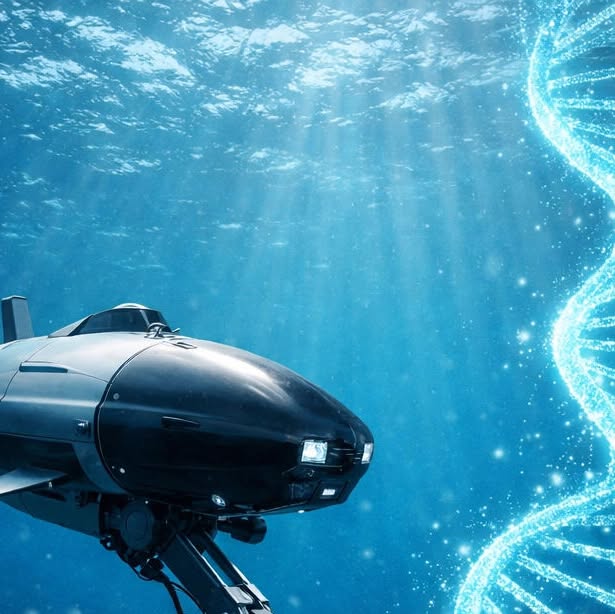
Unveiling Ocean Life: Environmental DNA and Autonomous Exploration
Ever wonder what lies beneath the ocean's surface without needing to catch a single fish? Welcome to the era of 'Ocean CSI.' At World Data Ocean, we are harnessing the power of environmental DNA (eDNA) to transform our understanding of marine ecosystems. By deploying autonomous underwater vehicles (AUVs) to collect water samples, we can detect DNA traces from marine life, enabling us to identify rare species and monitor biodiversity trends in real-time.