Watch: Indian Navy Commissions Indigenously Built Diving Support Vessel ‘INS Nipun’
Our take
The commissioning of INS Nipun, the second Nistar-class Diving Support Vessel (DSV) for the Indian Navy, represents a significant stride in bolstering India's maritime capabilities and reducing reliance on foreign-built assets. This development, following closely on the heels of the delivery of the US Navy’s final Expeditionary Sea Base, The 90,000-Ton USNS Hector A. Cafferata Jr. US Navy’s Final Expeditionary Sea Base, The 90,000-Ton USNS Hector A. Cafferata Jr., underscores a broader global trend towards regional navies enhancing self-sufficiency through indigenous shipbuilding programs. The Nistar-class, constructed by Hindustan Shipyard Limited (HSL) in Visakhapatnam, provides crucial underwater support capabilities, including diving operations, salvage, and search-and-rescue missions. This aligns with India's strategic focus on securing its vast coastline and protecting its maritime interests, particularly in the context of growing regional complexities and the increasing importance of the Indian Ocean as a critical trade route. Further illustrating this commitment to indigenous development, the Indian Navy recently received its first Indigenous Multi-Purpose Vessel ‘Samarthak’ Indian Navy Receives First Indigenous Multi-Purpose Vessel ‘Samarthak’, showcasing a sustained effort to build a versatile and modern naval fleet.
The Nistar-class DSVs are more than just support vessels; they are integral components of a broader maritime domain awareness strategy. Their ability to conduct underwater operations, coupled with the capabilities demonstrated by vessels like ‘Samarthak’, allows the Indian Navy to maintain a constant presence and respond effectively to a range of threats, from submarine activity to underwater infrastructure protection. The emphasis on indigenous construction is particularly noteworthy. It not only reduces dependence on foreign suppliers, mitigating potential supply chain vulnerabilities, but also stimulates the growth of India's domestic shipbuilding industry, creating jobs and fostering technological advancements. The calibrated approach to shipbuilding, focusing on specific capability gaps like diving support, reflects a pragmatic understanding of resource allocation and strategic priorities. The integrated data ecosystem required to effectively operate these vessels—linking sensor data, operational planning, and response capabilities—is a critical area for ongoing development and refinement, representing a significant opportunity for innovation in maritime data management.
The deployment of INS Nipun also has implications for regional security dynamics. India’s enhanced maritime capabilities project a message of resolve and contribute to the stability of the Indian Ocean region. While not inherently confrontational, this increased capacity allows India to more effectively participate in collaborative security initiatives and respond to shared maritime challenges, such as piracy and illegal fishing. The longitudinal data generated by these vessels, documenting underwater conditions and operational performance, will be valuable for long-term oceanographic research and climate change monitoring, contributing to a more comprehensive understanding of the marine environment. Peer-reviewed analysis of this data, integrated with broader ocean intelligence, can inform policy decisions related to resource management and environmental protection. The ability to conduct real-time assessments of underwater infrastructure, such as pipelines and cables, is also a crucial element of national security in an increasingly interconnected world.
Looking ahead, the Indian Navy's continued investment in indigenous shipbuilding programs, particularly in specialized platforms like the Nistar-class DSVs, signals a long-term commitment to self-reliance and maritime dominance. A key question to watch is how effectively the Indian Navy can integrate the data generated by these vessels and other platforms into a unified, real-time operational picture. Achieving true ocean intelligence – the ability to synthesize disparate data streams into actionable insights – will be paramount to maximizing the impact of these investments and ensuring the security and prosperity of India’s maritime domain.
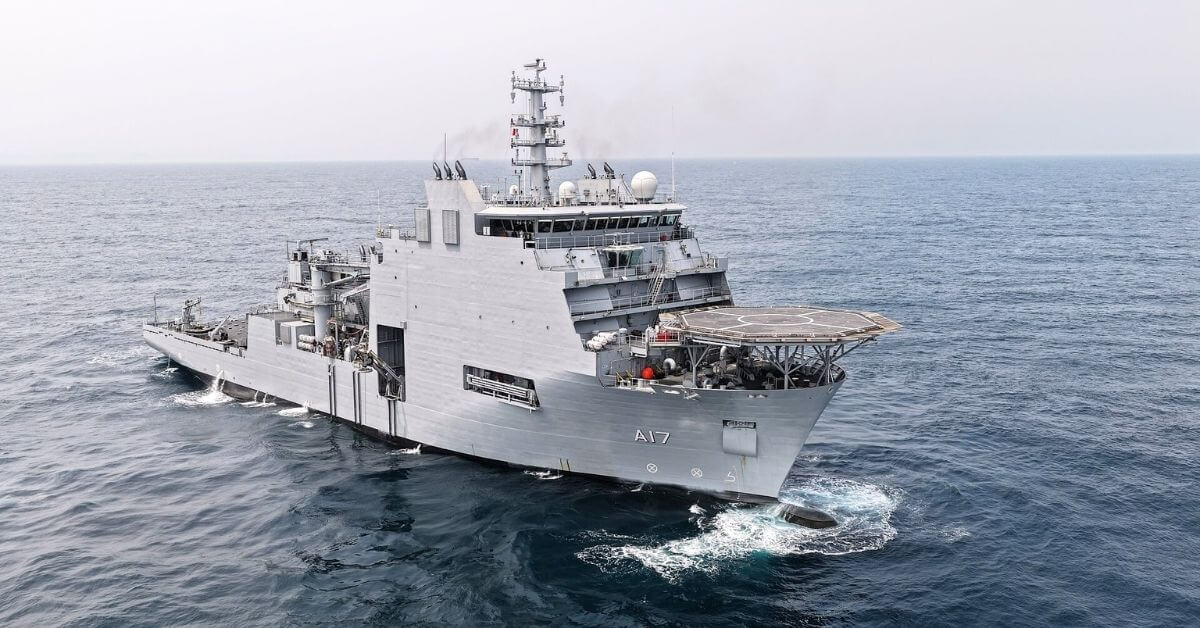
The Indian Navy commissioned its second Nistar-class Diving Support Vessel (DSV), INS Nipun, at the Naval Dockyard in Mumbai on Aug 31, 2026.
Chief of the Naval Staff Admiral Krishna Swaminathan led the commissioning ceremony.
Speaking at the ceremony, Swaminathan said the vessel will improve the Navy’s ability to carry out deep-water and underwater operations.
He added that Nipun would help the Western Naval Command carry out complex underwater missions, including diving support and submarine rescue.
The vessel was designed and built by Hindustan Shipyard Limited (HSL) in Visakhapatnam, India. The ship is 119.4 metres long and has a capacity of 10,500 tonnes.
#Nipun is set to be commissioned into the #IndianNavy today, with the Chief of the Naval Staff, Admiral Krishna Swaminathan, presiding over the ceremony.
The commissioning marks another significant milestone in strengthening India’s maritime capabilities.#INSNipun… https://t.co/4jUq0RniSc pic.twitter.com/g7fOqOFByq
— SpokespersonNavy (@indiannavy) August 31, 2026
Nipun can support diving operations at depths of up to 300 metres. It can also carry out deep-sea saturation diving and has a side diving stage for divers.
The ship has diving and underwater equipment to support divers working in difficult conditions at sea. It also carries remotely operated vehicles (ROVs) that can monitor divers and help with salvage work.
Nipun can serve as a mother ship for the Deep Submergence Rescue Vessel (DSRV), helping rescue people from submarines during emergencies.
The Ministry of Defence said the Navy received the vessel on July 30, 2026, after it completed its outfitting and trials.
The ship was built under the classification rules of the Indian Register of Shipping (IRS). Nearly 75% of the ship was built with indigenous content, according to the Navy and the Ministry of Defence.
INS Nipun’s Capabilities
Nipun has navigation and control systems that help it stay in position during underwater operations.
The ship has dedicated facilities for diving, underwater work and medical support. It can also be used for disaster relief and humanitarian operations.
The project is part of the government’s Aatmanirbhar Bharat, or self-reliant India, initiative.
The name Nipun comes from Sanskrit and means skilled, capable and knowledgeable.
References: newsonair, ANI
Read on the original site
Open the publisher's page for the full experience