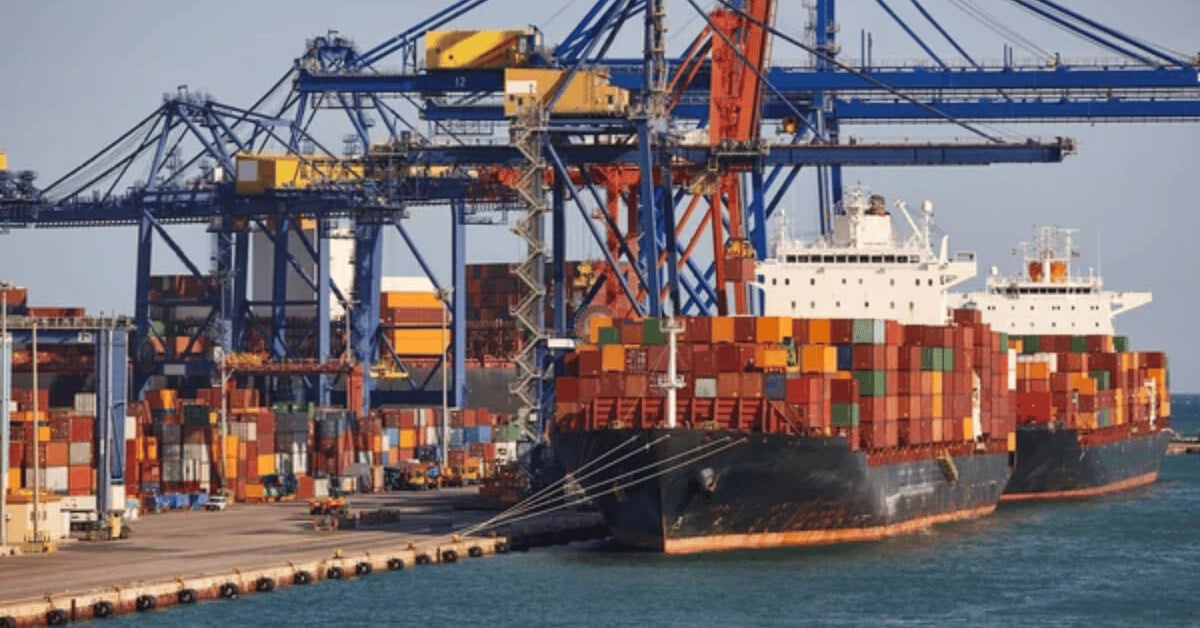
India's ports are moving more cargo than ever, but the data reveals a system still catching up to its own potential. A joint report from FICCI and Kearney, released at the Maritime India Conference & Expo 2026, shows validated national port capacity has risen 22 percent since 2017-18, reaching 2.8 billion tonnes per year. Actual cargo throughput climbed even faster, up 38 percent to 1,668 million tonnes. Those are measurable, empirical gains. Yet the same report flags a persistent bottleneck: delays after customs discharge still consume 84 percent of total export time, averaging 158 hours between official clearance and vessel departure. This is not merely bureaucratic drag; the report attributes much of it to logistics scheduling and waiting. For an economy aiming to scale trade efficiency, the gap between capacity and flow is the real target. Compare this with the potential being unlocked in other corridors, Arctic Corridor Advances as Churchill Port Cuts Europe Transit by 3 Days, where infrastructure investments are directly shortening transit timelines. India's challenge is less about concrete and more about coordination.
The headline numbers are encouraging. Average vessel turnaround time at major ports has dropped 18 percent to roughly 49 hours. Jawaharlal Nehru Port Authority, Pipavav, and Mundra all ranked among the top 30 in the World Bank's Container Port Performance Index 2025. Capacity utilization rose from 52 to 59 percent, leaving headroom for growth. But the structural story is starker: as of May 2025, international ports still handled about 75 percent of India's transshipment containers. The launch of Vizhinjam's deep-water terminal that same month adds new capacity, but the report notes that shifts in shipping-line rotations reveal the ongoing difficulty of building domestic transshipment hubs. This is not a problem that port investment alone solves. As we explored in India's marine fuel potential measured in new IMO competitiveness study, positioning as a regional hub requires integrated strategies, linking port infrastructure with inland transport, shipping services, and real-time data. The FICCI-Kearney report explicitly calls for that: development plans for transshipment hubs, container ports, and export corridors, with road and rail links prioritized around actual cargo flows.
The practical takeaway is precise. India's ports are not underbuilt; they are under-integrated. The 158-hour gap between customs clearance and sailing is not an operational quirk, it is the single largest lever for improving trade efficiency. Using shipment-time data to identify bottlenecks, as the report recommends, turns that gap from a frustration into a calibrated target. The next question is whether the investment strategy will follow the data.