Tianjin Launches China’s Second Cruise-to-Nowhere Service
Our take
The resumption of "cruise-to-nowhere" services in Tianjin, China, marks a noteworthy, albeit complex, development within the global maritime sector. Following a period of disruption, this initiative – mirroring similar approaches adopted elsewhere – reflects a pragmatic response to ongoing travel restrictions and a desire to revitalize tourism industries. The launch of the VISIO, carrying over 2,700 passengers, signals a renewed focus on domestic leisure travel, a strategy increasingly common across Asia-Pacific. This mirrors ongoing efforts to explore innovative solutions for sustainable economic activity, as demonstrated by China’s recent deployment of China Deploys World’s First 100-kW Bamboo-Built Offshore Solar Platform, showcasing a commitment to alternative energy sources and resource optimization – values that align with responsible ocean stewardship. The viability of these closed-loop tourism models, however, necessitates rigorous monitoring to ensure environmental compliance and mitigate potential risks, particularly concerning waste management and marine ecosystem impacts.
The return to cruise-to-nowhere voyages raises several pertinent questions regarding the long-term sustainability and scalability of this model. While providing immediate economic relief, it also underscores the inherent challenges in balancing economic recovery with environmental responsibility. The financial pressures on the cruise industry, as highlighted by the U.S. Navy Loses 15,000 Operational Days As Submarine Maintenance Delays Cost $3.4 Billion, demonstrate the significant operational and logistical complexities involved in maintaining large maritime assets, even outside of typical cruise operations. These costs are amplified when considering the environmental footprint of large vessels, even those operating within defined, limited areas. Furthermore, the reliance on these services as a primary driver of tourism revenue may create vulnerabilities if external factors, such as evolving travel regulations or shifts in consumer preferences, disrupt the model. The deployment of World’s first wind-powered underwater datacentre starts operating in China - The Guardian emphasizes the potential of leveraging innovative technology for ocean-based operations, suggesting a future where data collection and sustainable energy sources could mitigate some of the environmental concerns associated with traditional cruise activities.
The success of these "cruise-to-nowhere" initiatives hinges on the establishment and enforcement of robust environmental protocols. Real-time monitoring of emissions, waste discharge, and potential impacts on marine life will be crucial. Integrated data ecosystems, leveraging sensor technology and advanced analytics, can provide valuable insights into operational performance and identify areas for improvement. The concept of “ocean intelligence,” which we champion, demands a proactive approach to environmental management, moving beyond reactive measures to predictive strategies that minimize potential harm. Calibration of monitoring systems and longitudinal data collection are essential for establishing baselines and assessing the long-term effects of these operations. Such data-driven decision-making will be vital for ensuring that these services contribute to, rather than detract from, the overall health of the marine environment.
Ultimately, the Tianjin cruise launch serves as a microcosm of the broader challenges and opportunities facing the maritime industry. While the immediate focus is on economic recovery and fulfilling consumer demand, the long-term implications for ocean health and sustainability cannot be ignored. The effective integration of innovative technologies, rigorous environmental monitoring, and a commitment to global collaboration will be paramount in shaping a future where maritime activities are both economically viable and environmentally responsible. A key question moving forward is how these localized initiatives can contribute to a broader, globally coordinated approach to ocean stewardship, ensuring that the pursuit of economic growth does not come at the expense of the marine environment.
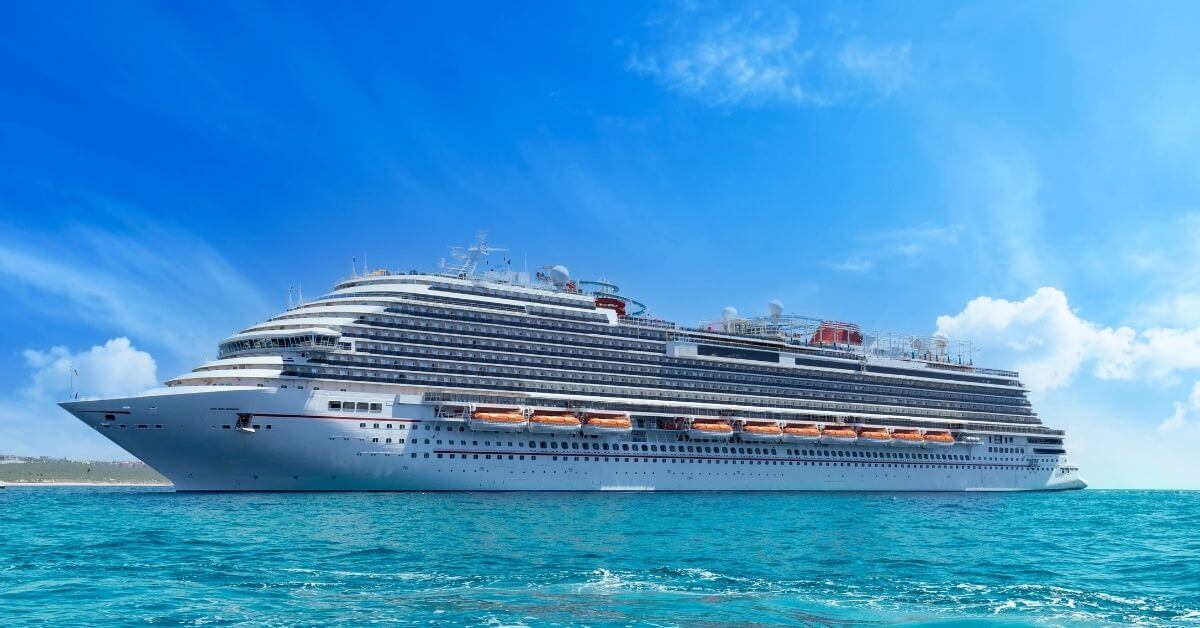
Tianjin has launched a cruise-to-nowhere service, becoming the first city in northern China and the second in the country to offer this type of trip.
The 105,000-ton cruise ship VISIO left the Tianjin International Cruise Home Port on Saturday with more than 2,700 passengers.
It was on a three-day, two-night trip at sea and was due to return to Tianjin early Monday without stopping at any other port.
The number of passengers was the highest recorded at the Tianjin International Cruise Home Port on a single day this year, the Tianjin Dongjiang border inspection station said on Sunday.
A second trip was scheduled to leave Tianjin on Monday.
The ship does not make stops at other ports. It leaves Tianjin, sails at sea and returns to the same port.
The service gives passengers a new option for a short seaside holiday and is expected to support marine tourism in northern China, Xinhua News Agency reported.
Passengers stay on the ship for the whole trip and can use its rooms, restaurants, entertainment and other facilities.
Shanghai Started China’s First Cruise-to-Nowhere Service
Tianjin’s new service comes after Shanghai launched China’s first cruise-to-nowhere trip in June.
Shanghai issued China’s first entry-exit permit for this type of cruise on June 5. A day later, Adora Magic City, China’s first homegrown large cruise ship, left Shanghai Wusongkou International Cruise Terminal with more than 4,100 passengers.
That was China’s first cruise-to-nowhere trip.
Tong Danying, an official with the Shanghai Municipal Transportation Commission, said the service was not just a shorter version of a regular cruise.
Instead, passengers travel mainly to spend time and enjoy the facilities on the ship, according to Xinhua.
Xie Xie, a research fellow at the China Waterborne Transport Research Institute, said demand for Adora Magic City’s first trip in June was higher than expected.
He also said passengers had a good experience and spent more than expected on board.
Xie told the Global Times that more cities could start offering similar trips. He said the trips may appeal to younger Chinese people who do not have time for longer holidays but still want to take a short cruise over a weekend.
He said some passengers may later choose longer, traditional cruises after trying these short trips.
Cruise Tourism Is Growing in China
China’s total cruise passenger throughput rose 25.3% in 2025 from a year earlier, according to figures cited in the source material.
China’s cruise ship industry could contribute 500 billion yuan ($74.33 billion) to the country’s economy by 2035, the People’s Daily reported in August 2023.
Tianjin is now the second Chinese city to offer cruise-to-nowhere trips after Shanghai. The second voyage was scheduled to leave Tianjin on Monday.
References: Global Times, cruisemapper
Read on the original site
Open the publisher's page for the full experience