Static electricity is a mystery, and scientists are all charged up
Our take
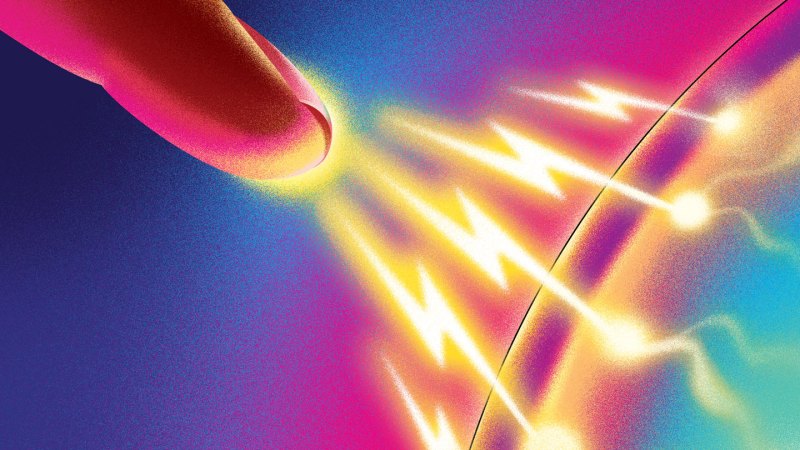
The persistent mystery surrounding static electricity, as highlighted in recent reporting, underscores a fundamental truth about scientific exploration: even seemingly commonplace phenomena can harbor profound complexities. While we routinely experience static discharge – the shock from a doorknob or a balloon clinging to a sweater – the underlying mechanisms generating this electrical imbalance remain incompletely understood. This isn't merely an academic curiosity; a deeper understanding of triboelectric charging, the process responsible for static electricity, could unlock advancements in fields ranging from materials science to energy storage. Consider, for example, the remarkable resilience observed in rehabilitated elephants, documented in Elephants can relearn how to live wild after years in captivity. Both phenomena, seemingly disparate, involve complex interactions at a molecular level, reminding us that the principles governing natural systems are often interconnected and require rigorous investigation. Similarly, the surprising revelation that koalas nearly faced extinction before human arrival, detailed in Koalas nearly went extinct before humans arrived, DNA study reveals, showcases the power of genetic analysis to illuminate previously unknown aspects of evolutionary history – a technique that could prove invaluable in dissecting the intricacies of triboelectric charging.
The current research efforts, characterized as “quirky” by some, are nonetheless valuable precisely because they challenge established assumptions. A willingness to approach seemingly settled topics with fresh perspectives and unconventional methodologies is a hallmark of scientific progress. The difficulty in unraveling static electricity stems from its multifaceted nature. It's influenced by material properties, surface textures, environmental conditions like humidity, and even subtle variations in applied pressure. Validated, measurable data across these variables is scarce, hindering the development of comprehensive models. The traditional focus on macroscopic observations has obscured the crucial role of nanoscale interactions – the way atoms and molecules interact and transfer electrons upon contact. A calibrated approach, utilizing advanced microscopy and simulation techniques, is essential to bridge this gap and move beyond descriptive observations to predictive understanding. The integrated data ecosystem required to analyze the sheer volume of information generated by these investigations necessitates robust computational infrastructure and collaborative data sharing initiatives.
The implications extend beyond the purely theoretical. A more thorough understanding of triboelectric charging could lead to the development of new, efficient energy harvesting technologies. Imagine devices capable of converting mechanical friction – the rubbing of surfaces – directly into electrical power. This could revolutionize applications ranging from wearable electronics to self-powered sensors, particularly in remote environments where traditional power sources are unavailable. Furthermore, controlling static electricity is critical in numerous industrial processes, from preventing dust explosions in manufacturing facilities to optimizing the performance of microelectronic devices. Real-time monitoring and adaptive control systems, informed by a deeper scientific understanding, could significantly improve safety and efficiency across a wide range of industries. The promise of such advancements underscores the importance of continued investment in fundamental research, even for phenomena that appear commonplace.
Ultimately, the ongoing quest to understand static electricity exemplifies the iterative nature of scientific inquiry. While the initial challenge may seem modest, the potential rewards – in terms of technological innovation and a deeper understanding of the physical world – are substantial. The long-term impact of this research hinges on the ability to develop empirical models that accurately predict triboelectric behavior across diverse materials and conditions. As researchers refine their experimental techniques and computational models, a key question emerges: will a unified theory of triboelectric charging, encompassing both macroscopic and nanoscale phenomena, finally be within reach, and what unforeseen applications will arise from such a breakthrough?
Read on the original site
Open the publisher's page for the full experience