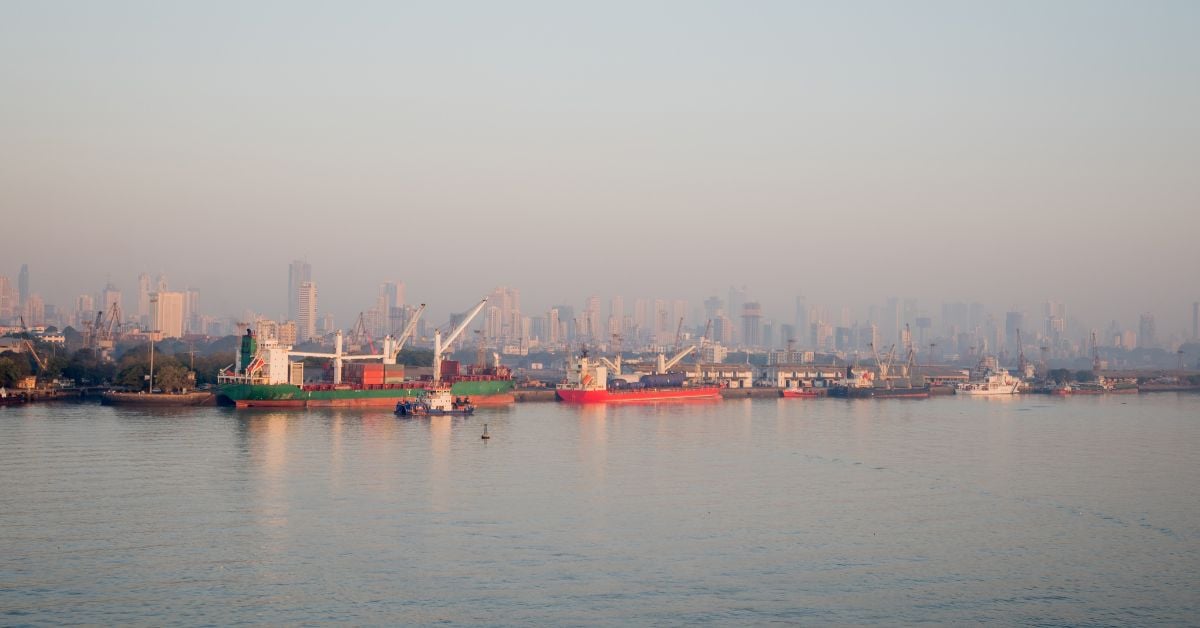
India's first blue-financing network is not a theoretical framework, it has a physical anchor, and that anchor is a Rs 650 crore shore-power project at Jawaharlal Nehru Port in Mumbai. This is a measurable step toward decarbonizing one of the world's busiest maritime corridors, and it deserves more than a footnote. For readers tracking the intersection of ocean intelligence and infrastructure finance, this project demonstrates that integrated data ecosystems are not just for monitoring, they are for validating investment. The blue-financing model ties capital directly to validated emissions reductions at the berth, creating an empirical loop that climate indicators have long demanded but rarely received. This stands in stark contrast to the risks flagged in Strikes on Odesa Port Underscore Broader Maritime Security Risks, where geopolitical instability undermines any long-term environmental investment. While Odesa faces existential threats to its port operations, Nhava Sheva is building an operational model where financial instruments are calibrated to environmental performance.
The practical consequence for our audience, whether you are a researcher validating emission baselines or a policymaker designing green credit mechanisms, is that India's first blue-financing deal offers a replicable template. Shore power reduces vessel emissions during turnaround times by 80 to 90 percent, and this project ties those savings to a financing structure that can be scaled across other Indian ports. Compare this with the paradigm shift noted in Paradip Port Designated a Mega Port, Anchors Eastern India's Maritime Growth, where designation alone is driving capacity expansion. Nhava Sheva's approach is more precise: it is not about volume but about integrated environmental accountability. The real-time data generated by shore-power infrastructure becomes the empirical backbone for future blue bonds, making the entire system transparent and peer-reviewed by market forces.
What matters most is the precedent this sets for ocean intelligence as a financial instrument. Too often, climate finance remains abstract, a promise against future carbon credits. Here, the reduction is direct and measurable: every kilowatt-hour drawn from shore power instead of auxiliary engines is a validated data point. This is purpose-driven capital allocation that aligns with the urgency of ocean health without resorting to alarmism. It treats port infrastructure as a calibrated node in a wider marine ecosystem, not merely a logistics hub. The open question remains whether other Indian ports, particularly those focused on volume growth like Paradip, will adopt similar financing structures. If they do, India will have built a nationwide blue-financing network from a single shore-power project. If they do not, this remains a high-value case study rather than a systemic shift. The detail to watch is the repayment timeline of the Rs 650 crore investment: if it is shorter than typical infrastructure payback periods, that will confirm that the empirical data from shore power is generating measurable returns, not just environmental goodwill.