Marine Forecasts Can Miss Wave Conditions Linked To Dangerous Vessel Rolling & Cargo Losses
Our take
The recent analysis from Sofar Ocean, highlighting deficiencies in marine forecasts concerning wave conditions, underscores a critical vulnerability within the global maritime industry. While traditional forecasting models have improved considerably, they demonstrably fail to capture the complexity of short-period, highly localized wave events – conditions directly linked to dangerous vessel rolling and potential cargo losses. This isn't merely an academic observation; the financial implications are significant, impacting insurance premiums, cargo integrity, and ultimately, the operational efficiency of shipping lines. As evidenced by the recent resumption of Suez Canal voyages despite ongoing Red Sea risks Maersk, Hapag-Lloyd Resume More Suez Canal Voyages Despite Red Sea Risks, the pressure to maintain schedules and optimize routes is immense, potentially incentivizing vessels to operate in conditions that exceed safe thresholds if forecasts appear benign. The need for more granular and accurate wave prediction has never been more urgent.
The limitations revealed by Sofar’s work speak to a broader challenge in ocean observation and modeling. Current forecasting systems often rely on sparse data points and coarse-resolution models, struggling to resolve the intricate dynamics of ocean waves, particularly in coastal regions and areas influenced by complex bathymetry. This necessitates a shift toward more integrated data ecosystems, leveraging a combination of satellite observations, buoy networks, and potentially, innovative technologies like Sofar’s own ocean sensors. The push for improved vessel traffic organization, particularly in congested port approach channels, further highlights this need Wind-constrained Pareto multi-objective reinforcement learning for low-carbon vessel traffic organization in port approach channels, as optimized routing strategies are predicated on reliable environmental data. The Suez Canal's own efforts to bolster its position amidst competition from the Panama Canal Suez Canal Reports Recovery In Container Ship Crossings & Eyes Greater Cooperation With Panama Canal also demonstrate a focus on operational efficiency driven by data-informed decision-making.
The core issue isn't simply about improving forecast accuracy; it's about bridging the gap between scientific understanding and practical application within the maritime sector. Peer-reviewed research consistently demonstrates the link between wave conditions and vessel safety, yet translating this knowledge into actionable alerts and operational adjustments remains a challenge. This requires a collaborative effort, involving meteorological agencies, oceanographic institutions, shipping companies, and technology providers. The development of real-time, calibrated wave models, capable of providing localized, high-resolution forecasts, is essential. Furthermore, the integration of these forecasts into vessel navigation systems and decision-support tools is paramount. A more proactive, rather than reactive, approach to wave forecasting can significantly reduce the risk of incidents and optimize vessel performance.
Looking ahead, the convergence of advancements in ocean sensing technology, artificial intelligence, and data analytics offers a pathway to transformative improvements in marine forecasting. The potential for deploying constellations of distributed sensors, coupled with machine learning algorithms capable of extracting meaningful patterns from vast datasets, is particularly promising. However, the successful implementation of such systems hinges on data sharing and interoperability – fostering a truly integrated data ecosystem where insights can be rapidly disseminated and acted upon. A critical question to watch will be whether the maritime industry, historically characterized by fragmented data sources and proprietary systems, can embrace the collaborative spirit required to unlock the full potential of ocean intelligence and proactively mitigate the risks associated with under-predicted wave conditions.
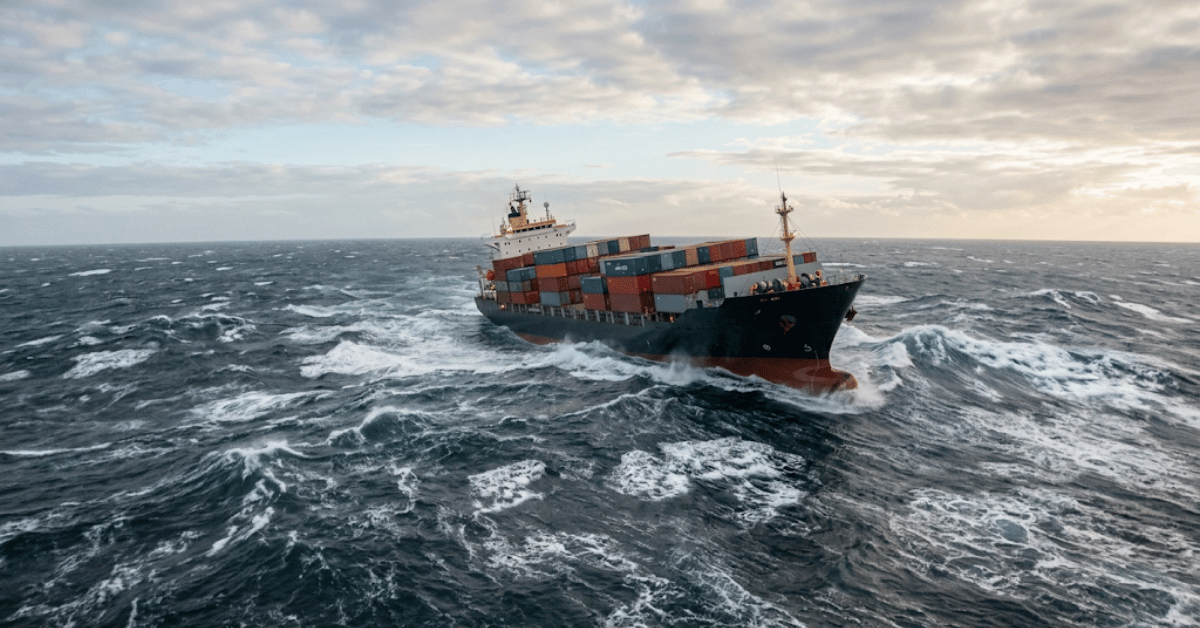
New analysis from Sofar Ocean finds that widely used marine forecasts can miss wave conditions associated with dangerous vessel rolling and cargo losses.
Most forecasts tell ships how high waves will be. But height alone doesn’t identify the impact on a ship. Wave period and direction, together with the vessel’s heading, speed, and loading, can create dangerous rolling even when waves don’t appear extreme.
Most marine forecasts have limited direct, in-water observations of the full wave field. As a result, wave period and direction can be harder to resolve accurately, even though both can be critical to how a vessel responds at sea.
Sofar Ocean’s whitepaper examines the December 2025 Baltic Klipper incident, when the refrigerated cargo vessel shed part of its cargo off the Isle of Wight, England. Wave heights on the day were not extreme, but long-period swell exceeded 15 seconds. Standard forecast products did not identify that risk. Sofar’s forecast used direct measurements of the swell earlier in its path and identified the risk more than two days ahead.
This finding matters as more vessels choose routes through areas such as the Cape of Good Hope. IUMI reported in September 2025 that heavy-weather claims had “spiked”, linked to Red Sea rerouting. Cefor has also reported a rise in heavy-weather hull claims as vessels move through more weather-exposed areas with reduced visibility.
“Wave height is only part of what we look at when assessing risk,” said Jessica Topal, Senior Routing Specialist at Sofar Ocean. “The timing and direction of the waves, together with the vessel’s heading and speed, determine how the ship will actually respond. Two sea states with the same wave height can create very different conditions onboard.”
The white paper also revisits major container-loss incidents involving Svendborg Maersk and CMA CGM G. Washington. Across the cases, the weather systems themselves were generally known in advance. The gap was in describing the wave characteristics that determine vessel motion.
Sofar Ocean’s analysis shows why measuring the full wave field matters: direct observations can improve understanding of wave period and direction, helping identify major risks that wave height alone can miss.
Read the full white paper: The Maritime Weather Forecast Gap Is an Operational Risk.
Press Release
Read on the original site
Open the publisher's page for the full experience