Keel Laid For First Royal Navy Fleet Solid Support Ship As Assembly Begins At Appledore
Our take
The laying of the keel for the RFA Resurgent, the first of the Royal Navy’s new Fleet Solid Support Ships, marks a significant shift in logistical capabilities and underscores the evolving demands placed on naval forces. The commencement of assembly at Appledore, as detailed in the recent announcement, represents more than just a construction milestone; it signals a renewed commitment to bolstering the UK’s maritime support infrastructure. This development arrives at a time when global naval operations are increasingly complex and far-reaching, necessitating robust and adaptable supply chains. The need for enhanced logistical support is further highlighted by the findings in [81% Of Crew Fatalities Linked To Illness, Not Accidents, Britannia P&I Report Finds], demonstrating the critical importance of maintaining crew health and operational readiness, a task directly reliant on consistent and reliable resupply. The investment in this new class of vessel, therefore, is a pragmatic response to the realities of modern naval power projection.
The Resurgent’s design prioritizes adaptability and resilience, key factors in an environment characterized by geopolitical uncertainty and potential disruptions to supply routes. The move towards a more integrated approach to fleet support, as exemplified by this program, is consistent with broader trends in naval modernization globally. The U.S. Navy’s exploration of alternative shipbuilding partnerships, as discussed in [U.S. Navy Considers South Korean, Japanese And Turkish Frigates For New Warship Class], reflects a similar drive to diversify supply chains and accelerate shipbuilding timelines – a lesson potentially relevant to the UK’s own approach. Furthermore, the strategic considerations surrounding shipbuilding capacity in regions like Bangladesh, as noted in [Maersk Eyes Investment In Bangladesh Shipbuilding, With Ship Recycling Also On Agenda], highlight the interconnectedness of global maritime industries and the potential for future collaborations in support of naval logistics. The Resurgent, therefore, isn't simply a ship; it’s a node in a broader, increasingly complex, network.
The significance of the Resurgent extends beyond its immediate logistical role. It represents a vote of confidence in the UK’s shipbuilding industry and a commitment to maintaining sovereign naval capabilities. The revitalization of Appledore shipyard, a location with a rich maritime heritage, provides a tangible economic benefit to the region and reinforces the UK’s position as a leading maritime nation. The integration of advanced technologies and design principles into the Resurgent’s construction, though not explicitly detailed in the initial announcement, is likely to be a core element of the program, enhancing its operational efficiency and adaptability. This forward-thinking approach is crucial for ensuring the Royal Navy remains at the forefront of maritime innovation. The shift away from reliance on chartered vessels and towards dedicated, purpose-built support ships allows for greater control over logistics and ensures a more predictable supply chain for deployed naval assets.
Looking ahead, the successful completion and integration of the Resurgent into the Royal Navy fleet will be a key indicator of the program’s overall value. The ability to seamlessly incorporate the new vessel into existing operational protocols and to demonstrate its effectiveness in supporting diverse naval missions will be critical. Furthermore, the lessons learned from the Resurgent’s construction and operation will likely inform future shipbuilding programs and influence the design of subsequent support vessels. A crucial question to watch is how the Royal Navy will leverage the Resurgent's capabilities to enhance its overall operational reach and resilience in an increasingly contested maritime environment, particularly considering the ongoing evolution of naval warfare and the rise of new maritime technologies.
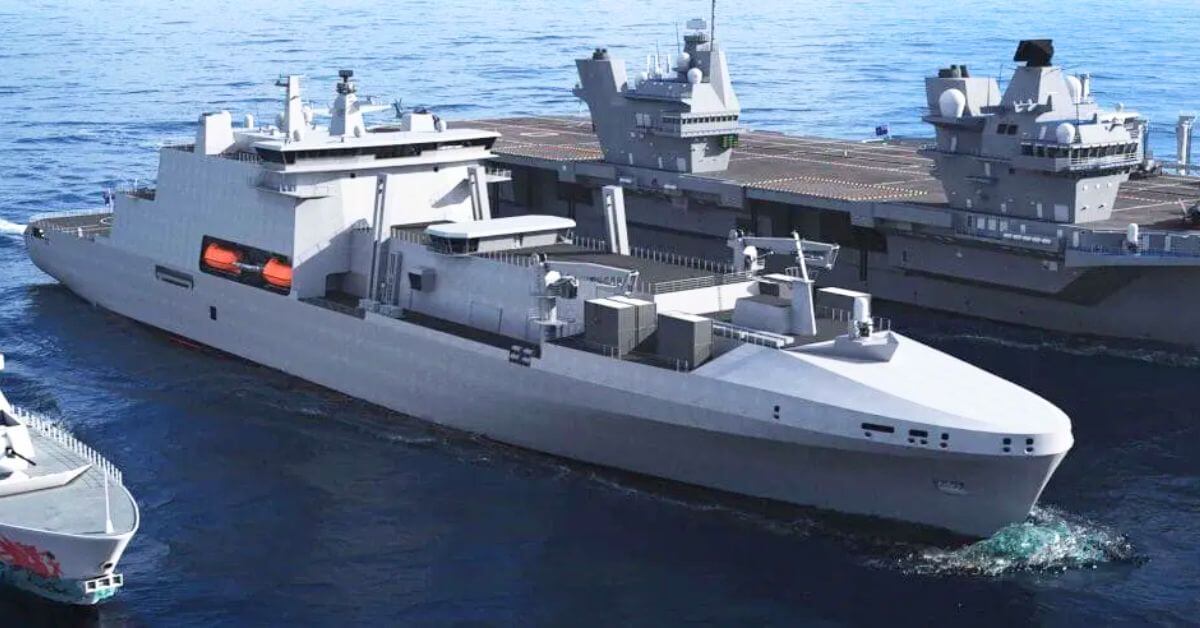
Navantia UK has laid the keel of RFA Resurgent at its Appledore shipyard in North Devon, marking the formal start of assembly of the first of three new Fleet Solid Support vessels for the Royal Fleet Auxiliary.
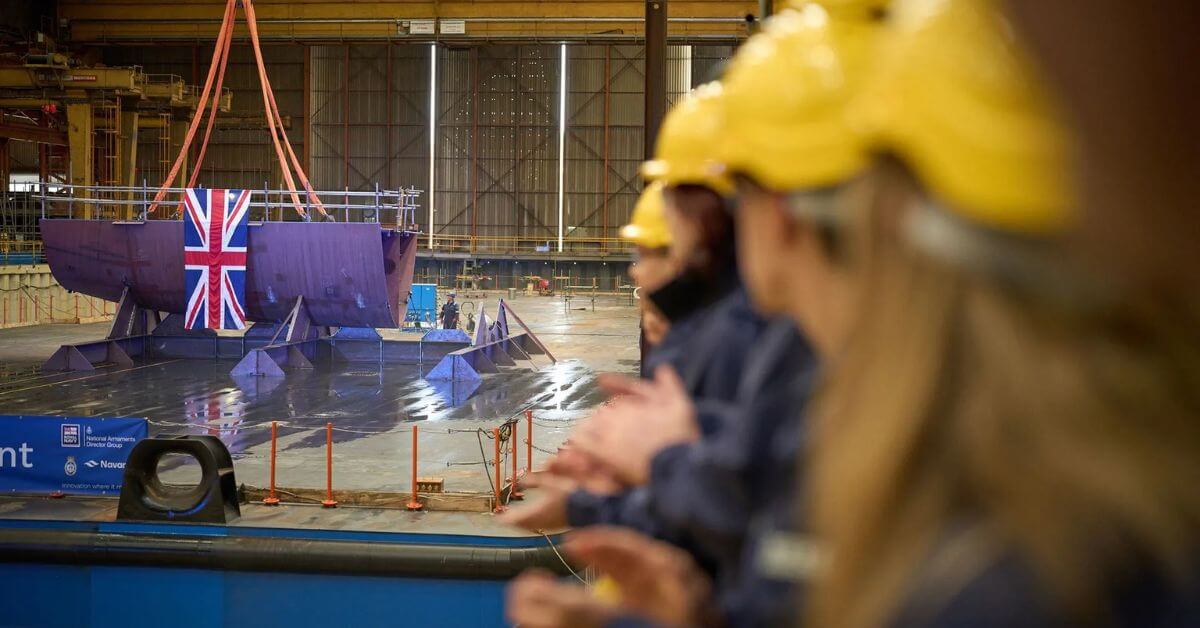
The milestone was marked by the lowering of the first block, a section of RFA Resurgent’s bow, onto the Seahorse barge in Appledore’s dry dock. The barge, built at Navantia UK’s Methil yard in Fife, will carry completed blocks from Appledore to Belfast. In keeping with shipbuilding tradition, a commemorative coin was placed beneath the section for good fortune.
The operation was initiated by apprentices from Navantia UK Appledore and the Royal Fleet Auxiliary, reflecting the central role that skills and the next generation of shipbuilders and seafarers will play in delivering the programme. The ceremony took place on Merchant Navy Day, which celebrates the UK’s civilian seafarers, including the men and women of the Royal Fleet Auxiliary.
The keel laying represents the latest major milestone for Fleet Solid Support, following the start of test block construction at Appledore in August 2025, completion of the Critical Design Review in October 2025 and the cutting of first steel at Appledore in December 2025.
Since the programme began in 2023, it has remained on schedule and on budget while progressing through a series of major design and construction milestones.
Minister for Defence Readiness and Industry, Luke Pollard MP said:
“The Royal Fleet Auxiliary are the backbone of our Royal Navy and these new ships will keep our navy ready to operate at range for longer.
“Seeing the steel cut for RFA Resurgent last year was a proud moment, and today’s keel laying shows real momentum behind this vital programme.
“This investment is helping bolster UK shipbuilding, backing thousands of skilled jobs and apprenticeships in Appledore, Belfast and beyond.”
Donato Martínez, CEO of Navantia UK, said:
“Today is an important moment for Fleet Solid Support, for Appledore and for the renewal of UK shipbuilding. The laying of the keel marks the formal start of assembly of the first ship and is clear evidence of the momentum we have built across the programme.
“FSS is helping to rebuild sovereign industrial capability in the UK. We are investing in shipyards, creating skilled jobs, developing apprentices and strengthening the supply chain that will support future naval programmes.
“At Appledore, shipbuilding has returned to a yard with more than 170 years of history. We are investing in its facilities and its people, while building the capability needed not only for FSS but for the next generation of naval vessels, including the autonomous and uncrewed platforms that will form part of the future Hybrid Navy.
“This milestone demonstrates what sustained investment and close partnership between government and industry can deliver. We are proud of the progress being made and focused on maintaining that momentum as the first FSS ship takes shape.”
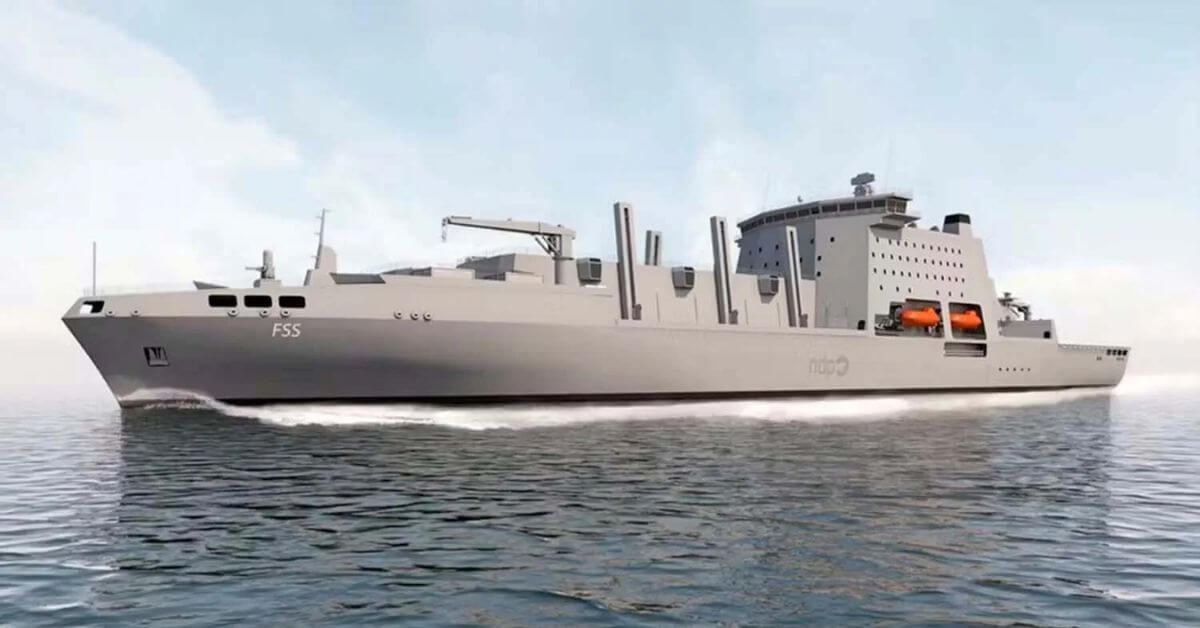
The three Fleet Solid Support ships will provide munitions, stores and provisions to Royal Navy task groups at sea, enabling ships including the Queen Elizabeth-class aircraft carriers to remain deployed for longer and operate at greater distance from their home ports.
At around 39,000 tonnes and 216 metres long, the vessels will be the largest ships in UK military service after the Queen Elizabeth-class aircraft carriers.
Construction of ship modules is now taking place at Navantia UK’s Appledore yard, along with its Harland & Wolff shipyard in Belfast and Navantia’s yards in Spain. Final assembly, integration and trials of the ships will take place at their Harland & Wolff shipyard in Belfast.
Commodore Sam Shattock, Commodore Royal Fleet Auxiliary, said:
“Today’s keel laying marks another important step in the delivery of RFA Resurgent and the wider Fleet Solid Support programme. Seeing construction progress here in Appledore demonstrates the momentum behind a project that will provide the Royal Fleet Auxiliary with world-class capabilities to sustain Royal Navy operations across the globe.
”The commemorative coin placed beneath the keel continues a proud maritime tradition, linking this modern programme with generations of shipbuilders and seafarers who have gone before us. I am delighted that apprentices from both Navantia UK and the Royal Fleet Auxiliary have been part of this occasion, representing the future of UK shipbuilding and the future of the RFA.”
The milestone also marks a significant moment in the regeneration of Appledore, which is undertaking its first shipbuilding activity since the completion of the Irish Naval Service offshore patrol vessel LÉ George Bernard Shaw in 2019.
Navantia UK is delivering an investment programme of around £15 million at Appledore, including a new roof, plasma-cutting equipment and a new pipe shop, as part of more than £157 million being invested across the company’s four UK yards, which together employ around 1,300 people.
The Appledore workforce has grown to 210 people, including 40 apprentices, with a further 20 apprentices starting this week as part of an intake of 121 new apprentices across Navantia UK. The yard works closely with nearby North Devon College to develop the skilled workforce required for future programmes.
The programme is also supporting businesses throughout the local and national supply chain. North Devon-based Wellington Welding, for example, supplies welding equipment and consumables to the yard as well as providing on-site testing services.
Another supplier supporting the project is Somerset-headquartered firm Denholm Industrial Services.
Steve Hill, Managing Director of Denholm Industrial Services, said:
“Denholm Industrial Services is proud to support Navantia UK on the Fleet Solid Support programme. We are already building on our early work, from providing scaffolding and painting support for the Seahorse barge in Appledore, to supporting major reroofing works in Belfast.
”We share Navantia UK’s drive, ambition, investment and commitment and are focused on supporting delivery of the FSS programme for the Royal Fleet Auxiliary to the highest standards. We look forward to continuing our partnership with Navantia UK on FSS and beyond, helping to deliver lasting benefits for the wider UK maritime sector.”
Appledore has a long history of naval and commercial shipbuilding dating back to 1855 and previously constructed bow sections for the Royal Navy’s Queen Elizabeth-class aircraft carriers. Under Navantia UK, the yard is being developed as a specialist centre for vessels of up to approximately 125 metres, including autonomous and uncrewed platforms.
Navantia UK has already developed its LASV75 concept for the Royal Navy’s future Hybrid Navy. The 75-metre, ocean-going autonomous support vessel is designed around modular mission systems and rapid, scalable construction. The concept has been developed with Appledore’s facilities and capabilities in mind.
Read on the original site
Open the publisher's page for the full experience