India’s Mazagon Dock To Invest ₹27,000 Crore To Establish Greenfield Shipbuilding Cluster
Our take

The announcement of India’s Mazagon Dock’s ₹27,000 crore investment to establish a greenfield shipbuilding cluster in Maharashtra represents a significant development with ripple effects across the global maritime landscape. This isn’t merely an expansion of domestic shipbuilding capacity; it signals a strategic commitment to bolstering India’s naval capabilities and its position as a key player in international trade. The projected creation of 90,000 jobs underscores the substantial economic impact, aligning with broader national goals of infrastructure development and employment generation. Recent developments elsewhere highlight a global trend towards maritime innovation and expansion; for example, [First Additional Large Vessel ‘Judy LaMarsh’ Joins The Great Lakes Region In More Than 3 Decades] demonstrates a renewed focus on regional maritime infrastructure, while [Japan’s First Hydrogen-Fueled Dining Cruise Ship ‘Amane’ Launched In Nagasaki] showcases the increasing integration of sustainable technologies within the shipbuilding sector. Understanding these concurrent advancements provides crucial context for evaluating the scope and potential of Mazagon Dock’s initiative.
The scale of the investment—equivalent to roughly $325 million USD—positions Mazagon Dock to compete on a larger stage, potentially attracting international partnerships and collaborations. India's growing economy and strategic geopolitical location make it an attractive hub for shipbuilding and maritime-related industries. This cluster, designed from the ground up, allows for optimized integration of modern technologies and processes, a departure from retrofitting existing facilities. This approach promises enhanced efficiency and the ability to construct increasingly complex vessels, including potentially nuclear-powered submarines and advanced warships. The recent news of [Two Major U.S. Container Gateways Handled Nearly 1.88 Million TEUs In August] further emphasizes the ongoing global demand for efficient maritime transport, which will be impacted by increased shipbuilding capacity in regions like India. The cluster's design will be critical; a focus on modular construction and digital integration will be essential to maximizing productivity and minimizing environmental impact.
Beyond the immediate economic benefits, this investment underscores India’s ambition to achieve self-reliance in defense production, a key tenet of the nation’s “Make in India” initiative. Reduced dependence on foreign suppliers for critical naval assets enhances national security and provides greater strategic flexibility. Furthermore, a robust domestic shipbuilding industry fosters technological innovation and creates a skilled workforce, contributing to broader economic diversification. The development of specialized shipbuilding capabilities, such as those required for advanced naval vessels, will require significant investment in research and development, and the establishment of strong partnerships with academic institutions and technology providers. This cluster represents a potential catalyst for such advancements, contributing to India’s emergence as a global leader in maritime technology.
Looking ahead, the success of the Mazagon Dock shipbuilding cluster hinges on several factors, including effective project management, streamlined regulatory approvals, and the ability to attract and retain skilled labor. The integration of sustainable shipbuilding practices – minimizing emissions, utilizing recycled materials, and adopting energy-efficient technologies – will also be crucial for long-term viability and alignment with global environmental standards. A critical question to watch is how this investment will influence regional competition in the shipbuilding market and whether it will spur similar large-scale investments in other emerging economies. The cluster's impact on global supply chains and maritime trade flows will be a key indicator of its ultimate success and its contribution to the evolving dynamics of the world’s oceans.
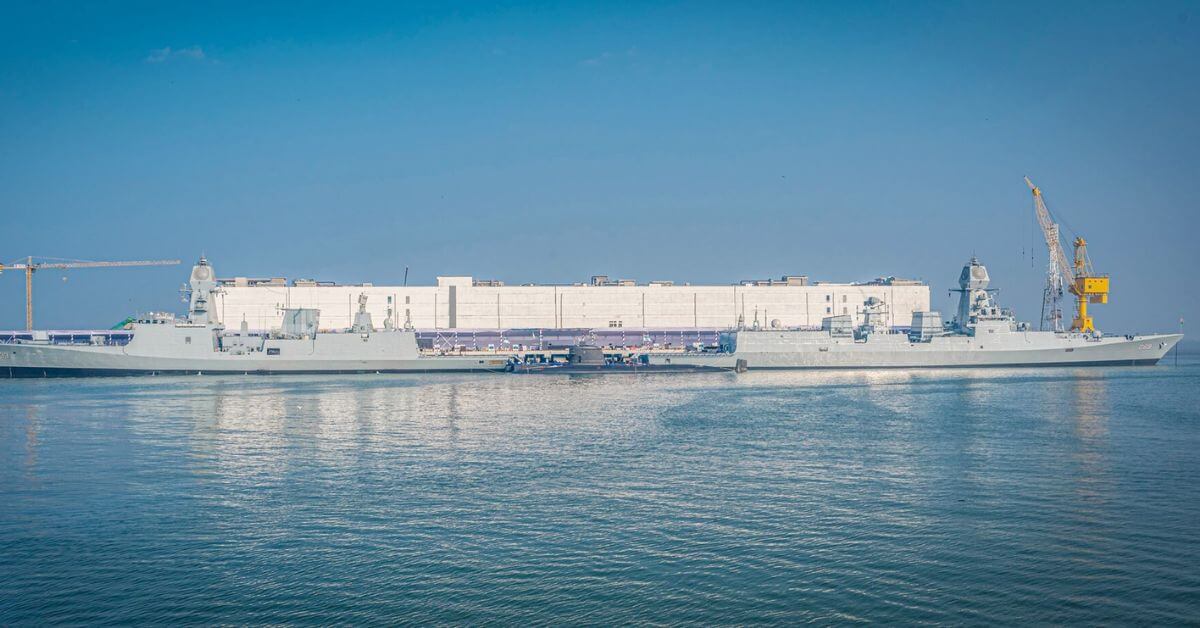
Mazagon Dock Shipbuilders Ltd (MDL) will invest around ₹27,000 crore to set up a greenfield shipbuilding cluster at Dighi in Maharashtra’s Raigad district, India.
The project is expected to create around 90,000 jobs, the Maharashtra government said on Tuesday, September 15.
MDL signed a memorandum of understanding (MoU) with National Shipbuilding and Heavy Industries Park Maharashtra Ltd (NSHIPML) for the project in the presence of Maharashtra Chief Minister Devendra Fadnavis, according to an official release.
Under the agreement, MDL plans to build up to at least 2 million gross tonnes of ships each year at Dighi. The facility will be able to build large commercial vessels and is expected to add to India’s shipbuilding capacity.
The ₹27,000 crore investment will go towards developing shipbuilding facilities at the site. The project will also have an industrial and supply chain network to support the shipbuilding sector.
The greenfield shipbuilding cluster is being developed jointly by the Maharashtra Maritime Board and the Mumbai Port Authority through NSHIPML.
The company was set up as a special-purpose company to develop the project.
The project is being developed under the Centre’s Greenfield Shipbuilding Cluster Development Plan. It is also expected to support the objectives of Maritime Amrit Kaal Vision 2047.
The Maharashtra government said the Dighi project is expected to increase India’s domestic shipbuilding capacity and attract technology and investment.
It is also expected to create skilled jobs and improve India’s competitiveness in the global maritime sector.
The cluster will include modern shipbuilding infrastructure as well as an industrial and supply chain ecosystem for the sector.
MDL Chairman and Managing Director Captain Jagmohan said the company would work with all stakeholders to develop a modern and globally competitive shipbuilding facility at Dighi.
Jagmohan signed the MoU with NSHIPML Managing Director Pradeep P, the release said.
References: thehindubusinessline, businessworld
Read on the original site
Open the publisher's page for the full experience