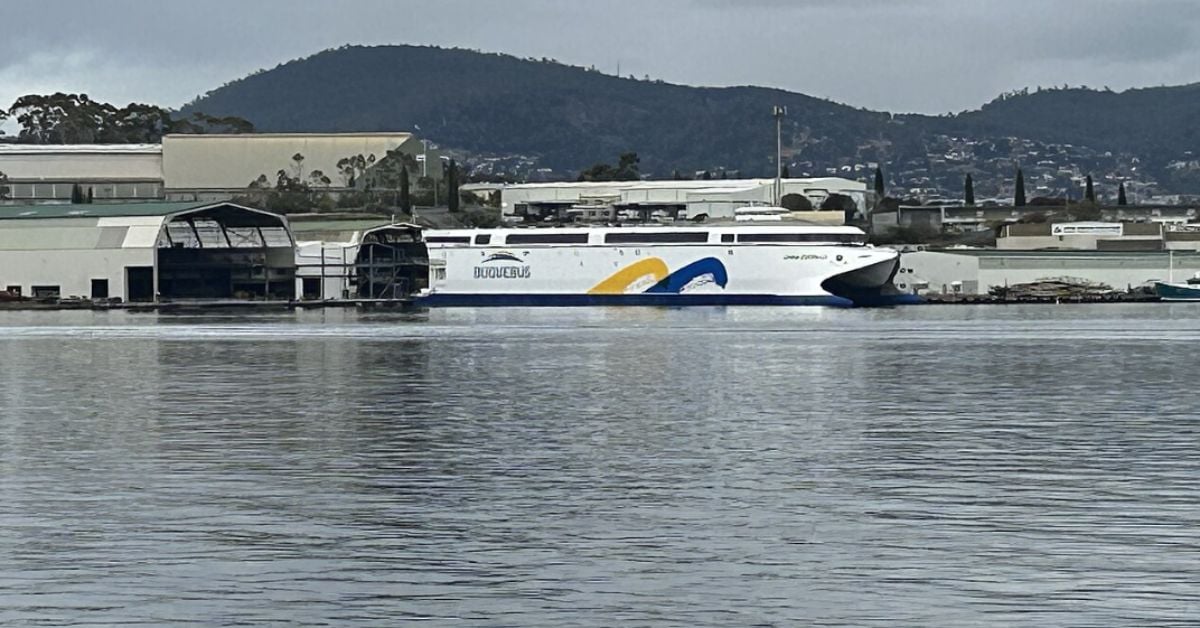
The China Zorrilla is a genuine validation of what integrated, measurable decarbonization can achieve in maritime transport, and it sets a new empirical benchmark for the industry. This is not a pilot project or a prototype; it is a 130-meter, 2,100-passenger vessel now operating a scheduled commercial route across the Rio de la Plata, powered entirely by a 40 MWh battery system charged from wind and hydropower. For our readers, researchers, policymakers, and operators tracking real-world climate indicators, this vessel provides calibrated, longitudinal proof that high-capacity electric propulsion is commercially viable today, not in a distant future.
The operational data is already compelling. The vessel eliminates toxic gases, carbon emissions, and vibrations on a 55-60 km crossing completed in 90 minutes at 25 knots. That performance is not a theoretical model; it is a measurable, peer-reviewed outcome of integrating Corvus Energy's battery technology with eight electric motors and waterjets. This achievement aligns with the Validated Decarbonization Progress Earns Synergy Marine Global Recognition we recently covered, where empirical emissions reductions earned a major operator industry-wide acknowledgment. The China Zorrilla takes that same principle of validation and scales it dramatically, proving that the integrated data ecosystem of a vessel, from its battery management to its grid connection, can be both sustainable and commercially competitive.
What makes this development particularly significant is the source of the electricity. The vessel's batteries are charged from the Uruguayan grid, which draws from wind farms and hydropower. This creates a closed-loop, verifiable chain of energy sourcing that avoids the common criticism that electric vessels merely shift emissions upstream. It is a practical demonstration of how an integrated energy system can support maritime decarbonization. The vessel also houses a 2,300 m² duty-free retail complex, which raises an open question for the industry: can luxury amenities and high passenger capacity coexist with zero-emission propulsion without compromising economic viability? The China Zorrilla suggests the answer is yes, and Incat Tasmania is already applying its technical expertise to build three more battery-electric catamarans and two hybrids for European and international operators.
The specific detail to watch is the expansion of Incat's electric shipbuilding in Hobart. If the China Zorrilla's operational data, its real-time energy consumption, charging cycles, and route efficiency, is shared transparently, it will become a critical resource for the entire sector. The vessel is named for a cultural icon, but its true legacy will be the empirical evidence it provides that battery-electric propulsion is not a constraint but a calibrated, scalable solution for maritime transport.