UAV
UAV at World Data Ocean is a file of 5 stories. The newest of them: “Counter-Drone Electronic Warfare Now Protects Guided-Missile Submarine USS Ohio”, “Uncrewed systems unlock co-located air-sea sampling in extreme storm conditions”, and “Drone Strike and Fire Imperil Cargo Ship, 23 Seafarers Aboard”. The USS Ohio now carries counter-drone electronic warfare capabilities, marking a measured evolution in undersea force protection. Coordinating uncrewed vehicles in extreme storm conditions has been a persistent challenge, but a new physics-based simulator for a rigid-wing, wind-powered USV marks a measurable step forward. A Global Hub for Ocean Intelligence 4 World Data Ocean is a centralized digital platform where researchers, scientists, and ocean enthusiasts converge to… The list below is every UAV story on World Data Ocean, newest first.
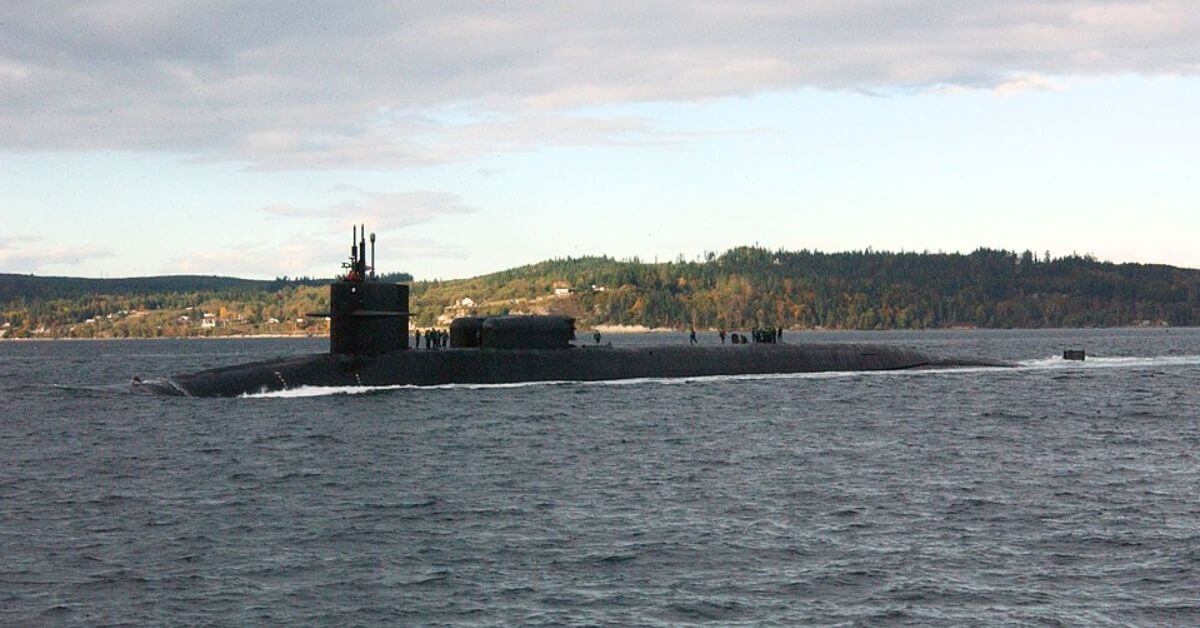
Counter-Drone Electronic Warfare Now Protects Guided-Missile Submarine USS Ohio
The USS Ohio now carries counter-drone electronic warfare capabilities, marking a measured evolution in undersea force protection. A guided-missile submarine's value has always depended on stealth and precision; adding layered defense against uncrewed threats reflects a realistic assessment of modern battlespace risks. The Navy continues integrating validated, real-time systems across its fleet, from forward-deployed destroyers to strategic assets. Readers tracking allied uncrewed target engagement in the Gulf of Bothnia will recognize the pattern: maritime defense is adapting, empirically, to what drones have changed.

Uncrewed systems unlock co-located air-sea sampling in extreme storm conditions
Coordinating uncrewed vehicles in extreme storm conditions has been a persistent challenge, but a new physics-based simulator for a rigid-wing, wind-powered USV marks a measurable step forward. Calibrated and validated using NOAA Atlantic Hurricane mission data, it reproduces surge, sway, and yaw under real-world wind and current forces. This tool enables repeatable virtual experiments for co-located air-sea sampling, critical for understanding climate indicators. For deeper coverage, see our related article on China's wind-powered data hub monitoring ocean health in real-time.
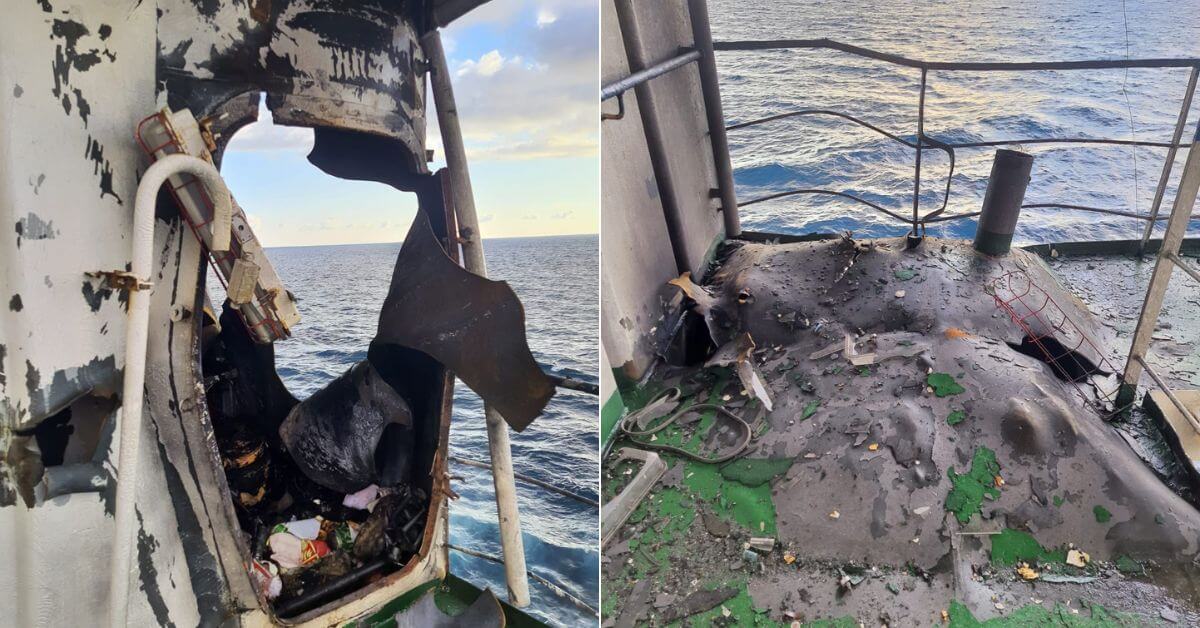
Drone Strike and Fire Imperil Cargo Ship, 23 Seafarers Aboard
The MV BARYON, IMO 9151412, was struck by a drone and fire while en route from Novorossiysk to Karachi, imperiling 23 seafarers aboard. This incident is a sharp reminder that maritime risk is no longer confined to weather or navigation. The threat is asymmetric, and it is here. As our reporting on Gulf of Oman STS transfers and Russian drone activities suggests, the operational picture is shifting. We will be tracking this closely, because safety at sea demands we understand every new vulnerability.

Caspian Sea Vessel Attacked: Iran Seeks Compensation Following Drone Strike
Iran's ambassador to Russia, Kazem Jalali, confirmed that Tehran is seeking compensation after a drone strike targeted the Anna, an Iranian-flagged cargo vessel in the Caspian Sea. The attack raises pointed questions about maritime security in a region already marked by strategic tension. Russia, for its part, has linked such incidents to broader military posturing, as seen in recent strikes on Ukrainian port infrastructure. This incident underscores the fragile line between commercial passage and geopolitical conflict, one that demands calibrated, evidence-based responses, not speculation.
Advancing Plastic Litter Mapping with AI-Powered Hyperspectral Data Analysis
Hyperspectral imaging from UAVs has long promised precise plastic litter mapping, but variability between flights has kept that promise out of reach. This study confronts the problem directly, standardizing each cube's spectral statistics before segmentation to reduce acquisition-specific bias. The result is a compact ConvNeXt V2-based U-Net that lifts mean IoU from 49.0% to 64.5%, with gains most pronounced under overexposure and background confusion. It is a practical step toward reliable cross-flight monitoring.