survival
9 stories filed under survival on World Data Ocean. The newest of them: “Fossilized Poop Reveals Feathered Dinosaur Traits Linked to Survival”, “Incendiamoeba Sets New Limit for Eukaryotic Heat Tolerance”, and “Ocean Ingestion: Could a Whale Swallow a Diver Whole?”. A rare fossilized coprolite is reshaping how we read survival in the Cretaceous. A single-celled organism has just redrawn the upper limits of complex life. A Global Hub for Ocean Intelligence 4 World Data Ocean is a centralized digital platform where researchers, scientists, and ocean enthusiasts converge to… The list below is every survival story on World Data Ocean, newest first.

Fossilized Poop Reveals Feathered Dinosaur Traits Linked to Survival
A rare fossilized coprolite is reshaping how we read survival in the Cretaceous. The specimen hints that feather differences among early birds were not just aesthetic but functional, tied directly to which lineages endured the asteroid impact. It is a quiet but compelling clue, one that turns a familiar extinction narrative toward smaller, more specific biological drivers. For broader context on ancient catastrophes, our coverage of the *Ancient Impact Crater, 390 Million Years Old, Identified in Quebec* offers a deeper look at Earth's violent history.

Incendiamoeba Sets New Limit for Eukaryotic Heat Tolerance
A single-celled organism has just redrawn the upper limits of complex life. Incendiamoeba cascadensis can replicate at 145° F, a new record for eukaryotic heat tolerance that recalibrates what we thought possible for organisms with a nucleus. This isn't a marginal uptick; it's a genuine expansion of a biological boundary. The discovery invites us to rethink the resilience of life's building blocks. For deeper context on how survival traits manifest across species, our piece on fossilized dinosaur plumage offers a compelling parallel.

Ocean Ingestion: Could a Whale Swallow a Diver Whole?
A sperm whale's throat is large enough to swallow a human, but the mechanics of such an event are far from cinematic. The animal's esophagus is designed for squid, not scuba gear, and its instinct would be to reject anything unfamiliar. Understanding these biological limits sharpens our respect for ocean life. For more on how we track such creatures, explore "Integrated Subsea Cables Enhance Data Transmission Across the Indian Ocean." Curiosity and precision drive real ocean intelligence.

Invasive Species Impact on Seagrass: Research Gaps and Ecosystem Concerns
Seagrasses are vanishing across most of their range, and invasive species are accelerating that loss. Our review of 73 studies confirms that invaders, from algae to bioturbators, overwhelmingly harm seagrass traits like shoot density, growth, and survival. Competitive disruption is the dominant mechanism, yet research remains skewed toward just two species and a few regions. These pressures compound with other anthropogenic stressors, hitting already weakened ecosystems hardest.
Warming Waters Disrupt Caribbean King Crab Larvae Behavior
Caribbean king crab larvae swim less and die more at 32°C, a near threefold jump in mortality over the control group. The shift is quiet but consequential: first-stage larvae reverse their vertical swimming, sinking faster rather than rising. That behavioral flip threatens dispersal and larval supply for outplanted populations. For restoration programs, this is a warning that stocking reefs with *Maguimithrax spinosissimus* assumes a resilience the larvae may not have.
Ocean Depth Limits: How Far Can Surface Fish Really Swim?
A curious question from *Finding Nemo* touches on a real oceanographic principle: depth stratification. Surface-dwelling species like clownfish and blue tangs are adapted to specific pressure zones, and their swim bladders are calibrated for that environment. The anglerfish's domain, by contrast, demands physiological adaptations that these fish simply lack. It is a practical example of how marine life is partitioned by depth, a concept worth exploring further in our piece on integrated subsea cables, which highlights how we map these very ecosystems.
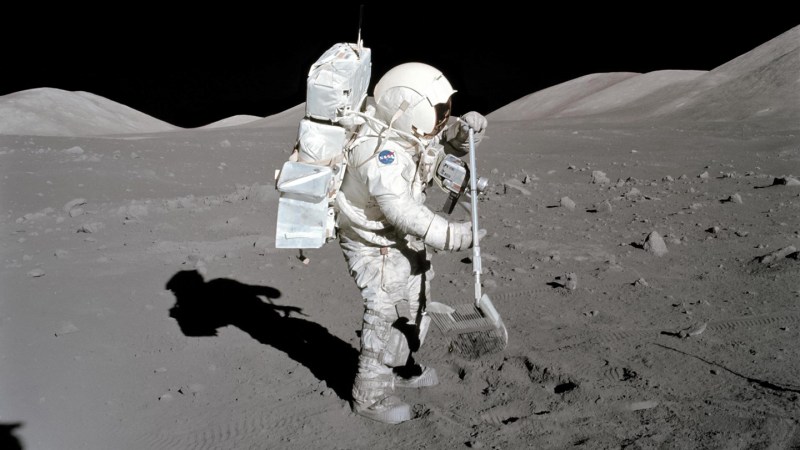
Lunar Exploration: Assessing Microbial Risks with Artemis IV
Fifty years after the last bootprint, Artemis IV returns humans to the lunar surface, and NASA is already asking what we might be bringing with us. New research identifies the hardy microbes hitching a ride on our spacecraft, turning a question of planetary protection into a matter of empirical precision. This isn't just about keeping the moon pristine; it's about understanding our own biological footprint. For those tracking how life endures in extreme conditions, our related piece on fossilized dinosaur traits offers a fascinating parallel.
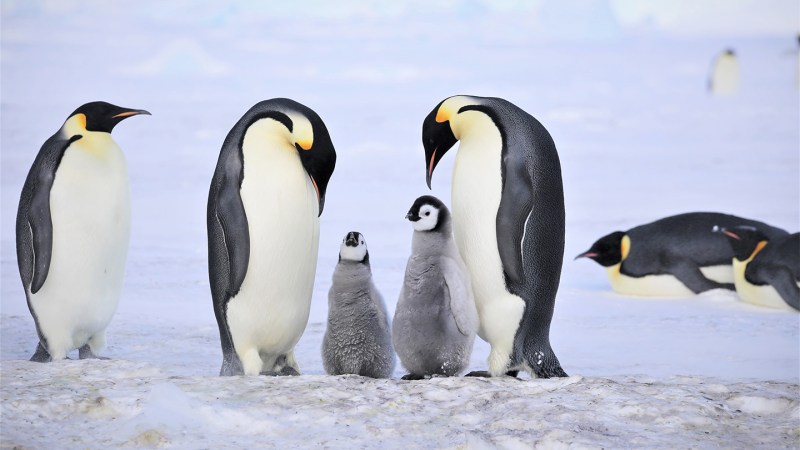
Iceberg's Presence Linked to Significant Chick Decline in Emperor Penguin Colony
A 2025 emperor penguin colony saw a sharp decline in chicks, and the likely culprit is the grounded iceberg nearby. The contours of that ice mass appear to have disrupted the colony's usual breeding conditions, a stark reminder of how local geography can tip the scales for a species already under pressure. It is a measurable, empirical signal of change. For broader context on Antarctic dynamics, our piece on Antarctic krill reproduction offers a complementary thread.
Climate and predation interplay drive Magellanic penguin population shifts.
At Monte León National Park, 15 years of reproductive data reveal a striking pattern: Magellanic penguin breeding success swings between complete failure and full success, driven by non-linear responses to climate and predation, yet population abundance holds steady. This decoupling suggests bottom-up environmental variability, not predation, governs interannual dynamics. It is a compelling reminder that reproductive performance does not always dictate population size. For broader coastal research, our coverage of seagrass ecosystem concerns offers parallel insights into ecological resilience.