research collaboration
45 stories filed under research collaboration on World Data Ocean. The newest of them: “Charting Arctic Research: Connecting Students to Ocean Expeditions”, “Mapping the Emerging Field of Environmental Epigenetics in Aquatic Life”, and “Validated Design: Nuclear-Powered Car Carrier Integrates Molten Salt Reactor.”. Navigating opportunities to participate in research cruises can be a pivotal step for emerging researchers. Understanding aquatic invertebrate responses to rapid environmental change is a critical challenge in marine ecology, increasingly addressed through environmental epigenetics. A Global Hub for Ocean Intelligence 4 World Data Ocean is a centralized digital platform where researchers, scientists, and ocean enthusiasts converge to… The list below is every research collaboration story on World Data Ocean, newest first.
Charting Arctic Research: Connecting Students to Ocean Expeditions
Navigating opportunities to participate in research cruises can be a pivotal step for emerging researchers. For those, like our recent poster, pursuing Arctic micropaleontology, identifying available expeditions requires a strategic approach. While a centralized database remains elusive, tracking funded research vessels and upcoming expeditions often relies on networking and collaboration. Understanding the application processes—which can vary significantly—is crucial. For broader insights into oceanographic research roles, consider our article, "Passionate about marine biology and electronics? Join our Ocean Tech team!"

Mapping the Emerging Field of Environmental Epigenetics in Aquatic Life
Understanding aquatic invertebrate responses to rapid environmental change is a critical challenge in marine ecology, increasingly addressed through environmental epigenetics. A recent bibliometric study, utilizing CiteSpace and VOSviewer, analyzed publications from 2014-2025, revealing a global research network characterized by methodological complementarity and collaborative partnerships. While China leads in publications and the United States drives network connectivity, current research emphasizes DNA methylation, a limited number of taxa, and often simplifies natural conditions.

Validated Design: Nuclear-Powered Car Carrier Integrates Molten Salt Reactor.
Lloyd’s Register has validated a groundbreaking design for a nuclear-powered car carrier utilizing a Molten Salt Reactor (MSR), marking a significant advancement in maritime propulsion. This study rigorously assessed the physical and operational integration of an MSR within a large vehicle carrier, demonstrating feasibility and potential for substantial efficiency gains. The approval underscores World Data Ocean's commitment to showcasing innovative solutions addressing global shipping challenges.
Mediterranean Pollution: Collaborative Governance Beyond Tunnel Vision
As pollution challenges in the Mediterranean Sea intensify, the need for effective collaborative governance becomes paramount. This paper explores the tunnel vision effect, frog principle, and flea effect to assess their implications for pollution management. The tunnel vision effect warns against short-term thinking, while the frog principle highlights the urgency of early action to mitigate cumulative harm. The flea effect emphasizes the need for clear regulations and incentives. Understanding these principles offers critical insights for enhancing marine pollution governance in the region.

Integrated AI Drives Future Naval Capabilities: Hanwha Ocean, Microsoft, Google Collaborate
On May 20, 2026, Hanwha Ocean hosted a pivotal discussion with technology leaders Microsoft and Google to explore the future of naval technology, particularly the development of AI warships. This collaboration aims to integrate advanced artificial intelligence into maritime defense systems, reflecting a commitment to innovation and global security. As nations navigate evolving maritime challenges, insights from this event could shape the next generation of naval capabilities.

Data-Driven Crew Wellbeing: Navy Integrates WHOOP for Optimized Performance
The U.S. Navy is enhancing sailor well-being by integrating WHOOP wearable technology into its CREW system architecture, in collaboration with MIT Lincoln Laboratory. This innovative approach aims to track fatigue and recovery, ensuring that sailors maintain optimal performance. By leveraging empirical data from WHOOP, the Navy seeks to foster a healthier and more resilient force. For further insights into maritime advancements, explore our article on India’s initiative to create the first underwater naval museum with the decommissioned INS Guldar.

Maritime Professor Honored for Championing Gender Equality at Sea
The International Maritime Organization (IMO) has honored Professor Momoko Kitada of Japan with the prestigious Gender Equality Award 2026, recognizing her enduring commitment to promoting gender equality and empowering women within the maritime industry. With her extensive academic contributions and advocacy, Professor Kitada has become a leading voice for inclusivity in maritime education and practice. This accolade underscores the importance of diverse perspectives in shaping the future of maritime affairs.
Centering Indigenous Voices: Shaping Equitable Ocean Futures Through Shared Values
This review explores advancing equity in ocean and coastal governance by centering Indigenous Peoples’ and Local Communities’ (IPLCs) values amid socioecological change. By synthesizing 27 empirical studies, it highlights how IPLCs mobilize their knowledge and values to influence marine governance. Key insights reveal mechanisms for strengthening authority and stewardship, the challenges posed by competing ocean uses and climate change, and emerging pathways for equitable governance. This work underscores the importance of the capability to aspire for governance transitions, a critical dimension of ocean equity.
Balancing Growth and Conservation: A Model for the Yellow River Delta
In the river-sea convergence zone of the Yellow River Basin, particularly in Shandong Province, balancing ecological conservation with high-quality development is crucial for regional sustainability. This study constructs a multi-level analytical framework to assess these dynamics, highlighting the need for intra-system coordination and inter-system coupling. Findings indicate that while ecological conservation shows a generally coordinated pattern, high-quality development remains uneven and under-resourced.
Jellyfish Bycatch to Collagen: A Sustainable Opportunity for Fisheries
Engaging small-scale fishers in a circular bioeconomy presents an innovative opportunity for valorizing Rhizostoma pulmo jellyfish bycatch, transforming a challenge into a resource. This study, part of the COLMED project, investigates the sustainable use of jellyfish for collagen production, a valuable biotechnological resource. Through collaboration with fishers in Catalonia and the Valencian Community, researchers assessed perceptions, quantified bycatch, and evaluated collagen integrity. Findings reveal strong fisher engagement and confirm the potential of jellyfish bycatch as a high-quality, sustainable source of marine collagen, enhancing fisheries

Sea Star Restoration Project Gains Momentum with New Funding
The California Academy of Sciences has secured a grant from the California Ocean Protection Council to support its efforts in restoring endangered Sunflower sea stars, vital to coastal ecosystem balance. Marine researchers are pioneering innovative techniques, including environmental DNA (eDNA) monitoring, to track surviving populations and identify genetic traits that could enhance resilience against sea star wasting disease. As part of this initiative, volunteers will assist in shoreline surveys, contributing to a comprehensive approach aimed at reviving this critical species and fostering ocean health.

Automated Drone Platform Enables Safe Shipboard Landings.
In a groundbreaking development, a UK-based firm has unveiled an innovative gyro-stabilised platform designed to enable drones to autonomously take off and land on moving ships. This technological advancement addresses the complexities of vertical takeoff and landing (VTOL) operations in dynamic maritime environments, enhancing safety and operational efficiency. By integrating real-time stabilization technology, this platform represents a significant step forward in maritime drone capabilities, fostering greater collaboration in ocean monitoring and research. This innovation underscores the potential for drones to contribute meaningfully to ocean stewardship.
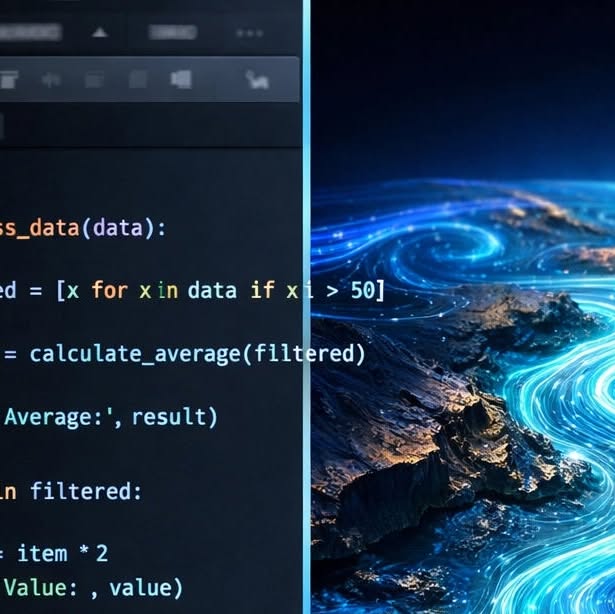
Unlock Ocean Insights: Efficient Data Access for Accelerated Research
Navigating the vast sea of raw data can feel overwhelming, but the Ocean Data Platform SDK is here to help you streamline your research process. Designed for efficiency, it allows you to filter and query data effectively, enabling you to focus on the insights that drive impactful ocean research. Coupled with our Python-based oceanography training, you will transform raw numbers into visual representations of ocean dynamics.

Wireless Charging at Sea: A New Era for Electric Vessels
A newly developed magnetic system allows for the wireless charging of electric ships at sea, marking a significant advancement in maritime technology. This innovative approach eliminates the need for physical connections, enabling vessels to recharge while in motion, thereby enhancing operational efficiency and reducing downtime. By integrating this cutting-edge technology into the shipping industry, we can support the transition to cleaner maritime practices and promote sustainability on the high seas.

North-East Atlantic Sets Stricter Limits on Ship Emissions.
The International Maritime Organization (IMO) has officially adopted the world's largest Emission Control Area (ECA) in the North-East Atlantic, aimed at regulating ship emissions. This significant move establishes binding limits on the maximum fuel sulfur content for vessels operating in these waters, effectively addressing the critical issues of sulfur oxides and fine particulate matter. By implementing these stringent regulations, the IMO underscores its commitment to enhancing air quality and safeguarding marine ecosystems, while promoting sustainable shipping practices in a rapidly changing climate.
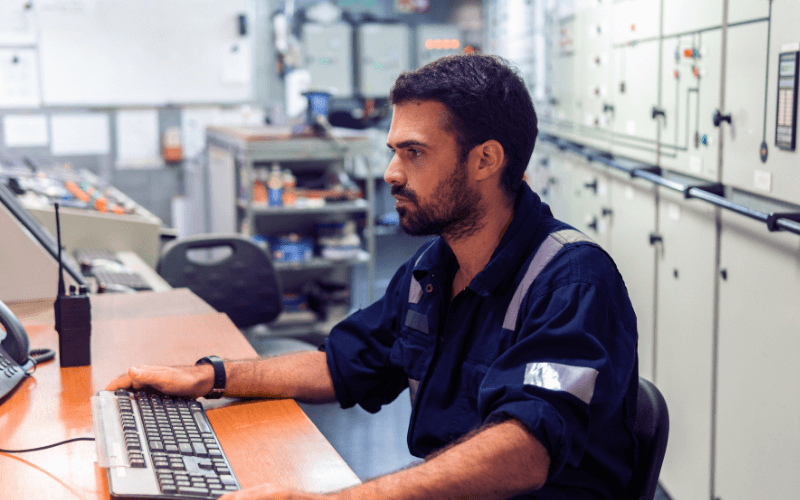
Powering the Seas: A Guide to Marine Engineering Careers and Innovation
Marine engineering is a specialized field that encompasses the design, operation, and maintenance of ship machinery and systems. This discipline plays a crucial role in ensuring the safety and efficiency of maritime operations. Aspiring marine engineers can pursue various educational courses, which equip them with the necessary skills and knowledge for this dynamic profession. Career paths in marine engineering offer diverse opportunities, from technical roles to management positions.

Advancing Crew Transfer: 3D Technology Shapes Next-Generation Vessels
NYK is pioneering the future of maritime transportation by utilizing advanced 3D technology to design next-generation crew transfer vessels. This innovative project, developed in collaboration with Kosaba Shipbuilding Co., Ltd. and Smert Design Co., Ltd., aims to enhance vessel efficiency and safety while prioritizing environmental sustainability. By integrating cutting-edge design methodologies, NYK is setting a new standard in the industry, ensuring that these vessels meet the evolving needs of ocean operations and contribute to the stewardship of our vital marine ecosystems.
Engineering a Sustainable Future: Pathways for Ocean Conservation Careers
Pursuing a career in environmental, ocean, or conservation engineering offers an exciting opportunity to make a meaningful impact on our planet. As a high school senior interested in engineering, consider focusing on majors like environmental or mechanical engineering, which align with your collaborative and innovative goals. Fields such as marine robotics or renewable energy are promising, as they directly contribute to conservation efforts.
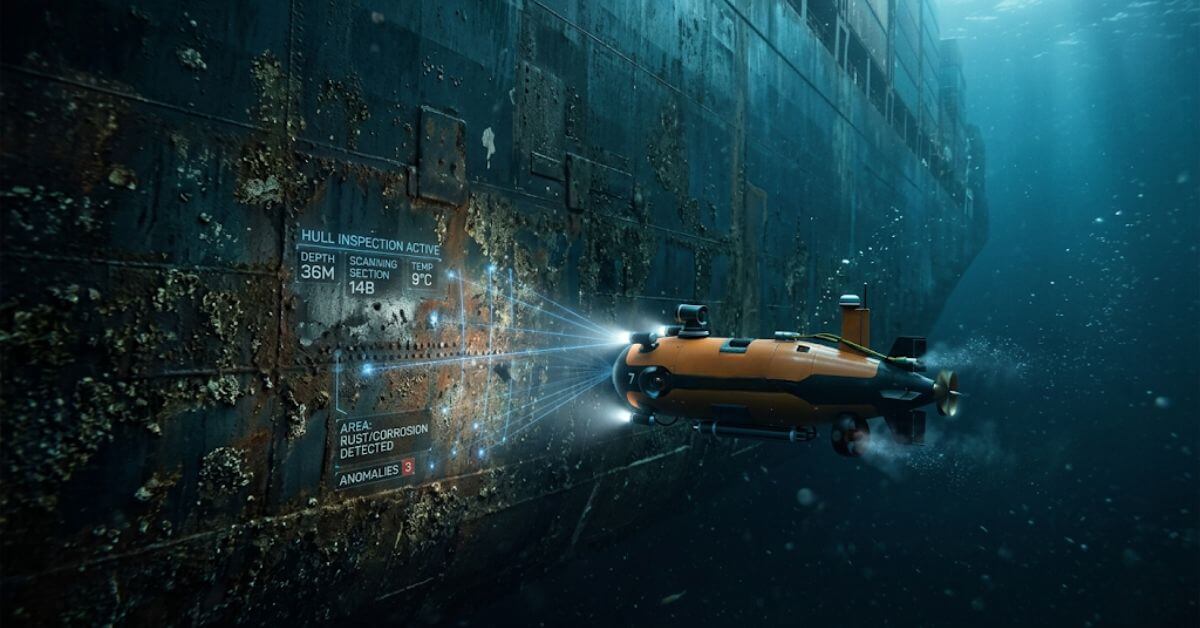
Autonomous Inspections: Validating AUV Technology for Safer, Efficient Ship Hulls
IQUA Robotics has successfully validated the use of autonomous underwater vehicles (AUVs) for ship hull inspection, eliminating the need for human divers. This innovative approach enhances safety and efficiency in maritime operations. The team is also set to explore the application of 3D sonar technology, which aims to improve the detection of sudden changes in hull shape and optimize navigation control. By integrating advanced robotics and sonar capabilities, IQUA Robotics is paving the way for more effective and reliable underwater inspections in the shipping industry.
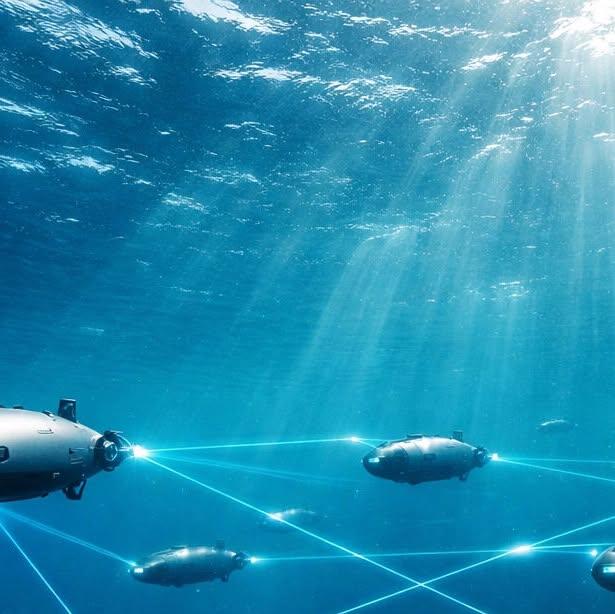
Ocean Exploration: From Ships to Swarms, Data Revolutionizes Understanding.
The exploration of our oceans is undergoing a transformative shift, moving from traditional research vessels to sophisticated autonomous robotic fleets. This evolution, driven by Ocean Infinity Operations, enables coordinated, real-time data integration, vastly improving our ability to monitor environmental indicators with validated accuracy. Rather than relying on isolated snapshots, we now access a dynamic living data ecosystem that empowers researchers and scientists to make informed decisions about our planet’s future.
Fostering Ocean Intelligence: A New Collaborative Research Initiative Begins.
Early-stage research collaboration is essential for advancing our understanding of ocean ecosystems and addressing the pressing challenges they face. By fostering partnerships among scientists, policymakers, and stakeholders, we can leverage diverse expertise and innovative technologies to generate impactful solutions. This collaborative approach encourages the sharing of empirical data and insights, facilitating a more integrated response to climate change and marine conservation. Join us in exploring the opportunities that arise from these partnerships, as we work together to enhance ocean intelligence and stewardship for future generations.