ocean circulation
44 stories filed under ocean circulation on World Data Ocean. The newest of them: “Modeling Storm Surge in Venice Lagoon: Assessing Barrier System Performance”, “Submesoscale Dynamics Shape South China Sea Response to Typhoon Noru”, and “Longitudinal Data Reveals Elasmobranch Patterns in Maldives’ Lhaviyani Atoll”. The Venice Lagoon faces escalating risks from extreme storm surges, mitigated primarily by the MoSE movable barrier system. Understanding the multiscale oceanic response to Typhoon Noru (2022) in the South China Sea is crucial for enhancing typhoon intensity predictions. A Global Hub for Ocean Intelligence 4 World Data Ocean is a centralized digital platform where researchers, scientists, and ocean enthusiasts converge to… The list below is every ocean circulation story on World Data Ocean, newest first.

Modeling Storm Surge in Venice Lagoon: Assessing Barrier System Performance
The Venice Lagoon faces escalating risks from extreme storm surges, mitigated primarily by the MoSE movable barrier system. This study introduces a novel modeling framework integrating an immersed boundary method within the SHYFEM-MPI ocean circulation model to accurately simulate storm surge dynamics and the impact of these barriers. Validated through testing and applied to the November 2022 event, the framework demonstrates the capability to forecast storm surges from regional scales to the urban environment.
Submesoscale Dynamics Shape South China Sea Response to Typhoon Noru
Understanding the multiscale oceanic response to Typhoon Noru (2022) in the South China Sea is crucial for enhancing typhoon intensity predictions. This study investigates how submesoscale processes influence the three-dimensional reshaping of the post-typhoon wake. Utilizing a nested model configuration, we reveal that wind-driven vertical mixing primarily dictates cooling magnitudes, while submesoscale dynamics drive significant thermal variability. Our findings underscore the necessity of incorporating submesoscale processes for improving vertical transport parameterizations in coupled prediction models.
Longitudinal Data Reveals Elasmobranch Patterns in Maldives’ Lhaviyani Atoll
The Maldives is renowned for its rich diversity of sharks and batoids, yet detailed patterns of elasmobranch occurrence in the region remain underexplored. This study examines a comprehensive seven-year dataset of 12,732 SCUBA surveys and 142,994 observations from Lhaviyani Atoll, identifying 28 species, including 23 threatened on the IUCN Red List. Our findings reveal that elasmobranch diversity and abundance are influenced by environmental factors such as sea surface temperature and current velocity, crucial for guiding effective conservation efforts.
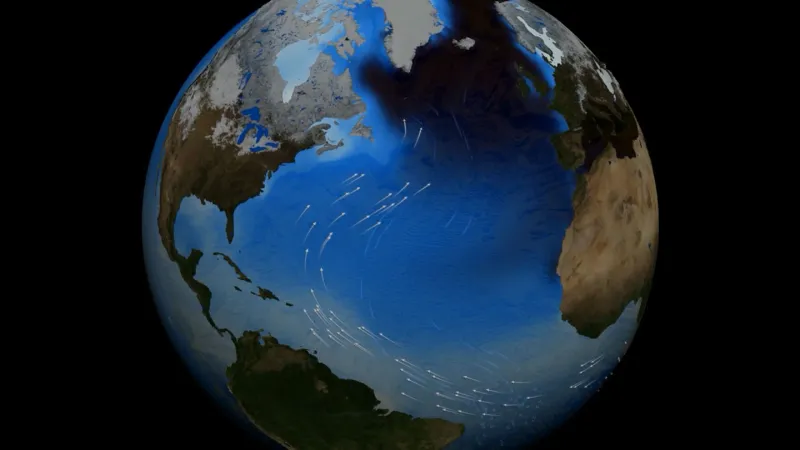
Weakening Atlantic Current Demands Urgent, Integrated Ocean Action.
The outlook for the Atlantic Meridional Overturning Circulation, a vital climate-regulating ocean current, is concerning, with projections indicating a weakening of up to 50 percent by 2100. This significant decline raises critical questions about the implications for global climate patterns and marine ecosystems. Addressing this challenge requires strategic action and collaboration among scientists, policymakers, and the public.
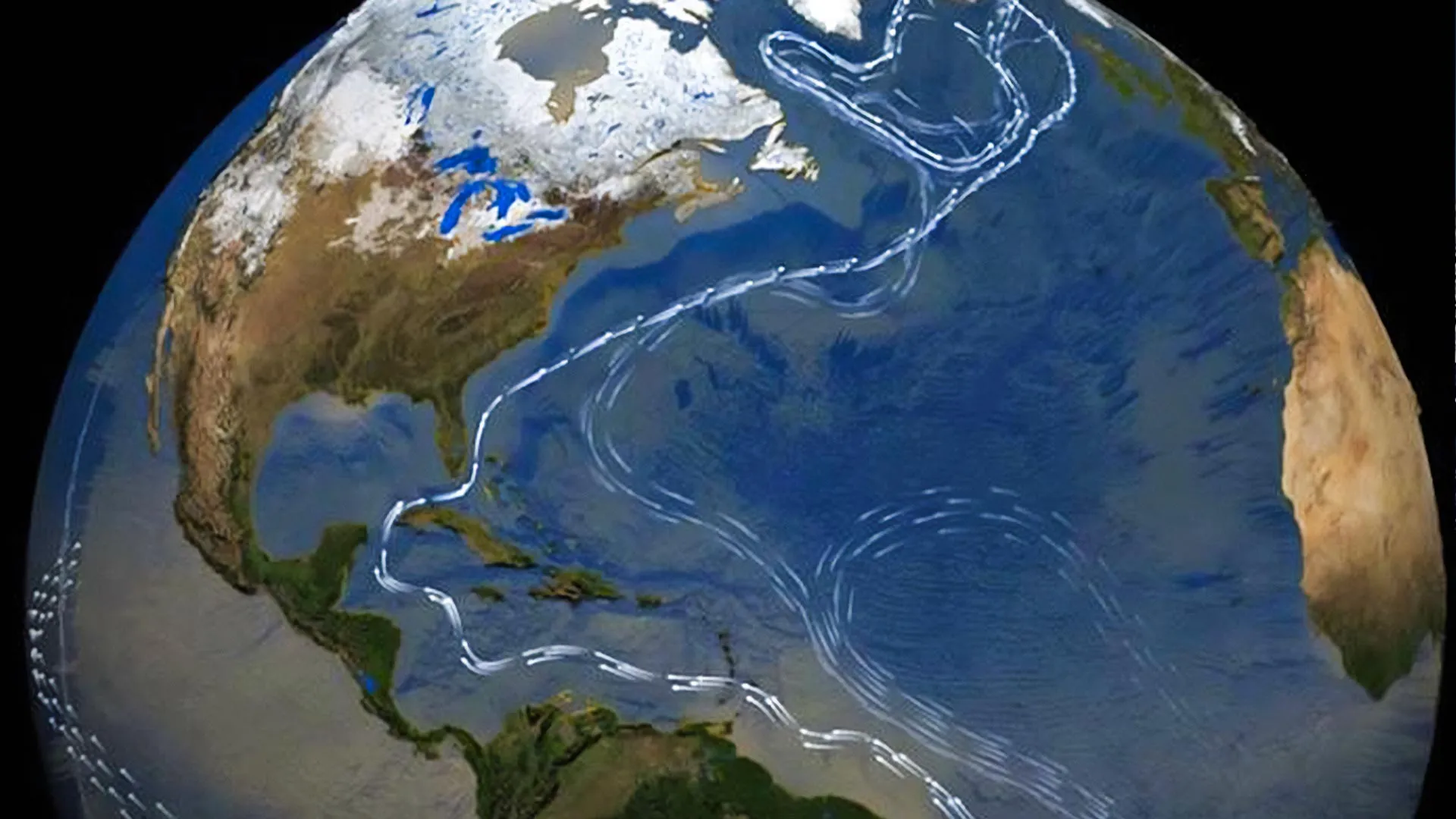
Atlantic Current Slowdown: A Measurable Shift with Global Implications
Scientists have identified compelling evidence indicating that a key Atlantic Ocean current system, which plays a vital role in regulating global climate, is weakening. This significant slowdown has been observed over nearly two decades across a broad area of the North Atlantic. The implications of this change are profound, as this ocean circulation influences weather patterns and temperatures. Consequently, alterations to this system could lead to notable impacts on storms, rainfall distribution, sea levels, and winter conditions in regions of Europe and North America.
Arctic Eddy Dynamics Illuminate Kara Sea Climate Change Processes
The Marginal Ice Zone (MIZ) serves as a critical interface for interactions between the atmosphere, ocean, and sea ice, prompting frequent mesoscale eddy formation. This study explores a mesoscale eddy in the northeastern Kara Sea during summer 2024, utilizing in situ and satellite data alongside ellipsoidal vortex theory. Our findings reveal the eddy's significant role in transporting freshened cold water and influencing local circulation patterns.

Antarctic Ice Reveals Climate Puzzle: Cooling Oceans, Stable Greenhouse Gases
Scientists have made a groundbreaking discovery in Antarctic ice, revealing insights into Earth's climate over the past 3 million years. By examining tiny pockets of trapped air and rare gases, researchers found that while global temperatures dropped significantly—particularly in oceanic regions—the levels of crucial greenhouse gases like carbon dioxide and methane changed only modestly. This unexpected finding indicates that other influential factors, such as shifting ice sheets, ocean circulation patterns, and changes in Earth’s reflectivity, have played substantial roles in driving long-term climate change.
Long-Term Monitoring Reveals Fukushima's Legacy in Pacific Coastal Waters
This study examines the levels of iodine-129 (129I) in coastal Pacific Ocean waters from southern California between 2011 and 2020, following the Fukushima Daiichi Nuclear Power Plant accident. Initiated in June 2011, our monitoring program at Scripps Pier aimed to detect potential radionuclide transport from Japan. Despite extensive sampling, we found no significant 129I signal directly linked to Fukushima. Instead, we observed a systematic seasonal 129I time series, likely influenced by local surface circulation variations. This report integrates recent findings from 2018-2020 and previously
Subtropical Pacific Eddies: A Decade of Dynamic Energy Shifts
Ocean mesoscale eddies, characterized by substantial eddy kinetic energy (EKE), are crucial to ocean circulation, climate, and biogeochemistry. This study investigates the decadal variability of EKE in the Subtropical Northeast Pacific using observational data from 1993 to 2024. Findings reveal significant decadal variability with a notable 10–11 year cycle, primarily influenced by the Pacific Decadal Oscillation (PDO). The variability manifests as a monopole spatial pattern, impacting both cyclonic and anticyclonic eddies, and is expected to have substantial effects on the coastal
Climate Shifts Reshape Penguin Habitat: Integrated Assessment for Vulnerability
This study explores the vulnerability of crested penguins to ocean warming by integrating innovative climate assessment tools—storylines and time of emergence. As anthropogenic climate forcing alters ocean circulation in the Southern Ocean, understanding the impacts on these threatened species becomes increasingly complex due to uncertainties in climate projections.
Ancient Ocean Shifts Reveal Climate's Impact on Tropical Seas
The Oligocene–Miocene transition, spanning approximately 24–20 million years ago, was a pivotal period marked by significant global climate and ocean circulation shifts. This study presents stable isotope and Mg/Ca temperature records from planktic foraminifera at IODP Site U1501 in the northern South China Sea, revealing notable upper-ocean hydrographic variability. Findings illustrate changes in thermal and nutrient stratification, highlighting the interplay between ocean dynamics and climate transitions. The research underscores the necessity for understanding low-latitude ocean responses to early Miocene climate variability, informed by regional
Yellow Sea Circulation Patterns Revealed Through Data-Driven Analysis
This study investigates the wintertime upper-layer circulation in the Yellow Sea, focusing on the influence of southern compensatory inflow and the shelf-break jet. Utilizing high-resolution ocean reanalysis data from 2020 to 2025, the research employs the Self-Organizing Map (SOM) technique to identify dominant circulation states and their variability during synoptic-scale atmospheric events. The findings reveal significant fluctuations in circulation intensity and structure, particularly highlighting the shelf-break jet's behavior across different winters.
Ocean Currents Enhance Tuna Spawning Habitat in Mediterranean
This study investigates the critical role of hydrodynamic retention in the spawning grounds of large pelagic fishes in the western Mediterranean, specifically focusing on Atlantic bluefin tuna, albacore tuna, and swordfish. Traditionally, spawning grounds have been associated with temperature and surface mixing; however, this research posits that oceanographic processes are equally vital for sustaining early life stages.
Amazon River Plume Shapes Life on the Continental Shelf
The Amazon-Guianas continental shelves represent a dynamic tropical margin shaped significantly by the Amazon and Orinoco rivers. This study explores how river-derived particulate organic carbon (POC) influences benthic ecosystems, utilizing a 21-year time-series analysis of Amazon River discharge and satellite-derived POC data. Our findings reveal distinct POC concentration patterns across four shelf sectors and highlight regional variations in benthic invertebrate composition. These results underscore the critical relationship between river plume dynamics and benthic biogeography, enhancing our understanding of ecosystem structure in this vital region.

WOCE Data Reveals Key Ocean Circulation Patterns and Processes.
The World Ocean Circulation Experiment (WOCE) provides invaluable hydrographic data that enhances our understanding of large-scale mass transports, water mass formation, and diffusivities in the oceans. This publication from AGU highlights key findings derived from extensive empirical analyses, offering insights into the dynamics of ocean circulation. By employing validated methodologies, the study underscores the significance of these processes in regulating climate and supporting marine ecosystems.
Ocean Circulation Insights Refine Global Heat Transport Estimates.
Recent advancements in hydrographic data have led to improved estimates of global ocean circulation, heat transport, and mixing processes. This research, published in *Nature*, emphasizes the critical role that enhanced ocean intelligence plays in understanding climate dynamics. By integrating validated measurements and empirical data, scientists can better assess how these factors influence global climate systems and marine ecosystems. The findings underscore the importance of collaborative efforts in oceanographic research, highlighting the need for ongoing commitment to ocean stewardship and informed policy-making.
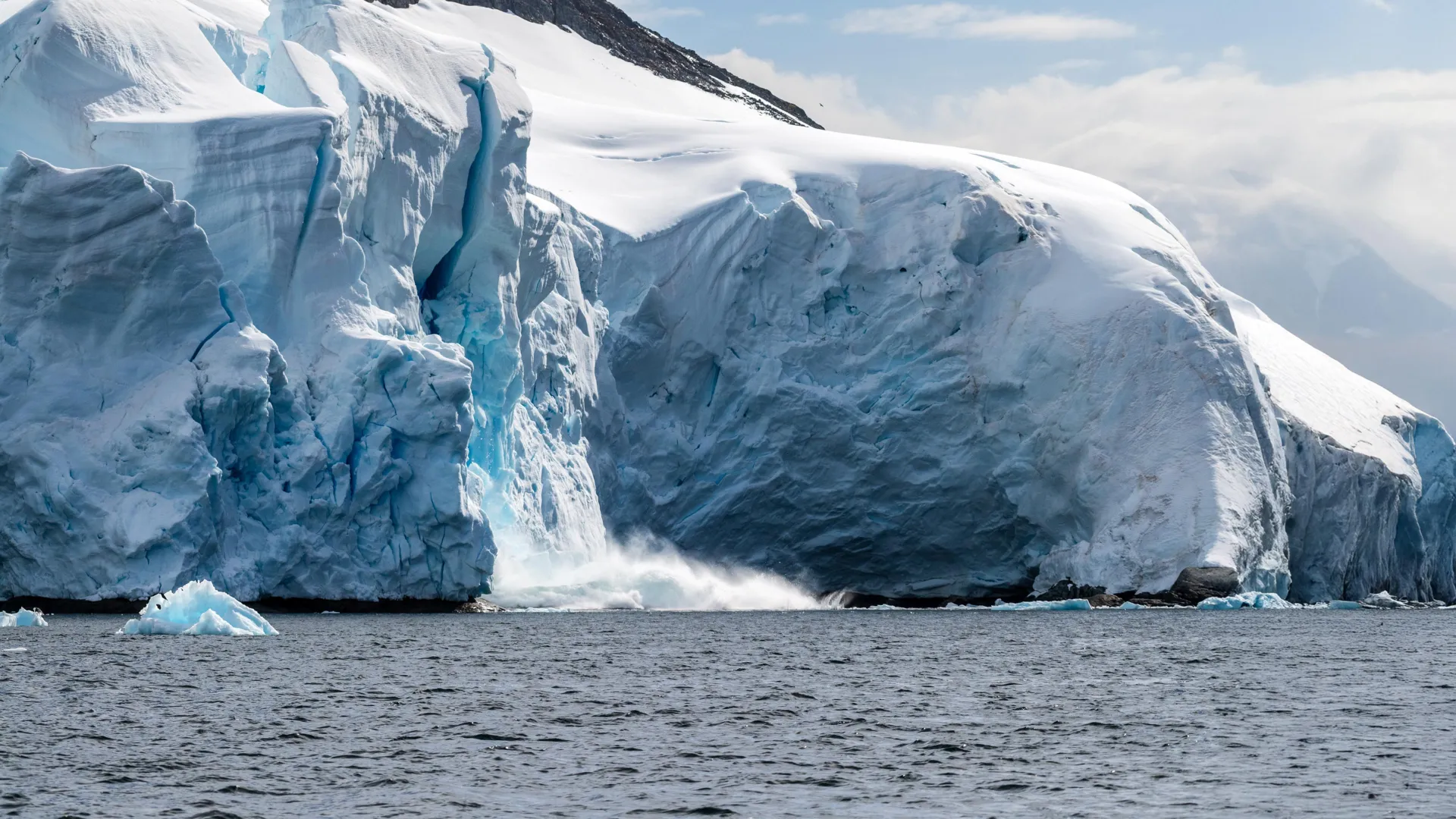
Antarctica's Accelerated Changes Demand Urgent Climate Action.
Researchers warn that Antarctica is experiencing rapid changes that could have dire global consequences. The melting of ice, collapsing ice shelves, and disruptions in ocean circulation pose significant threats to sea levels, ecosystems, and climate stability. This transformation endangers wildlife populations, including penguins and krill, which face increasing extinction risks. Scientists emphasize the urgent need for swift emission reductions to prevent irreversible damage and safeguard both the region's biodiversity and the health of our planet's climate system.

Antarctic Ocean Shifts Released Ancient Carbon, Shaping Early Warming
A significant shift in deep-ocean circulation around Antarctica played a crucial role in releasing long-stored carbon into the atmosphere as the last Ice Age came to an end. Evidence from deep-sea sediments reveals that ancient Antarctic waters had trapped vast amounts of carbon, which were subsequently released during two major warming events. Understanding these historical shifts is vital for scientists today, as it provides insights into how modern Antarctic melting may further accelerate climate change, underscoring the urgency of addressing ocean health and climate stability.
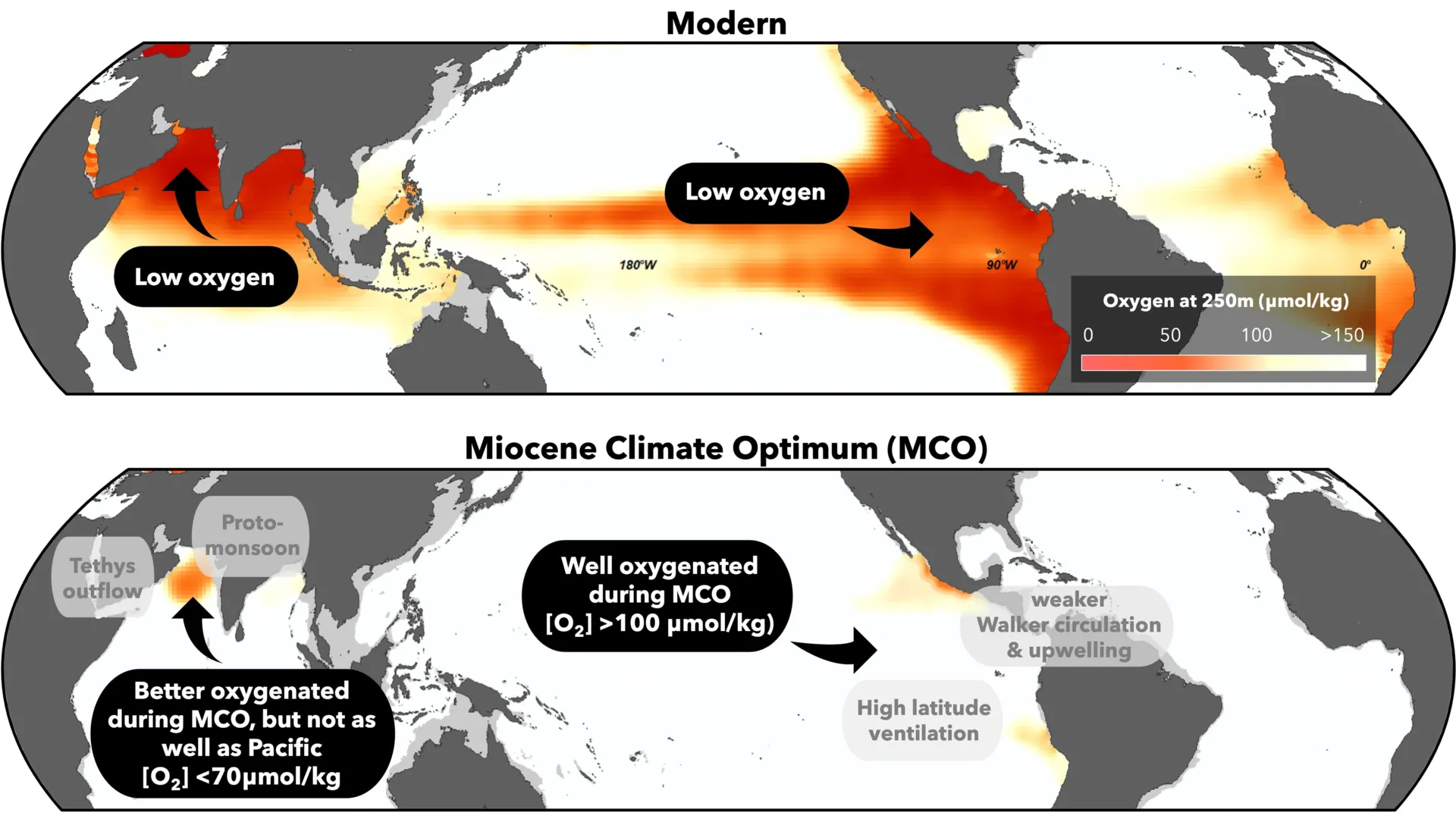
Ancient Arabian Sea Remained Oxygenated Despite Warming Climate
Recent studies of ancient ocean fossils reveal that the Arabian Sea maintained higher oxygen levels 16 million years ago, despite experiencing a warmer climate than today. This finding challenges the prevailing notion that rising temperatures inevitably lead to reduced oxygen availability in oceans. Instead, it appears that robust monsoon patterns and effective ocean circulation played a crucial role in delaying oxygen depletion in this region.